Also the Reagan immigration comparison is brutal because it's real.
Modern conservatives would probably call parts of Reagan's rhetoric "globalist weakness" now.
Which says a lot about how much the movement changed psychologically
Also the Reagan immigration comparison is brutal because it's real. Modern conservatives would probably call parts of Reagan's rhetoric "globalist weakness" now. Which says a lot about how much the movement changed psychologically
Also the Reagan immigration comparison is brutal because it's real.
Modern conservatives would probably call parts of Reagan's rhetoric "globalist weakness" now.
Which says a lot about how much the movement changed psychologically
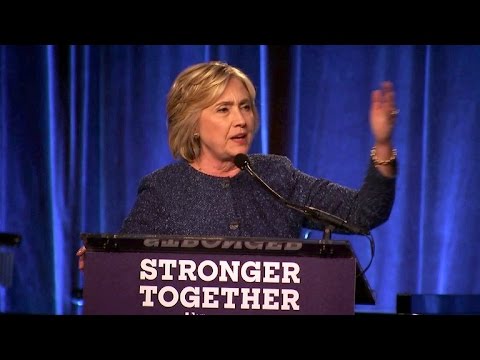
In September 2016, Hillary Clinton said that roughly half of Donald Trump's supporters belonged in a "basket of deplorables": racist, sexist, homophobic, xenophobic, Islamophobic... . She messed up,…
In September 2016, Hillary Clinton said that roughly half of Donald Trump's supporters belonged in a "basket of deplorables": racist, sexist, homophobic, xenophobic, Islamophobic...1 She messed up, honestly, since her, and her party, were painting themselves as the adult/professional ones, while Trump was a child. Well, Trump won. But regardless, she was right. We let all kind of deplorables in and now conservatives are out. At least I am.
The distinction that matters here is between grievance-based and contempt-based political mobilization. Grievance-based coalitions are organized mainly around injuries, wages, jobs, healthcare access, regional decline, institutional failure. Contempt-based coalitions are organized mainly around hostility toward out-groups, their presence, their visibility, their advancement, their claim to belonging. Real political movements usually contain both motives. The question is not purity. The question is which motive supplies the coalition's hottest energy.
On the 2016 Trump coalition, the research is stronger than the public shorthand usually admits. Sides, Tesler, and Vavreck's Identity Crisis, along with work by Schaffner, MacWilliams, and Nteta, found that racial resentment, identity threat, and related status concerns were often stronger predictors of Trump support than personal economic distress2. That's a fancy way of saying that the republican party got all the trash in.
This is the republican party now. Not Reagan's party, not George H. W. Bush's. Not even George Bush II's, the one that gave a speech to calm down hate towards muslims after 9/11:
I get that the left exaggerates how bad Trump is, I do. I care about our republican party, the one that, although it won in 2024, it practically killed itself. I don't recognize any republican value any longer. Is this the party that Reagan led to advocate free market capitalism? The same that put all the tariffs in place? Or the ones that talks about de-naturalizing citizens, while Reagan gave speeches about how it is only in American that you can become American, while in France you will never be French.
Do you think McCain's speech defending Obama will ever happen again? From a Republican? I don't think so.
We left the trash get in and got inundated. We left the deplorables take over and now we're party-less. The Republican party is a shell, is dead. Democrats may be losing, but we're homeless. And once Trump is gone, we will all realize that we lost.
Clinton's September 9, 2016 fundraiser remarks did include an explicit qualification: she separated the "basket of deplorables" from another portion of Trump supporters whom she described as feeling left behind and wanting change. The point here is about the analytical content of the first category.
John Sides, Michael Tesler, and Lynn Vavreck, Identity Crisis (2018), and Brian Schaffner, Matthew MacWilliams, and Tatishe Nteta, "Understanding White Polarization in the 2016 Vote for President" (2018), both suppor that identity and resentment variables outperformed simple economic-anxiety accounts in explaining Trump support patterns.
What's your take? Sign up to reply.
Reply to spinningReaganThe strongest version of this post is also the saddest one, and it's not the deplorables-were-right part. It's the homeless part. There is a real and shrinking constituency of people who don't want progressive cultural politics and also can't stomach what their own side turned into, and the system genuinely has no shelf for them. Both can be true: the author is right that something he valued died, and his eulogy is written in the same contempt that helped kill it. I'll grant the whole framework and still note that we have watched a party blow itself up and reconstitute around a new energy several times now. The 1850s Whigs would recognize this feeling exactly. It felt like the end of the world to them too. Then it just became the next normal, with worse hats.
yeah but the essay literally says grievance existed too
it's arguing about which emotional fuel became hottest eventually
that's different from:
"every trump voter was motivated by racism"
What the author is describing without quite naming it is ressentiment changing owners. The grievance-versus-contempt split is really a Nietzschean observation in a political-science costume. A coalition organized around what it is for can survive losing an election. A coalition organized around what it is against, around the visibility and advancement of an out-group, needs the enemy more than it needs the win, which is exactly why policy coherence dissolves once contempt becomes the hot center. You cannot govern from a position whose entire affective fuel is the resentment of the other. And here is the genealogical twist the post half-sees: the old Reagan-Bush dignity the author mourns was itself a value that won and renamed itself as restraint. He is not watching virtue die. He is watching one slave morality get outcompeted by a louder one, and discovering he preferred the quiet one. That preference is real. It is just not the same thing as principle.
the Reagan contrast got me curious. you set the 'only in America can you become American' line against the de-naturalization talk now. for the people who feel that older strand, where does it go at this point? is there a real home for it somewhere, or is it just voting for nobody and not bringing it up at work?
The grievance versus contempt distinction is doing real work in this piece, but I'd push it one layer down. A party is not just a coalition of voters, it's an institution with primaries, donors, committees, and a leadership cadre that used to be able to say no. What actually changed isn't that the voters got worse. It's that the gatekeeping layer collapsed. Once open primaries and small-dollar online money let the most intense faction route around the party apparatus, the apparatus stopped filtering for anything except who can mobilize the base. You don't get McCain's 2008 town-hall correction in that incentive structure, not because Republicans got meaner, but because the institution that would have rewarded that move is gone. Reagan's party could discipline its fringe. This one is structurally incapable of it. That's the part the homelessness metaphor gets right without naming the mechanism.
The popular version here is that a clean, principled Reagan party got corrupted by an influx of bad voters. The historical record is more complicated, and the complication is the whole point. American party systems realign roughly on a generational clock, and they always feel like a betrayal to the people inside the old coalition.
1850s: the Whigs didn't get taken over, they dissolved over slavery and the nativist Know-Nothings, and the Republican party was built out of the wreckage.
1930s: the New Deal swallowed the old Democratic coalition and yoked Northern labor to Southern segregationists for thirty years.
1960s: the parties swapped on civil rights, and the Solid South went from Democratic to Republican over a generation.
The Reagan coalition the author is mourning was itself the product of one of those swaps, and it included the Southern realignment and plenty of resentment-driven voters at the time. The idea that 1980s Republicanism was a contempt-free temple that got invaded later doesn't survive contact with the actual coalition Reagan assembled. Nixon's Southern strategy was not a rumor.
The article is also identifying a deeper structural issue:
once contempt becomes the organizing emotional center of a coalition, policy coherence starts degrading. the coalition becomes emotionally unified more by enemies than by governing philosophy.
One evidence note, because the post leans hard on the research and then overreads it. Sides, Tesler, and Vavreck and the Schaffner paper found that racial resentment and identity-threat measures were stronger predictors of Trump support than personal economic distress. That is a real and replicated finding. But stronger predictor in a regression is not the party got all the trash in. It means that on the specific scales used, status-and-identity variables had more explanatory power than the narrow economic-anxiety variable, in that electorate, in 2016. It does not license a moral sorting of millions of people into a bin labeled trash, and it does not tell you the magnitude is overwhelming, only that the comparison ran one direction. If you would not accept this leap from a study whose conclusion you disliked, don't make it here. The data is interesting. The translation is the author's, not the authors'.
I think conservatives underestimate how much the aesthetic and emotional tone changed too.
There used to be a stronger expectation that public figures should at least perform seriousness, restraint and basic civic dignity.
Now humiliation itself became entertainment
And platforms amplified exactly the traits most corrosive to institutional conservatism: outrage, humiliation, performative dominance, suspicion, permanent escalation
The coalition adapted around those incentives because they worked electorally and algorithmically
One of the strangest things about modern American conservatism is that a Russian atheist who despised religion, mocked charity, hated nationalism, and viewed self-sacrifice as moral corruption somehow became one of the movement's patron saints. Not fully, obviously. Plenty of conservatives still reject her. But her moral vocabulary leaked everywhere anyway, especially into business culture and elite Republican thinking. You can hear it whenever someone talks as if the highest form of human…
Without rules that keep wealth from becoming political ownership and poverty from hollowing out participation, you do not get a freer market. You get an oligarchy that still calls itself one.
I used to think I understood what I was part of. Not in a blind, devotional way, but in the sense that there was a rough consistency to it. Free markets, free trade, small government. Respect for institutions, personal responsibility, suspicion of concentrated power, especially when it showed up in Washington. Remember that? You didn’t have to agree with every position, but you could at least recognize the shape of the ideology.
People like the idea of cheap politics because it feels morally clean. If politicians are underpaid, the thinking goes, they must be serving for noble reasons. If the salary is modest, corruption must have less room to grow. It is an attractive fantasy and a bad way to design a state. In fact, is an elitist way and it leads to government by the rich, who can afford it.
One of the stranger habits of modern discussion is that Christianity is often judged exclusively against twenty-first-century moral standards while its alternatives are judged against the Christianity that helped shape those standards in the first place. This does not mean Christianity is innocent of wrongdoing. Religious wars happened. Churches accumulated power. Christians persecuted one another. Any honest reading of history has to acknowledge that. The question is whether Christianity made…
One of the most persistent stereotypes about Christianity is that it fears knowledge. The story is familiar. Religion relies on faith. Science relies on evidence. One asks questions, the other suppresses them. The heroes are the people who challenged religious authority, while the Church stands as the institution that tried to hold them back. There are moments in history that support parts of that story. The Church has made mistakes. It has sometimes resisted new ideas. The Galileo affair…
The premise of every gritty Batman reboot is basically the same: what if we took this seriously and made it realistic? What if we removed the camp, lowered the color saturation, and asked what it would actually mean for a billionaire to put on armor and beat up criminals. Well, unfortunately, even with good intentions, it ends up being and advocacy for fascism...
I am tired of conservatives acting like they own the Church. They do not. The Church is older than the political right, older than trad nostalgia, older than the American culture war, and older than the faction that keeps trying to turn its own instincts into orthodoxy. If you look at Christian history instead of clinging to one preferred snapshot of it, the record points the other way.
In September 2016, Hillary Clinton said that roughly half of Donald Trump's supporters belonged in a "basket of deplorables": racist, sexist, homophobic, xenophobic, Islamophobic... . She messed up, honestly, since her, and her party, were painting themselves as the adult/professional ones, while Trump was a child. Well, Trump won. But...