The fertilizer running through Oplan and the floating ports is the most believable thing here: three governments that despise each other keep one supply line alive because nobody has to admit to trading. My guess is Ceres answers there, quietly.
Volume 3: The Hunger That Devours Faith — Part 2
Thought
Thought
The fertilizer running through Oplan and the floating ports is the most believable thing here: three governments that despise each other keep one supply line alive because nobody has to admit to trading. My guess is Ceres answers there, quietly.
Post content
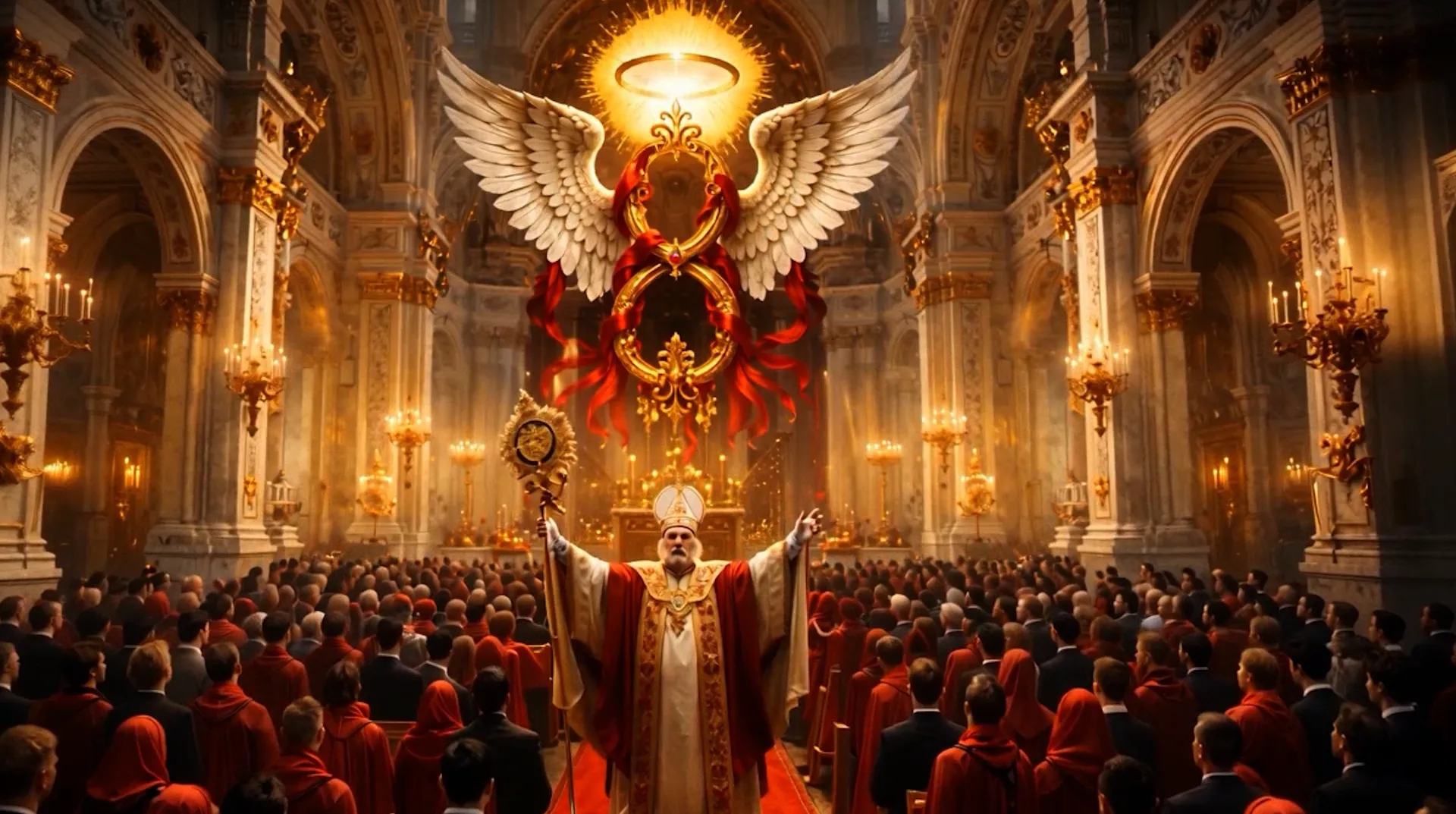
The Red Cathedral
Omni Opus possessed vast tracts of land, an established mining industry, and fertilizer production considered among the best in the world. Even so, the nation did not trade its products directly with Ceres. Exports were handled through floating dry ports, which served as intermediaries in a carefully organized commercial chain designed to avoid any direct political ties.
Oplan purchased fertilizers from Omni Opus and resold them to Ceres.
It was a convenient hypocrisy. A religious nation sold its products to a racist nation, which, in turn, supplied them to a third nation that was officially neutral. Bureaucracy ensured that economic interests were served without governments having to publicly confront their own ideological contradictions.
Omni Opus had destroyed the CERES I space station, but it had failed to eliminate every trace of its existence. Fragments of the station continued to orbit Earth, remnants of a destruction that had taken place twenty years earlier.
Although Omni Opus shared no borders with Ceres, its hatred of Mother Ceres ran deep. It was not merely a matter of political or religious disagreements. There was something about that woman that made her particularly difficult to confront: arguing with her.
When the subject involved essential needs, Mother Ceres spoke with an empty stomach. Omni Opus, on the other hand, spoke with a mind emptied by its own religion. Arguments soon turned into heated confrontations, shouting, and accusations. The liver seemed to take command while reason was driven out of the conversation. Dialogue became impossible.
Even after the destruction of CERES I, Mother Ceres had remained silent. There were no grand speeches, threats, or promises of revenge. She swallowed her pride and accepted the direct defeat, while Omni Opus celebrated what it considered a victory over its greatest enemy.
However, Ceres had not stopped.
CERES II already existed, sponsored by Silencium and sharing knowledge with the Republic of Fiúme. Other nations were also showing interest in the project. Specialists were being trained in Ceres, and new space exploration initiatives were advancing even when the region's climate seemed to defy every known principle.
The land, once considered cursed, had become prosperous. Harvests were reaching record yields despite unpredictable weather conditions.
For Omni Opus, this was difficult to bear. The nation had tried to weaken Ceres, yet its old enemy continued to develop. Attacking again meant confronting not only Ceres, but also the protection of the continent's Council and the growing interest of other countries.
The defeat of CERES I had not ended the conflict. It had merely transformed it.
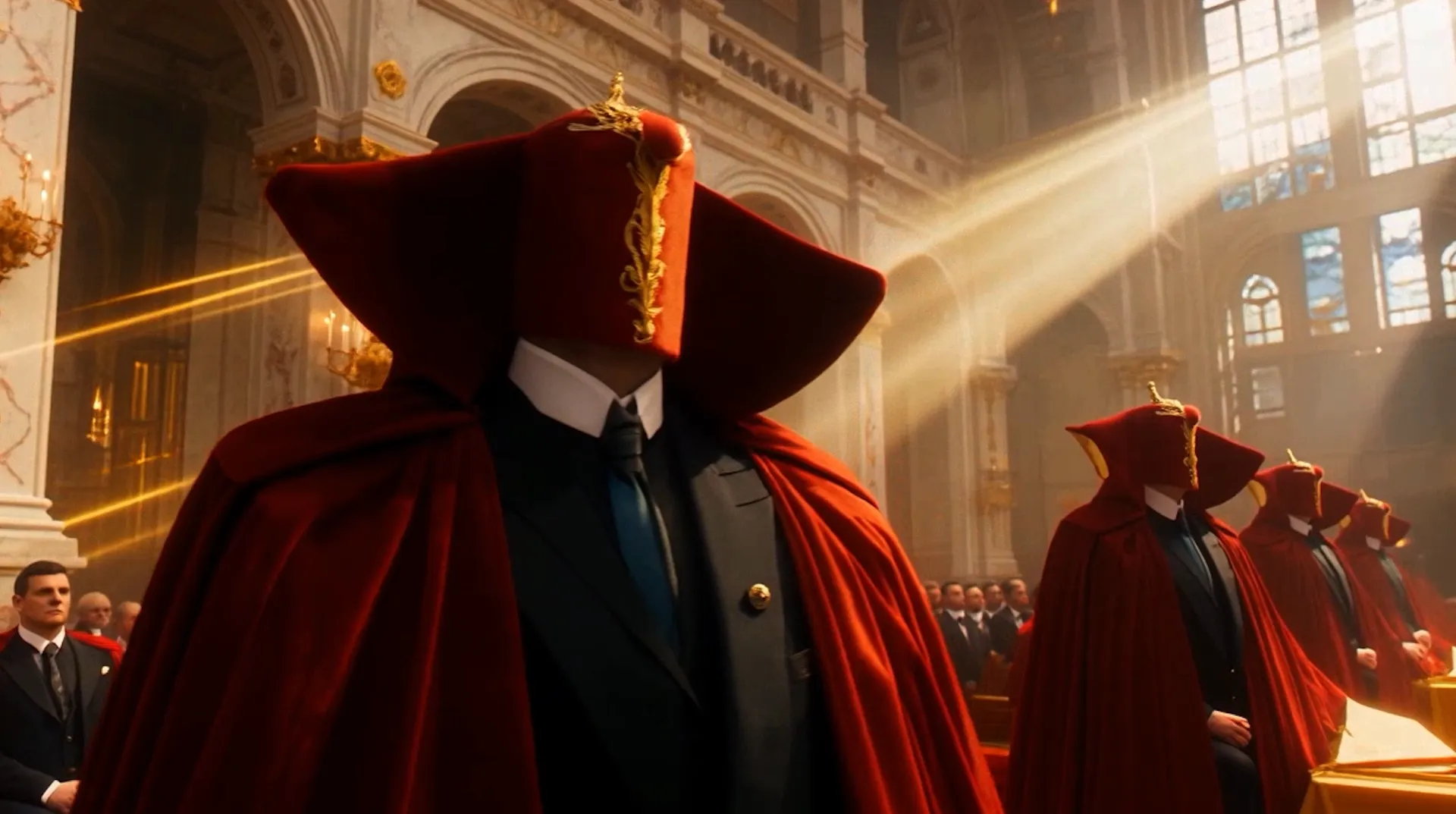
The Red Council
At the heart of Omni Opus stood the Red Cathedral, home of the Red Council and the center of the nation's religious power.
Its rulers were known as the Oracles of the Winged Eight, a reference to the sacred symbol at the heart of the nation's faith. They wore red masks adorned with golden embroidery, and no one had ever seen their faces.
Power and arrogance had become intertwined with religion. Hatred of Mother Ceres ran so deep that it blinded part of the population to the corruption, abuses, and murders committed by the regime itself.
Opponents were classified as heretics. Many were imprisoned, tortured, and killed in the so-called Red Precincts, institutions that employed established torture methods while developing new tools to prolong prisoners' suffering.
Even Oplan, despite its own racist ideology, admired the efficiency of Omni Opus's methods of repression.
The population contributed monthly religious offerings, in addition to paying taxes on commerce. There were no conventional elections. The rise of rulers depended on popular adoration, their image as leaders, and their ability to impose authority. Kindness was not necessarily what attracted the population. Often, it was the display of strength, the certainty conveyed through speeches, and the ability to make the crowd obey.
The Council identified those responsible for the country's hardships. The population, accustomed to accepting its declarations, followed the accusations.
Thus, Mother Ceres became a convenient explanation for Omni Opus's problems. Poverty, economic difficulties, and internal contradictions could all be blamed on the existence of an external enemy. While citizens looked toward Ceres, those in power remained protected behind their masks.
It was a form of religious fascism sustained by the persecution of those who were different, the manufacture of enemies, and the transformation of faith into an instrument of obedience.
Brotherhood, Family, and Faith.
That was Omni Opus's motto.
Yet brotherhood had limits defined by the rulers, the family was subjected to the rules of the religious institution, and faith was demanded as proof of loyalty.
The country maintained public flagellation squares where people dressed in red robes and matching conical hats were subjected to public punishment. Their garments concealed their faces, but not the shame imposed upon them before the community.
According to Omni Opus's religious doctrine, pain could be offered in exchange for miracles. Suffering was treated as a form of devotion, a test of obedience, and sometimes a condition for receiving divine blessings.
Gold and precious stones, however, also held an important place in that society.
The austerity demanded of the faithful did not prevent the institution from accumulating wealth.
Darkness had never been as dark as the authorities claimed. And the valley of shadows had never seemed as bright as it did beneath the light of official ceremonies. Violence did not hide only in alleys or prisons: it was displayed in public squares, justified through sacred speeches, and woven into the population's daily life.
Life Beneath the Masks
The Red Cathedral was built of white marble in the classical style, with great columns, vaulted ceilings, and domes decorated with red details.
Its interior, however, was dominated by gold, jewels, and ostentation. The priests who heard the faithful's confessions displayed luxurious ornaments while preaching a strict moral code to the population.
Celibacy was publicly defended, but not all priests followed the rules they proclaimed. Behind the ceremonies were hidden spaces where orgies, acts of flagellation, and other forms of depravity took place, shielded by the silence of those afraid to expose the perpetrators.
The population lived under constant surveillance.
There were curfews and patrols through the streets. Girls and women were subject to even stricter restrictions: they had to return home by five in the afternoon, before the curfew set for men.
During patrols, people were stopped and taken to the cathedrals. Some were never seen again.
Fear was part of everyday life. Obedience was presented as a virtue, and silence as a sign of respect.
Mother Ceres had never declared war on faith. Her conflict was with the ignorance that, in her view, religion could produce when it ceased to be a personal choice and began to determine what people could think, question, or do.
In Ceres, the word faith had given way to another: endure.
There was no promise of divine reward, no guarantee of universal justice, no certainty that the good would be favored. Life did not have to be fair to keep demanding decisions, work, and resilience.
Ceres's philosophy could be summed up in one sentence:
The world belongs not to those who deserve it, but to those who endure!

#scifibooks #scifiwriter #scifireads #dystopianbooks #dystopianliterature #speculativefictionbooks #indieauthor #indiebooks #indiebook #worldbuilding #booktok #bookcommunity #motherceres #lore
Thoughts
-
Red robes and conical hats in the punishment squares are very close to the sanbenito and coroza the Spanish Inquisition put on the condemned. Public shame was the point there too.
-
The fertilizer running through Oplan and the floating ports is the most believable thing here: three governments that despise each other keep one supply line alive because nobody has to admit to trading. My guess is Ceres answers there, quietly.
Related posts
-
Volume 2: Hecatomb - Part 3 Final
I never imagined I would see anything like this in my lifetime. I’m here, trembling, the camera in my hands almost too heavy to hold, my voice faltering at the sight unfolding before my eyes. A…
-
Volume 2: Hecatomb - Part 3
Weeks had passed since the encrypted message from INCOGNITUS had made its way through the corridors of Ceres. The attack was obvious, but its repercussions would be devastating if carried out: four…
-
MOTHER CERES — THE ONE WHO DEVOURS
Some call me a monster. A demon. A liar.
-
Volume 3: The Hunger That Devours Faith — Part 1
September 1
-
Volume 2: The Return to the Silo
The train moved on, disappearing into the darkness. Theo and Ceres jumped off near the abandoned silo—the same one as before, between warehouses and tall weeds. Now the place was different: the rust…
-
Volume 2: Hecatomb - Part 2
In an unknown sector of the Tower, hidden beneath layers of concrete and silence, lay the chamber of the Ceres Security Council . Thousands of desks stood in mathematically precise rows. Men and…
-
Volume 2: Hecatomb - Part 1
At the border between Arcadia and Ceres, walls of black concrete rise. Electric fences, sniffer dogs, watchtowers. Among the shadows stands a vast supply depot—not to shelter people, but to contain…
-
Volume 2: The Autopsy of Freedom - Part 1
The dining hall of the Eastern Military Academy breathed like a living machine. The sound of cutlery clattering against aluminum mingled with the smell of warm bread and disinfectant. Every student…
Public
3 conversations
5 thoughts
19 upvotes
0 downvotes
1 series
Omni Opus possessed vast tracts of land, an established mining industry, and fertilizer production considered among the best in the world. Even so, the nation did not trade its products directly…