September 1
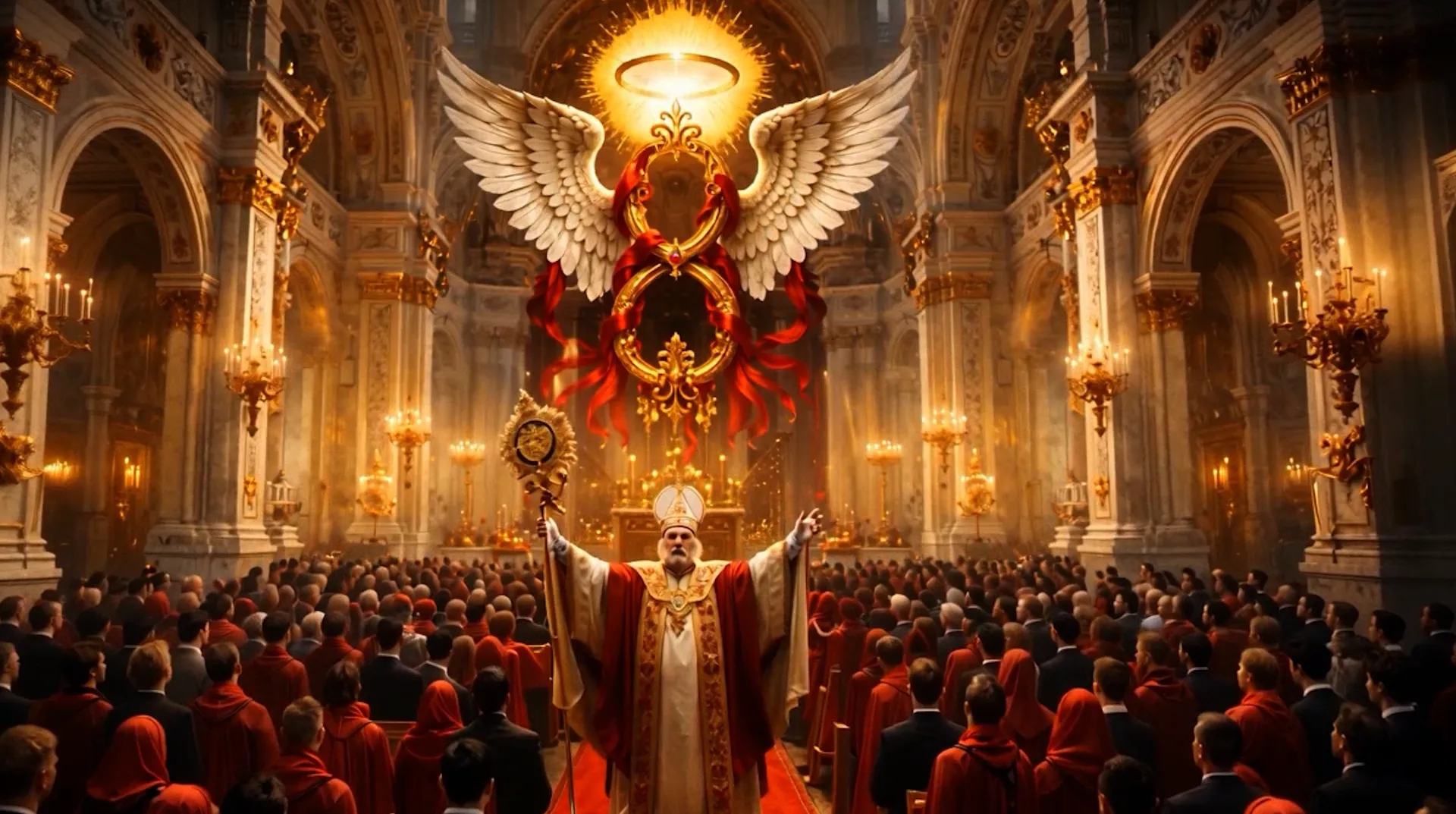
In the sacred scriptures of Omni Opus, religion and the nation’s name were one and the same. Among its oldest texts, a prophecy had been repeated for centuries:
If the Sacred Golden Eight breaks its wings, Omni Opus will be destroyed by its own blind faith.
That day, the entire nation was watching its screens.
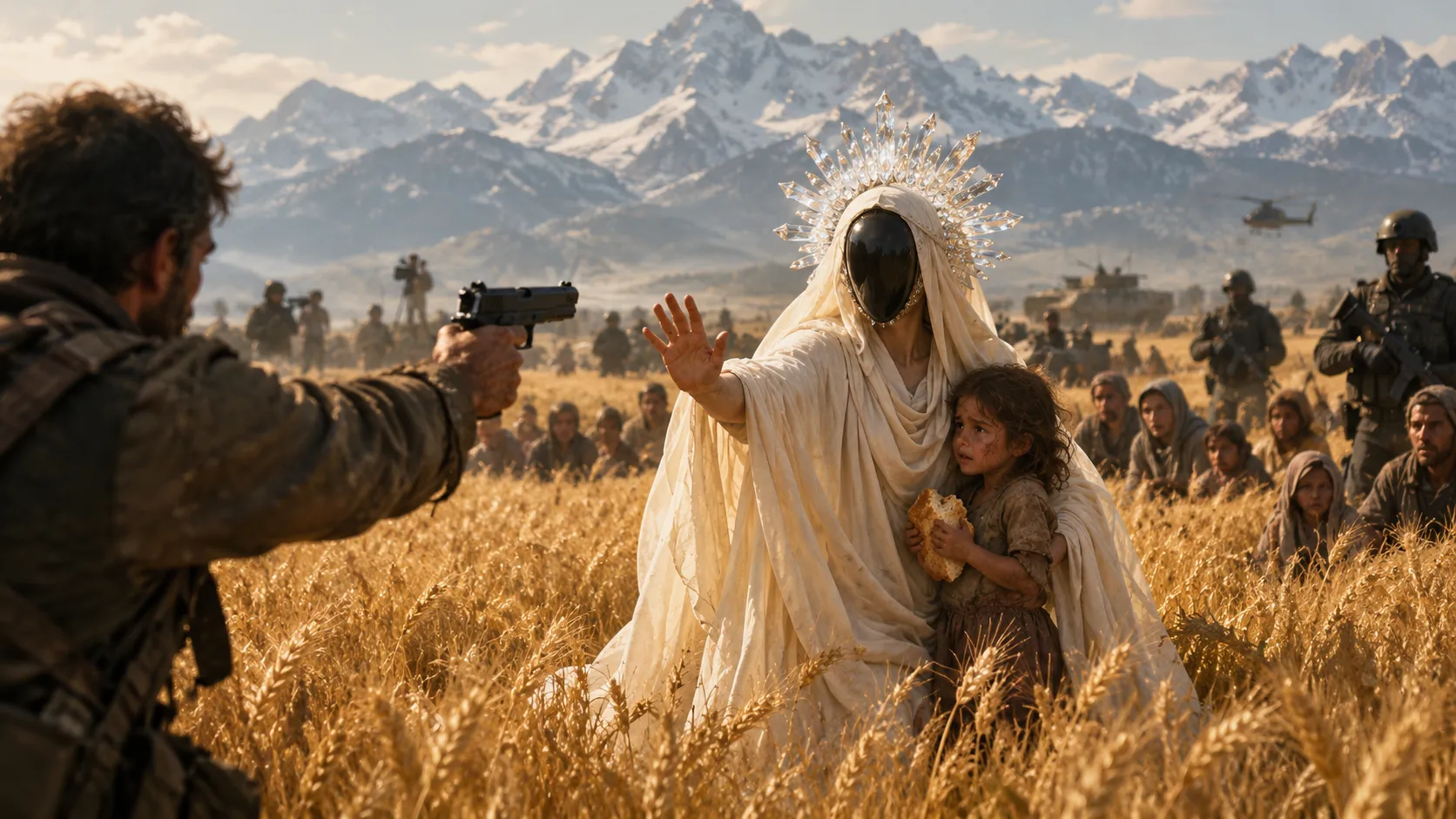
The broadcasts showed Mother Ceres in a wheat field, surrounded by three hundred refugees from Arcadia. War tanks filled the landscape around them. Armed soldiers watched every movement, while television crews recorded everything in real time.
Omni Opus was expecting a massacre.
A hecatomb.
Bodies scattered across the wheat, blood staining the earth, and Mother Ceres finally revealed as the monstrous creature her rulers had described for generations.
That was what people expected to see.
But the cameras showed something else.
Food.
Water.
Medical care.
The three hundred refugees were receiving assistance while armed soldiers remained stationed around them. There were no executions, no cries of agony, no orders to open fire. There were doctors at work, people handing out food, and children who, for the first time in a long while, could eat without having to fight their own companions for scraps.
Mother Ceres was sharing bread.
A small child, dirty and starving, approached her with a piece of bread in their hands. Their face was grimy, their hair tangled, their clothes stiff with dust. They walked with the hesitation of someone who had learned far too early to distrust every act of kindness.
Mother Ceres bent down and lifted the child into her arms, settling them on her lap.
The dirt stuck to her veil. Small hands left marks on garments that, until then, had remained immaculate.
She did not care.
She did not recoil from the smell, show disgust, or try to push the child away to preserve her appearance. She simply welcomed them, as though this little being, covered in misery, were a citizen of Ceres being welcomed home.
The child kept eating.
And Mother Ceres remained there, holding them in her arms.
In Omni Opus, no one knew what to make of that image.
The nation that hated her so deeply, that had declared her city an enemy and issued countless decrees against its interests, was watching its greatest adversary offer what its own religious principles claimed to defend.
Mercy.
Omni Opus had never entered into economic agreements with Ceres. Their antagonism was not merely political: it was a matter of faith, identity, and power. To its rulers, the very existence of Ceres was an affront to the sacred order.
The hatred had reached its extreme when Omni Opus brought down the CERES I space station, accusing it of blasphemy against the Sacred Eight.
The weapons used in that operation had been secretly supplied by Arcadia. The two countries shared the same enemy and believed that by eliminating Ceres, they would also eliminate everything it represented.
Now, Arcadia’s refugees were being fed by the very woman their own allies had sent to die.
The irony was too great to fit inside the official narratives.

The three hundred refugees had not arrived there by chance.
Everything had been planned to turn the wheat field into a spectacle of condemnation. The refugees were to be used as a trap: Mother Ceres was supposed to execute them, or at least respond with the violence Omni Opus expected to attribute to her.
Television crews had been summoned to record the event. The live broadcast would ensure that no alternative version could compete with the images.
The plan was simple.
Provoke a tragedy, point the cameras, and give the continent a villain.
And if Mother Ceres showed mercy, so much the better. The public humiliation could be exploited in other ways. Her enemies were prepared to interpret any gesture as weakness, manipulation, or a staged performance.
They had not considered the possibility that she simply did not want to kill those people.
After all, five hundred years of history had taught the peoples of that continent to recognize cruelty dressed up in countless justifications. Wars changed their names, rulers changed their faces, and speeches acquired new words, but the need to manufacture monsters remained intact.
The difference between the cruelty of five hundred years ago and the cruelty of the present was that now we could see it in color, live, and in high definition.
And Omni Opus was watching.
In homes, businesses, and public squares, people stood motionless before their screens.
Some wept.
Others clenched their fists, unable to reconcile what they were seeing with what they had been taught to believe.
Hatred, devotion, and admiration mingled into a confusion no one dared confess aloud.
It was possible to hate Mother Ceres and still wish for her to keep feeding that child.
It was possible to consider Ceres a blasphemy and feel ashamed upon realizing that their enemy was offering the starving what their own nation had failed to provide.
Faith was not disappearing. It was more complicated than that.
It was beginning to conflict with itself.
Then a man rose among the refugees.
At first, his presence drew no attention. He was just another man among three hundred survivors, someone who might have been looking for water, trying to approach the doctors, or searching for a place to sit.
But he was armed.
He drew his gun and aimed it directly at Mother Ceres.
She was still holding the child.
For an instant, no one understood what was happening. The camera operators adjusted their framing, the soldiers began to move, and the refugees near the man recoiled in panic.
Mother Ceres saw the gun.
And placed herself in front of the child.
There was no speech. No command. No attempt to negotiate with the man.
Only a movement.
She shielded the little one with her own body and raised one hand toward the barrel, as though such a simple gesture could stop a bullet.
The child still held the bread.
Mother Ceres’s veil was dirty. Her once-immaculate garments bore the marks of the small fingers that had clung to her.
The cameras recorded everything.
The woman Omni Opus wanted to portray as a monster was about to die protecting a refugee child.
The shot seemed inevitable.
People watching the screens held their breath.
In that instant, Mother Ceres would die live on air.
But the shot never came.
The man began to collapse.
First, his knees gave way. Then his body fell into the wheat field, partly disappearing among the golden stalks.
The gun slipped from his hand.
For a few seconds, no one moved.
Mother Ceres placed the child on the ground, made sure they were safely away, and rushed toward the man.
She knelt beside him and gathered him into her arms, supporting his head and body as though trying to keep the earth itself from claiming him.
Framed by the cameras, the scene resembled a Pietà.
But there was no dead son in a mother’s arms.
There was a man who had just tried to kill her.
“No… No, my son. Live!”
Mother Ceres’s voice broke the silence.
She held the man close, searching his face for some response. The hand that, seconds earlier, had risen to stop a bullet was now trying to support the person who would have fired it.
Then she looked up.
“Amós! Amós, do something!”
Amós hurried over and knelt beside them. He checked the man’s condition and began CPR, pressing on his chest while calling for medical assistance.
The medical professionals treating the refugees stopped what they were doing and rushed over. One took over the procedures while another prepared the necessary equipment.
Mother Ceres did not move away immediately.
She remained kneeling in the wheat, watching the doctors work on the body of the man.
The man who had pointed a gun at her.
The man who could have killed her in front of the entire continent.
The refugees watched, frightened and confused. Some tried to understand what had happened; others attempted to move away, fearing that more shots would follow.
The cameras remained on.
In Omni Opus, millions of people were witnessing something for which they had no ready-made narrative.
The woman who was supposed to die had just rushed to save her would-be murderer.
The nation’s enemy had called an armed man my son.
And no one knew why.
At that moment, the sacred scriptures of Omni Opus offered no answers. Its priests had no prepared interpretation, its rulers had no convincing statement to deliver, and its commentators could not turn the scene into an ideological victory.
The wheat field remained before them.
The tanks were still there.
The soldiers still carried their weapons.
And at the center of it all, doctors were trying to save a refugee’s life while Mother Ceres waited, kneeling in the dirt, her garments stained by the child she had fed.
The broadcast continued.
The entire continent was watching.
And, for the first time that day, Omni Opus did not know whom to believe.
#scifibooks #scifiwriter #scifireads #dystopianbooks #dystopianliterature #speculativefictionbooks #indieauthor #indiebooks #indiebook #worldbuilding #booktok #bookcommunity #motherceres #lore