That ending about discoveries growing quietly in your garden reads like you're saying the extraordinary isn't far away. It's here. I bet that's the line that connects all three scientists: they each just asked what nobody else was asking, and stayed with it. That staying with it is the whole story.
𝚃𝚑𝚎 𝚖𝚊𝚗 𝚠𝚑𝚘 𝚍𝚒𝚜𝚌𝚘𝚟𝚎𝚛𝚎𝚍 𝚝𝚑𝚊𝚝 𝚙𝚕𝚊𝚗𝚝𝚜 𝚏𝚎𝚎𝚕 🌿
Public
2 conversations
6 thoughts
15 upvotes
0 downvotes
1 series
What if I told you that plants were never truly silent?
In series
In groups
Thought
Thought
That ending about discoveries growing quietly in your garden reads like you're saying the extraordinary isn't far away. It's here. I bet that's the line that connects all three scientists: they each just asked what nobody else was asking, and stayed with
Post content
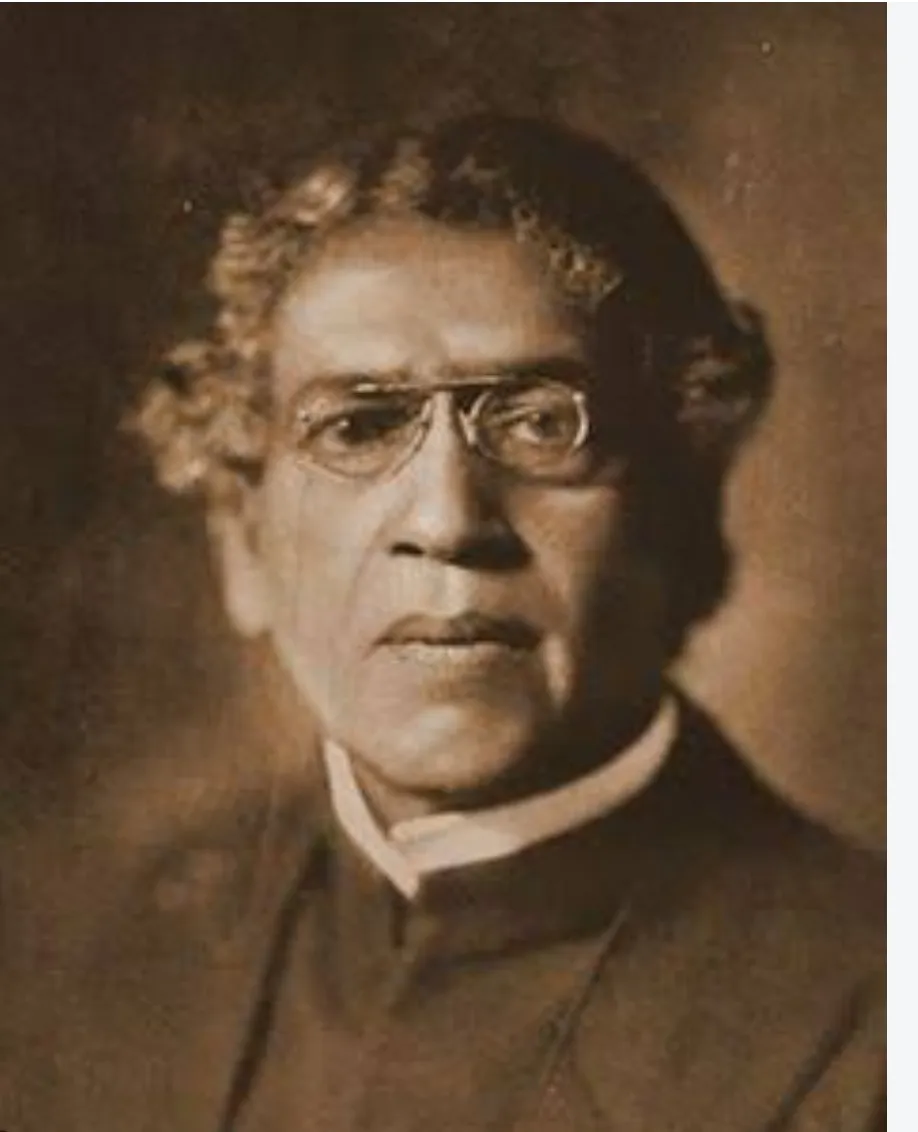
What if I told you that plants were never truly silent?
What if they were responding to the world around them—but humans simply didn't know how to listen? 🌱
More than a hundred years ago, an Indian scientist dared to ask a question that sounded almost unbelievable:
“Can a plant respond to the world around it?”
His name was Jagadish Chandra Bose.
Born in Bengal in 1858, Bose was a scientist with an extraordinary curiosity. He didn't just look at nature—he wanted to understand its hidden secrets.
He experimented with radio waves and electromagnetic waves, creating sensitive instruments to study phenomena that were difficult to observe.
But then his attention turned toward something most people simply walked past every day:
Plants. 🌿
Bose believed plants could respond to changes around them. To investigate this, he developed an instrument called the crescograph, which could measure incredibly tiny movements and growth in plants.
Imagine that—a scientist trying to uncover a hidden world inside something as ordinary as a leaf or stem.
His experiments helped demonstrate that plants respond to external stimuli, challenging people to think differently about the living world.
In 1917, Bose founded the Bose Institute in Kolkata, creating a place where scientific curiosity could continue to grow.
But his greatest lesson wasn't only about plants.
It was about asking questions.
Because sometimes, the most extraordinary discoveries aren't hiding in distant galaxies or complicated machines.
Sometimes…
they are growing quietly in your garden. 🌱
Jagadish Chandra Bose looked at a plant and wondered what was happening inside.
And that simple curiosity became a remarkable chapter in the story of Indian science.
Maybe the world isn't silent.
Maybe we just haven't learned how to listen yet. 🌿✨
Thoughts
-
I like the 'we just haven't learned to listen yet' bit. Consistency and showing up to the boring work. That's the actual discovery here, not the instruments.
-
The line between 'responds' and just 'moves': that's where everything changes. Bose proved you can measure the difference.
-
That ending about discoveries growing quietly in your garden reads like you're saying the extraordinary isn't far away. It's here. I bet that's the line that connects all three scientists: they each just asked what nobody else was asking, and stayed with it. That staying with it is the whole story.
-
Another one asking the fundamental question. Mandela, Einstein, Bose. One question that opens up a field. That's the pattern so far.
Related posts
-
𝐍𝐄𝐋𝐒𝐎𝐍 𝐌𝐀𝐍𝐃𝐄𝐋𝐀– 𝙰 𝙻𝙸𝙵𝙴 𝚃𝙷𝙰𝚃 𝙲𝙷𝙰𝙽𝙶𝙴𝙳 𝙰 𝙽𝙰𝚃𝙸𝙾𝙽
𝙸𝚖𝚊𝚐𝚒𝚗𝚎 𝚜𝚙𝚎𝚗𝚍𝚒𝚗𝚐 27 𝚢𝚎𝚊𝚛𝚜 𝚋𝚎𝚑𝚒𝚗𝚍 𝚙𝚛𝚒𝚜𝚘𝚗 𝚠𝚊𝚕𝚕𝚜… 𝚊𝚗𝚍 𝚜𝚝𝚒𝚕𝚕 𝚠𝚊𝚕𝚔𝚒𝚗𝚐 𝚘𝚞𝚝 𝚠𝚒𝚝𝚑 𝚑𝚘𝚙𝚎 𝚒𝚗 𝚢𝚘𝚞𝚛 𝚑𝚎𝚊𝚛𝚝.
-
𝐀𝐋𝐁𝐄𝐑𝐓 𝐄𝐈𝐍𝐒𝐓𝐄𝐈𝐍—𝚃𝙷𝙴 𝙱𝙾𝚈 𝚆𝙷𝙾 𝚀𝚄𝙴𝚂𝚃𝙸𝙾𝙽𝙴𝙳 𝙴𝚅𝙴𝚁𝚈𝚃𝙷𝙸𝙽𝙶
What if the person who changed our understanding of the universe was once just a curious boy who asked too many questions?
-
Does secular society still believe in original sin?
One of the funniest things about modern secular culture is that it absolutely still believes in original sin. It just refuses to call it that because theological language makes educated people uncomfortable. Listen to how modern institutions describe human beings. We are governed by unconscious bias, shaped by childhood conditioning, manipulated by algorithms, trapped in dopamine loops, distorted by social incentives, blinded by ideology, and mostly incapable of seeing our own motivations…
-
Shouldn't cultural criticism go both ways?
I had one of those big-tech team dinners. The conversation turned to how people met their partners. A few of my Indian coworkers talked about arranged marriage, family involvement, and how much more normal it is in India for marriage to be treated as a family matter and not just a private romantic choice. That part is ok, different cultures and all. It was interesting to see their perspective, even though I wouldn't share it. The problem started when one of them stopped describing the custom...
-
Do larger budgets destroy TV shows rather than improve them?
Some of the most expensive fantasy ever put on screen felt emptier than the more limited work that came before it. That is not because viewers secretly prefer cheapness. It is because abundance is a terrible substitute for judgment and good storytelling.
-
Is rural resentment self-inflicted?
Large parts of rural America depend heavily on federal spending through farm programs, highways, Medicare, Social Security, and infrastructure support while voting for politicians who perform anti-government identity politics. That is not simple hypocrisy. It is the contradiction the political product is built on. The mythology is anti-government. The economy is federally underwritten.
-
Is Ayn Rand's philosophy far more destructive to America than we admit?
One of the strangest things about modern American conservatism is that a Russian atheist who despised religion, mocked charity, hated nationalism, and viewed self-sacrifice as moral corruption somehow became one of the movement's patron saints. Not fully, obviously. Plenty of conservatives still reject her. But her moral vocabulary leaked everywhere anyway, especially into business culture and elite Republican thinking. You can hear it whenever someone talks as if the highest form of human…
-
Are airlines betting you'll never redeem that travel credit?
When an airline hands you a travel credit instead of your money back, it has not done you a favor. It has converted a refund it owed in cash into a coupon it controls. The money stays on the airline's balance sheet. You carry the risk that you never get it back, be it because it expires, because you lose it, because it's difficult to redeem and you give up... Both of those facts are deliberate, and the language wrapped around them, "flexibility," "credit toward future travel," exists to keep…