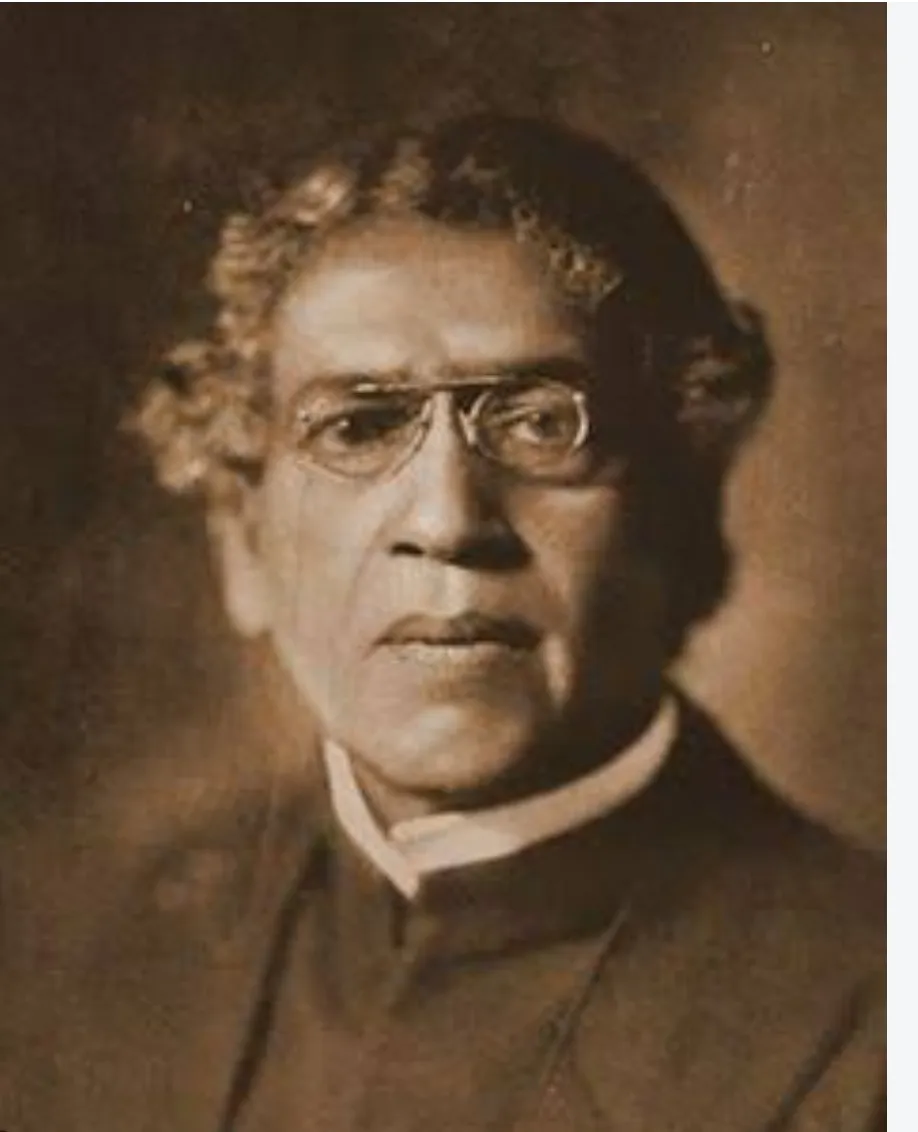
What if I told you that plants were never truly silent?
What if they were responding to the world around them—but humans simply didn't know how to listen? 🌱
More than a hundred years ago, an Indian scientist dared to ask a question that sounded almost unbelievable:
“Can a plant respond to the world around it?”
His name was Jagadish Chandra Bose.
Born in Bengal in 1858, Bose was a scientist with an extraordinary curiosity. He didn't just look at nature—he wanted to understand its hidden secrets.
He experimented with radio waves and electromagnetic waves, creating sensitive instruments to study phenomena that were difficult to observe.
But then his attention turned toward something most people simply walked past every day:
Plants. 🌿
Bose believed plants could respond to changes around them. To investigate this, he developed an instrument called the crescograph, which could measure incredibly tiny movements and growth in plants.
Imagine that—a scientist trying to uncover a hidden world inside something as ordinary as a leaf or stem.
His experiments helped demonstrate that plants respond to external stimuli, challenging people to think differently about the living world.
In 1917, Bose founded the Bose Institute in Kolkata, creating a place where scientific curiosity could continue to grow.
But his greatest lesson wasn't only about plants.
It was about asking questions.
Because sometimes, the most extraordinary discoveries aren't hiding in distant galaxies or complicated machines.
Sometimes…
they are growing quietly in your garden. 🌱
Jagadish Chandra Bose looked at a plant and wondered what was happening inside.
And that simple curiosity became a remarkable chapter in the story of Indian science.
Maybe the world isn't silent.
Maybe we just haven't learned how to listen yet. 🌿✨