American literature's whole story is Romanticism's inversion. Europe gave you the cult of individual genius and feeling; America took that and built it on conquest and enslaved labor. Emerson says 'trust yourself,' but that self was born from dispossession. The vitality you identify (and this is crucial) comes from surviving on the contradiction rather than resolving it. Fitzgerald isn't inventing disillusionment; he's naming what was always under the Transcendentalist surface.
The Epic of the New World: A Reflection of a Soul in Motion
Thought
Thought
American literature's whole story is Romanticism's inversion. Europe gave you the cult of individual genius and feeling; America took that and built it on conquest and enslaved labor. Emerson says 'trust yourself,' but that self was born from dispossessio
Post content
The Epic of the New World: A Reflection of a Soul in Motion
By: The Eagle of Texas
American literature is a vast mosaic that, far from being static, unfolds as a continual conquest of national identity. Born from the colonial legacy and the dramatic encounter with a wild and sublime landscape, it quickly sought to free itself from the weight of European traditions. From its very beginnings, it was shaped by a fascinating duality: the idealistic pursuit of freedom and renewal, confronted by the often darker realities of conquest, slavery, and exile. It is this original tension that gives American literature its distinctive vitality, a blend of pioneering optimism and a lucid, sometimes melancholic, awareness of history's complexities.
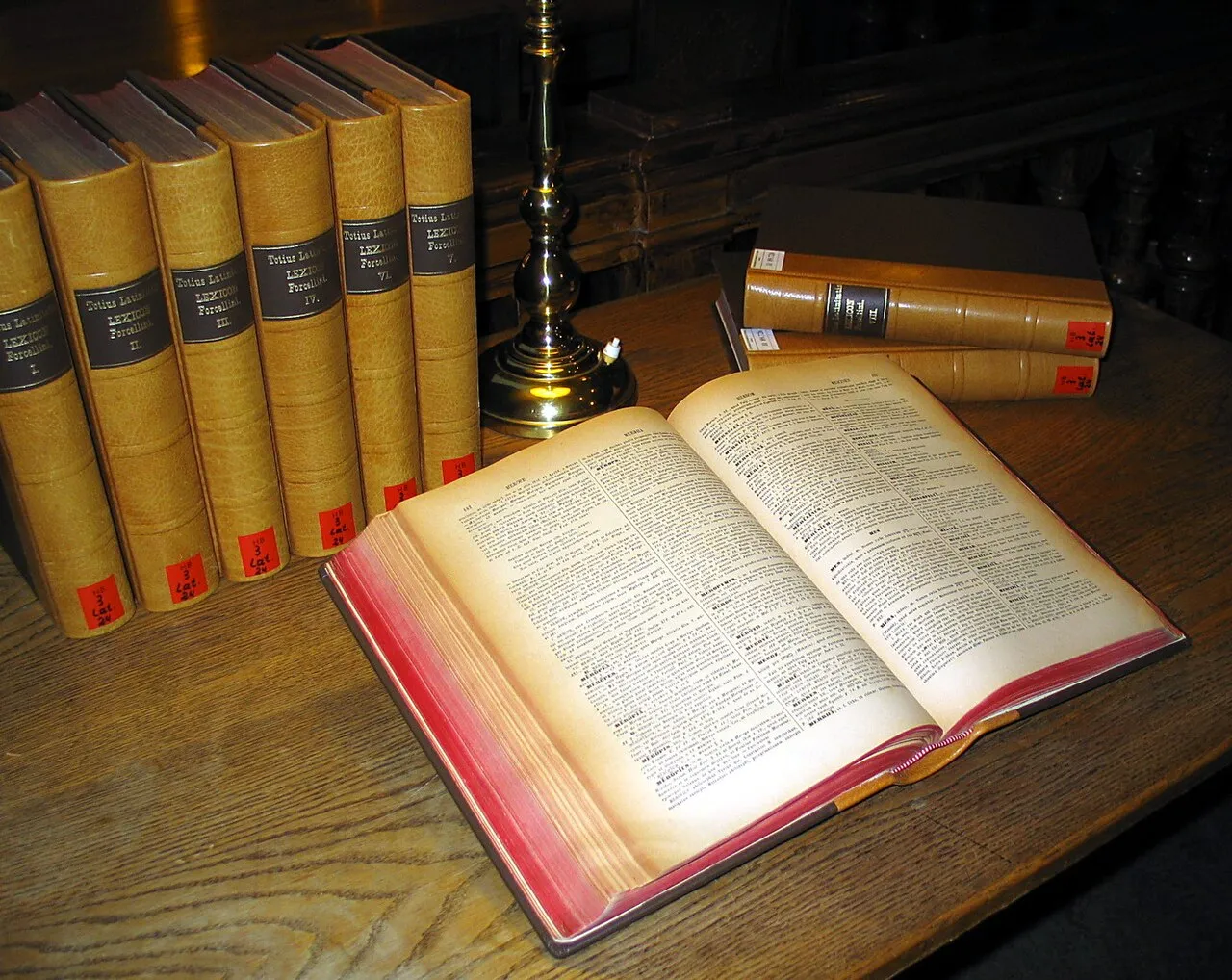
During the nineteenth century, American literature came into its own through a profound exploration of the self and the human condition. While the transcendentalism of Ralph Waldo Emerson and Henry David Thoreau celebrated spiritual communion with nature and the sovereignty of the individual, other voices, such as Nathaniel Hawthorne and Herman Melville, descended into the depths of the human conscience, probing sin, destiny, and the obsessions that haunt the human heart. It was during this period that the "Great American Novel" began to emerge, not as a mere imitation of the Old World, but as a psychological and philosophical epic exploring the outer limits of human experience.
With the dawn of the twentieth century and the traumas of the World Wars, American literature embraced realism and modernism, breaking with classical forms to capture the turmoil of modern life. The "Lost Generation," represented by writers such as Ernest Hemingway and F. Scott Fitzgerald, portrayed with remarkable precision the disillusionment of a society caught between urban exuberance and the invisible scars of war. Their prose became leaner, sharper, and more restrained, reflecting both the urgency of living and the fragility of ideals in a world where the American Dream often seemed to falter beneath the weight of historical reality.
The second half of the twentieth century witnessed an extraordinary flourishing of diverse voices that fundamentally reshaped the literary canon. American literature became a stage for the struggle for civil rights, social criticism, and the affirmation of marginalized identities. Writers such as Toni Morrison, Ralph Ellison, and Philip Roth used fiction as a mirror held up to the nation, compelling America to confront its own contradictions and fractures. Magical realism, postmodernism, and testimonial literature intersected, demonstrating that America is not a monolithic entity but a tapestry of intertwined stories, each contributing to a collective truth that continues to evolve.
Today, American literature remains one of the most eloquent reflections of a nation in perpetual reinvention. It continues to explore the relationship between the individual and the community, between the myth of success and the fragility of reality. In the digital and globalized age, American writers move effortlessly between the intimate and the universal, demonstrating that this "New World" is, above all, a boundless literary landscape that transcends geographical borders and continues to inspire readers around the world.
Thoughts
-
American literature's whole story is Romanticism's inversion. Europe gave you the cult of individual genius and feeling; America took that and built it on conquest and enslaved labor. Emerson says 'trust yourself,' but that self was born from dispossession. The vitality you identify (and this is crucial) comes from surviving on the contradiction rather than resolving it. Fitzgerald isn't inventing disillusionment; he's naming what was always under the Transcendentalist surface.
Related posts
-
Love of my life.
Love of my life, you've hurt me You've broken my heart And now you leave me Love of my life, can't you see? Bring it back, bring it back Don't take it away from me Because you don't know What it…
-
Bite the neck that feeds
You claimed to be mine
-
The Blues of Forgotten Steel
The Blues of Forgotten Steel
-
Does splitting 'hard' and 'soft' skills make people worse at both?
Hard skills are measurable, specific, and teachable abilities or technical knowledge gained through education, training, or experience, which is often directly related to a particular job or industry. Examples include data analysis, programming, graphic design, accounting, dancing, painting… They are usually the core of a profession, particularly the part of it excluding interaction with other people. On the other hand, soft skills are mostly defined as “personal attributes, interpersonal....
-
The missing piece was always me,
This world is like a giant puzzle, and each of us is a unique piece of it. No piece is greater or lesser than another. Without you, the puzzle is incomplete. Without me, it is incomplete too. Our worth does not come from another person's validation. Our completeness does not depend on another person's presence. Love begins when we recognize our own value and embrace ourselves fully.
-
Does your personality matter far less than you think?
I realize, interacting with students, teenagers and younger co-workers peers that many believe that their personality traits are a leading factor in deciding what do to or how to tackle their own career. Although younger people ask these questions more explicitly, older adults also seem to think along the same lines. I personally find it to be far more irrelevant than most people think. Besides my job, where I observe successful people doing the same role with drastically...
-
Future Changes — Chapter 5 part 4
Mother Ceres — After the VIP Box
-
The Military Academy — Chapter 4 part 4
The girl with blue eyes. Pale skin, a body sculpted like cold marble. Firm steps, alone, each step a silent sentence. The silence around her seemed to mold itself to her.
Public
3 conversations
4 thoughts
7 upvotes
5 downvotes
0 series
American literature is a vast mosaic that, far from being static, unfolds as a continual conquest of national identity. Born from the colonial legacy and the dramatic encounter with a wild and sublime landscape, it quickly sought to free itself from the weight of European traditions.