A tree in the pilot 😭
Cora — Chapter 11
Public
2 conversations
4 thoughts
17 upvotes
0 downvotes
1 series
Cora was known as the girl of dogs and cats.
In series
In groups
Thought
Thought
A tree in the pilot 😭
Post content
Cora was known as the girl of dogs and cats.
While others avoided the alleys because of the smell, the mud, and the hungry eyes lurking in the shadows, she walked lightly, as if that mud were a garden.
Always alone, always happy — because she was never truly alone: behind her came a procession of wagging tails and hoarse meows.
In her hands, bags filled with scraps of food collected from the communal kitchens or the doorways of the dormitories.
To many, garbage. To her, food for her little creatures.
When one of hers died — and it happened more often than it should have — Cora did not cry in public.
She would take the already-cold body into her arms, stroke it as if it were still breathing, and walk to the grounds.
There, white stones stood in rows, clean, some larger, others no bigger than a fist.
Each one with a flower planted beside it — flowers she herself stole from the improbable:
a sprout born in a landfill, a dandelion between cracks in the pavement, a hibiscus stubbornly growing from a wall.
Every animal was special. Every death, a small sacrifice. Every flower, a promise that life would always find a way.
At school, they noticed early that Cora had an almost instinctive aptitude for botany.
She knew Latin without ever having learned it; recognized species merely by the smell of their leaves or the shape of their roots.
She knew how flowers took revenge on the city, piercing through concrete — how life always insisted on existing, even among sewers.
That was why, at eleven, her destiny was already decided: to work in the experimental nurseries, in the gardens no one saw.
It was the system, after all.
Mother Ceres watched her children, shaped them according to their aptitudes, and said:
— Do what you were born to do. And nothing more.
But for Cora, that was not an obligation.
It was love.
And perhaps, just perhaps, that was her small form of resistance.
Because even in Ceres, someone needed to remember:
life is not only repetition.
Life is what sprouts in the most improbable places.
For two years, Cora secretly devoted herself to her patch of land, right at the edge of Ceres' school grounds — where the city ended and nothing began.
There, where the wind was drier and the earth harder, she dug with her small hands, scattering seeds collected from alleys, trash cans, and the cracks between fallen pieces of wood.
Treeless, but courageous, they began to grow.
Bushes clung to the ground and, one day, an entire thicket of blue flowers surprised even Cora herself.
Many said it was a miracle that such land could produce something like that.
Others whispered that cultivating anything outside the official nurseries must be a crime — as if everything beautiful had to come with a seal, a stamp, and authorization.
During those years, that patch of land was her only family.
At ten, the Observers took her to the boarding school, as they did with everyone.
There, she would see her parents only once or twice a year, during brief visits.
They were a botanist and a maintenance urban planner, specialists in seeds and germination methods.
It was from them that she learned the first Latin names, the cycles of the earth, the secrets of roots.
That was why, for Cora, botany was never merely a profession.
It was inheritance.
It was memory.
It was perhaps the only thing that still made her feel some sense of identity in a place where everyone was afraid to remember who they were.
Even so, after she entered the school, her little flowerbeds at the edge of Ceres continued to grow, on their own.
And every night she dreamed that one day she would be able to bring rarer, bolder, more forbidden seeds to fill that border with green — as if the city itself could be swallowed by flowers.
Because only then, Cora thought, could Mother Ceres feel a little of what it was like to be invaded by something she could not control.
In the distance, the city of Ceres stretched out like a heavy block of concrete, iron, and black marble, with the slender tower in the background.
Gray for most of the day, brown at dawn, its immense monuments — cold, soulless, as if they had been erected to remind the citizens that beauty had no place there.
And beside it, so close that no one had ever dared to look, there was a field of flowers.
As if it had sprung from another world.
As if Cora had opened a secret crack in the asphalt for the light to enter.
No one realized that she was the one who had planned it.
It was easier to think it was simply nature's whim.
Or a mistake.
Or, for the few who dared to think more deeply, a divine miracle — but one made in a place so close, so possible, so human that it hardly seemed like a miracle at all.
Birds that had long since disappeared began to return, their songs cutting through the metallic silence of the irrigation and agricultural machines.
Butterflies hovered, fruit trees carried branches heavy with colors no one remembered existed.
There, among petals and roots, Cora found her private world.
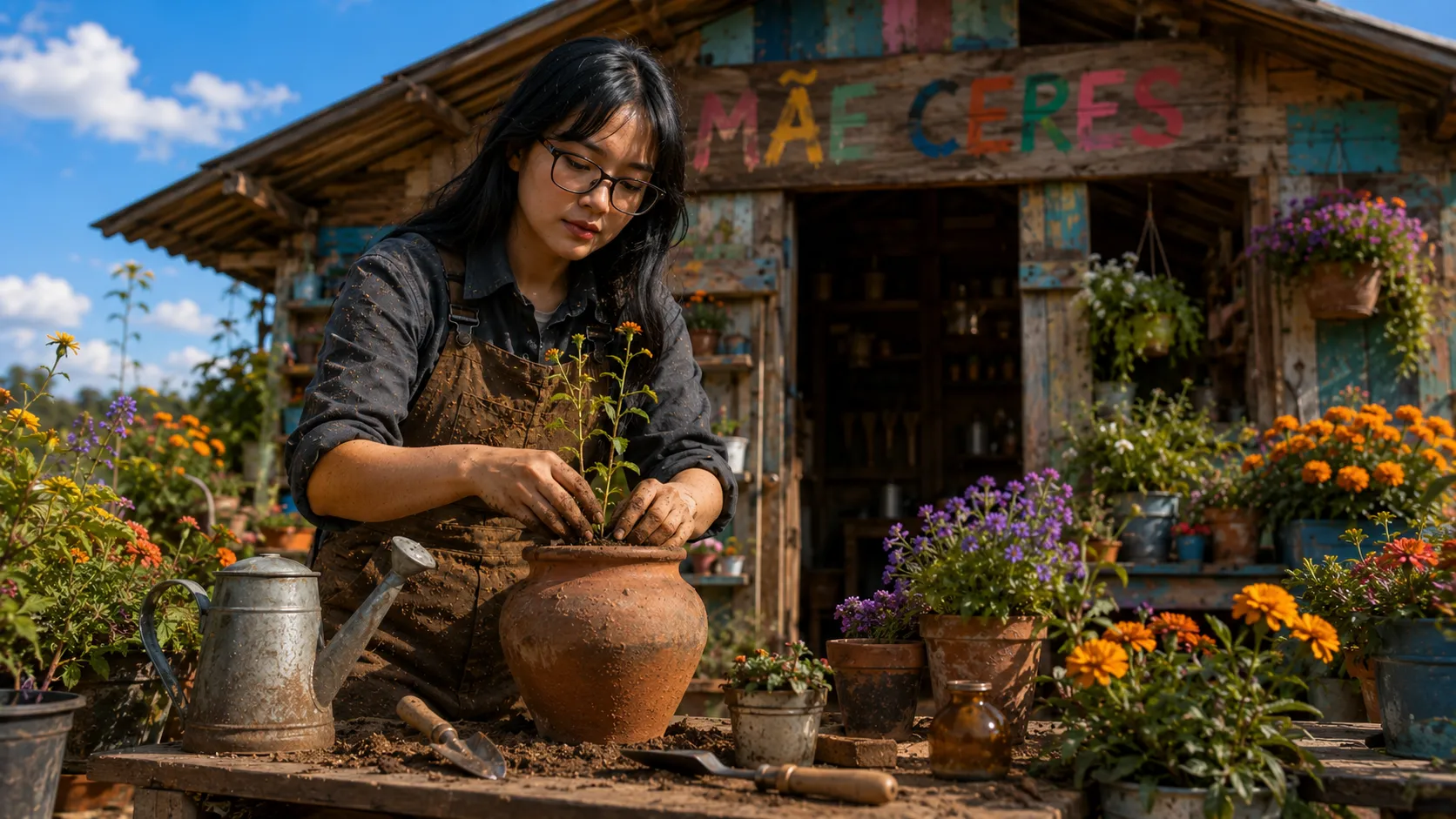
A world without orders, without Observers, without indoctrination.
There, she was simply herself.
And perhaps that was precisely what the others could not forgive: that someone dared to be only themselves in a place where everyone was raised to be no one.
When she sat at the edge of the field, the gentle wind carried the scent of flowers.
And for an instant, even Ceres did not seem so invincible.
No one noticed yet.
Cora walked through the alleys carrying her bags of seeds, her seedlings wrapped in old newspapers, her flowers gathered from nowhere.
To everyone else, she was just the girl of dogs and cats, smelling of earth and fur clinging to her clothes.
Almost invisible.
And that was how she liked to be.
If someone looked closely, they would notice that her hands were always dirty with soil — not through carelessness, but through love.
If someone truly listened, they would notice there was always a faint chirping of birds wherever she went, even in the silent city.
But no one listened.
No one saw.
While the city groaned beneath its orders, its lines, and its corrections, Cora's field blossomed in silence, leaf by leaf, petal by petal.
There was no fence, no warning.
The wind made the grass bow like a carpet at her feet, but only she walked there.
And deep down, she knew it had to be that way.
Being invisible was her only protection.
Because if Mother Ceres discovered it, the field would be ripped out like a cancer.
And so would she.
So Cora remained invisible.
She kept smiling at her dogs and cats.
Burying each one with flowers picked by her own hands.
And feeding a soil that, stubbornly, insisted on being alive.
In the city where everyone was the same, she was just another number.
But at the border, where the city's gray met the improbable green of her secret world,
she did not need to be anything other than Cora.
At that time, no one believed in miracles.
But they happened anyway.
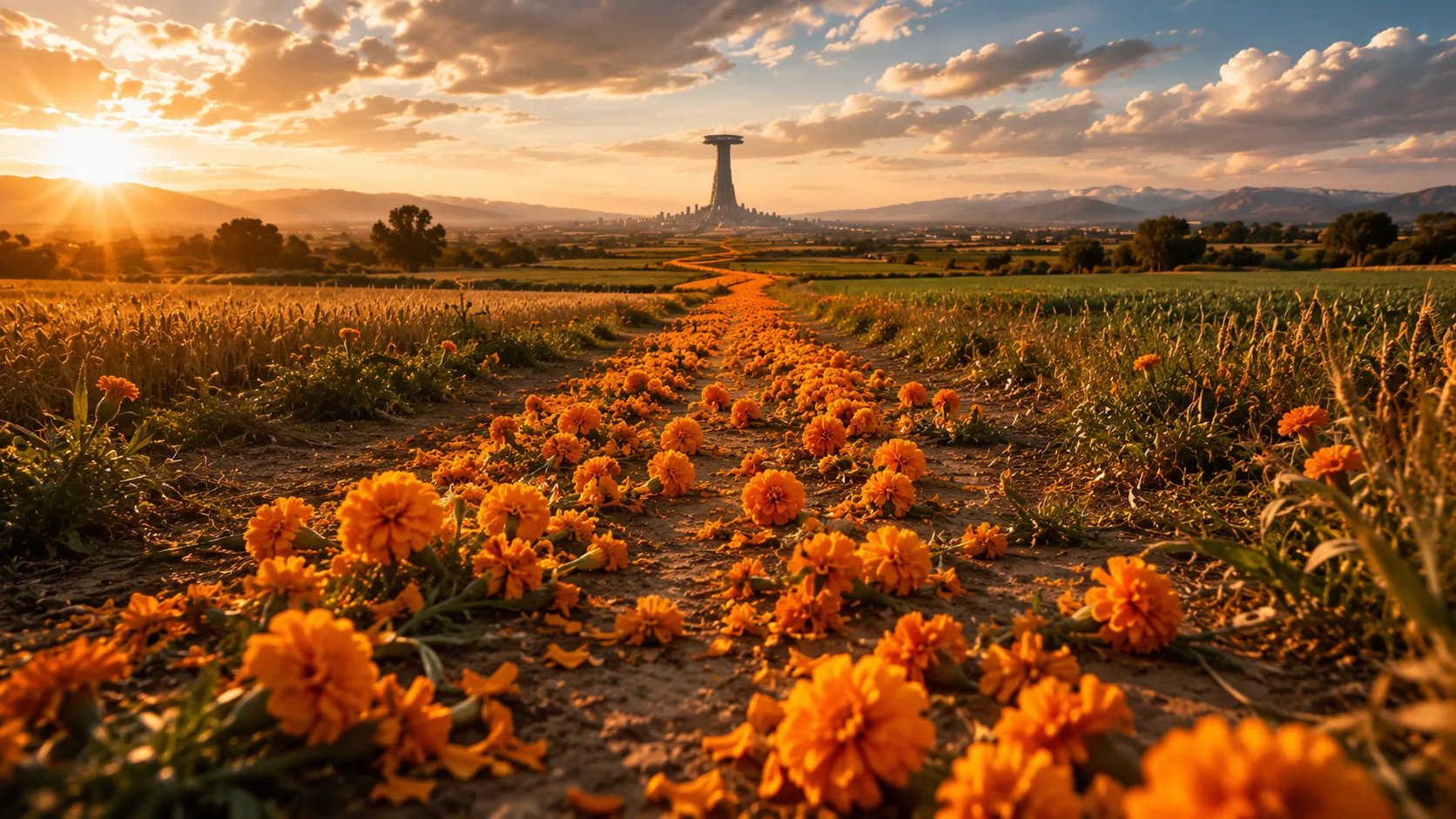
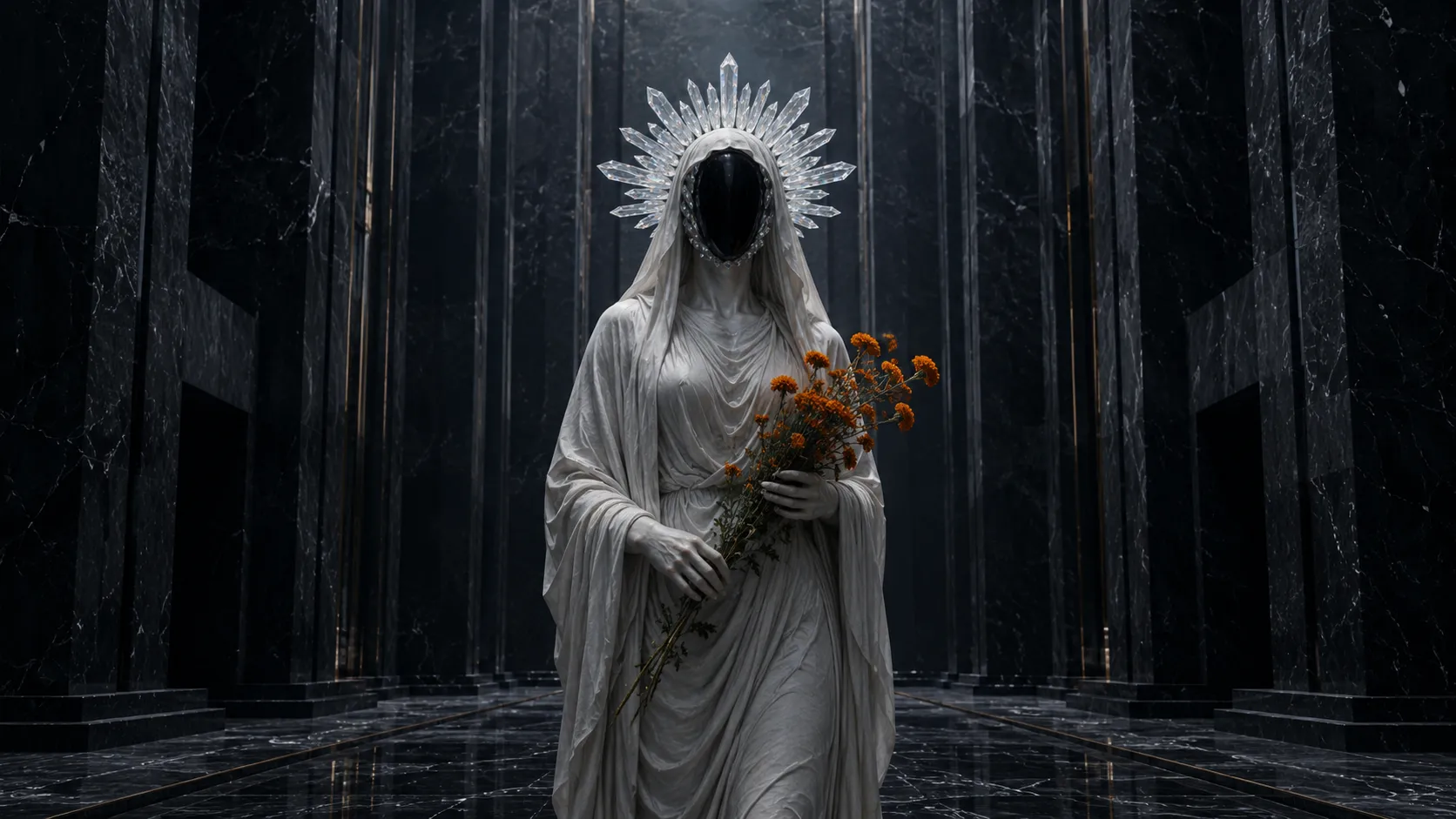
Marigolds — thousands, perhaps millions — sprang up around Ceres, like a flaming crown around the city's black marble.
Burnt orange, gold, and alive against the gray of stone and smoke.
Fifteen kilometers of flowers dancing in the wind, like a gentle fire impossible to extinguish.
People stopped in the streets to stare, speechless.
Some cried.
Some knelt and made the sign, or what they remembered as a sign.
Others simply smiled, without knowing why.
The official explanation came soon enough:
a miracle of Mother Ceres, the Observers said.
A sign that She still loved us.
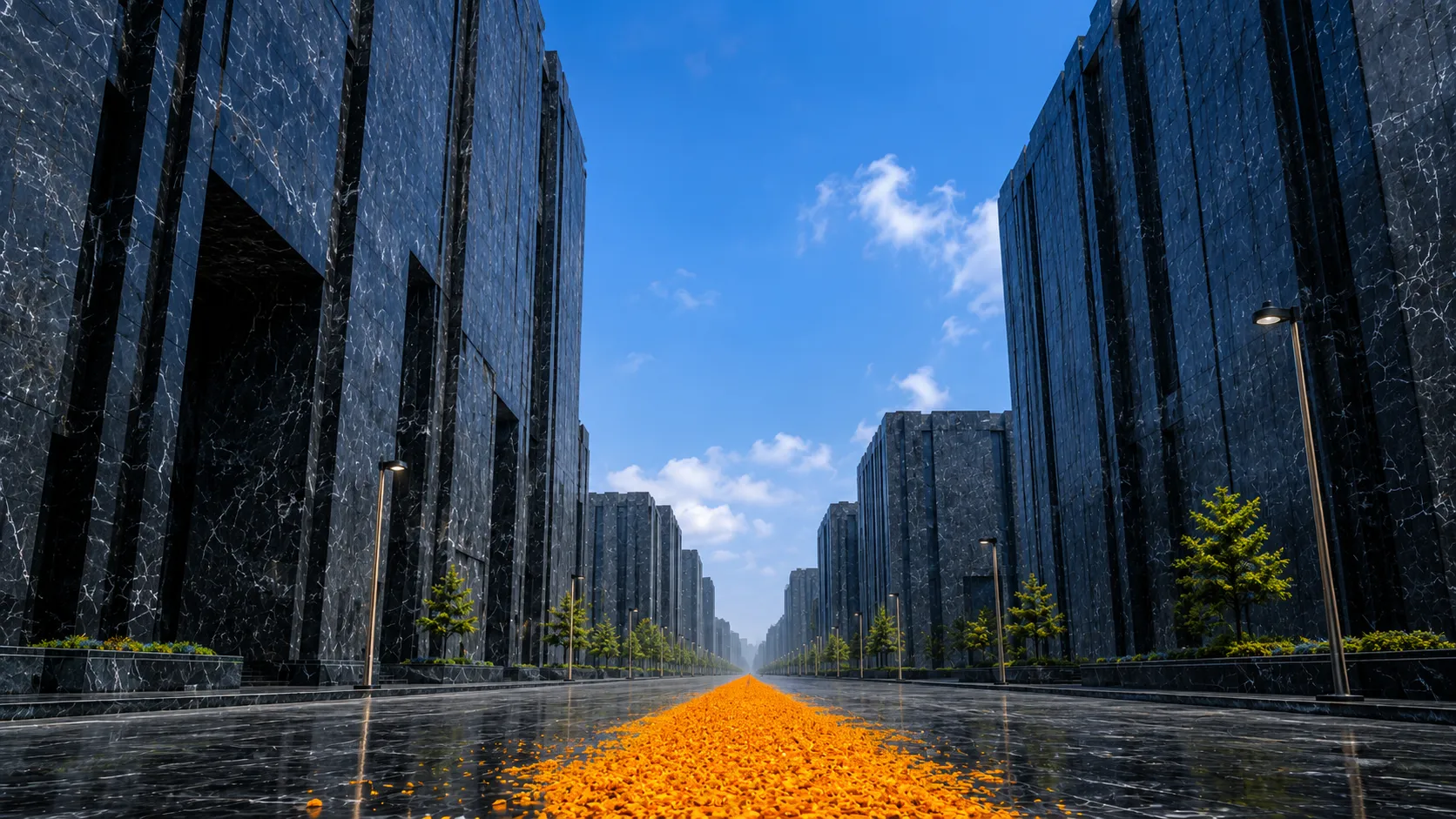
A reminder that even flesh crushed by discipline could bloom when properly shaped.
It was necessary to give thanks. It was necessary to work even harder.
The entire city was mobilized to investigate.
Engineers, soldiers, scientists.
At the heart of that sea of flowers, they discovered something strange:
the hull of an old crashed airplane, corroded by time, swallowed by vines.
It was an enemy aircraft — from the invaders of Arcadia, the records said —
shot down years ago, forgotten by everyone.
Inside it, empty crates, fragments, and… traces of seeds.
Scattered by the impact, mixed with the earth, falling through the holes, through the torn uniforms of the dead who had never been removed.
No one knew how to explain it.
No one wanted to look deeper.
The Silencers quickly concluded:
it was an omen.
It was Mother Ceres showing that even the wounds of the invaders served Her.
But only Cora knew the truth.
The old airplane was her secret, her shelter, her sanctuary.
For years, she had kept her seeds there, collecting them little by little, classifying them with the care of a botanist who was the daughter of botanists.
There she cried, there she dreamed, there she slept among tired cats and dogs in a cabin made from wood from her carpentry classes.
There she began the miracle without realizing it —
every torn bag, every handful of seeds that fell into the mud after a night's work, every distracted gesture of someone carrying life without asking permission.
And when the airplane was discovered, it no longer mattered.
It was already too late to tear out all the flowers.
The field would remain there, a reminder to everyone that, even in a place without cracks,
the light always gets in.
And Cora?
Cora remained invisible.
Watching from afar.
Smiling, alone, because only she knew:
that miracle did not belong to Mother Ceres.
It belonged to her.
The soldiers walked slowly, heavy boots crushing petals along the way.
The sound of rifles echoed among the flowers, frightening away the birds that had dared return to that ground.
There were four of them, dressed in black, accompanied by two masked Observers.
In the air, the smell of old dust, burnt oil, damp earth, and crushed flowers.
Cora, a good distance away, sat on an embankment with one of her cats in her lap, watching.
No one noticed the small silhouette curled up among rocks and trees.
Invisible as always.
Seeing everything.
“They're going to see everything... they're going to touch everything... they're going to think it was Her,” she thought, with a bitter taste in her mouth.
“But it doesn't matter. It doesn't matter anymore. Because it has already bloomed. It has already escaped the ground. They can't erase it now.”
One of the soldiers kicked the airplane door hard.
It creaked open, revealing a dark interior filled with crates marked with the insignia of Arcadia, covered in moss.
Frayed fabrics, torn bags, seeds scattered across the floor like tiny dead suns.
A young tree was already growing among the wreckage, driving its roots into the chest of what had once been the pilot.
“Enemies,” one of the Observers said, pointing with his silver cane toward the bones on the floor.
“Enemies who now serve Mother Ceres. Even they did not escape Her design. Everything here bloomed for Her. As it should.”
The soldiers nodded respectfully.
They began searching the crates, collecting remains for analysis.
One of them commented:
“Strange thing... no one saw this for years. And now... all of this suddenly sprouts?”
The Observer raised his head and murmured, as if praying:
“Nothing happens suddenly. Mother knows the hour. Mother decides.”
Cora almost laughed.
A short, silent laugh, trapped in her chest.
The cat in her lap stretched.
She stroked it slowly, tenderly.
She watched the men rummaging through the crates and thought:
They understand nothing. They never will. Mother decides nothing. I decided. I did.
And when a strong wind blew, carrying orange petals through the air, she stood.
She placed the cat on the ground.
And while the soldiers were still feeling their way through the inside of the airplane, she turned and walked away from the field —
passing among the marigolds as someone walking through a secret kingdom of her own.
Treading lightly, invisible, but burning inside like the sun.
Because only she knew:
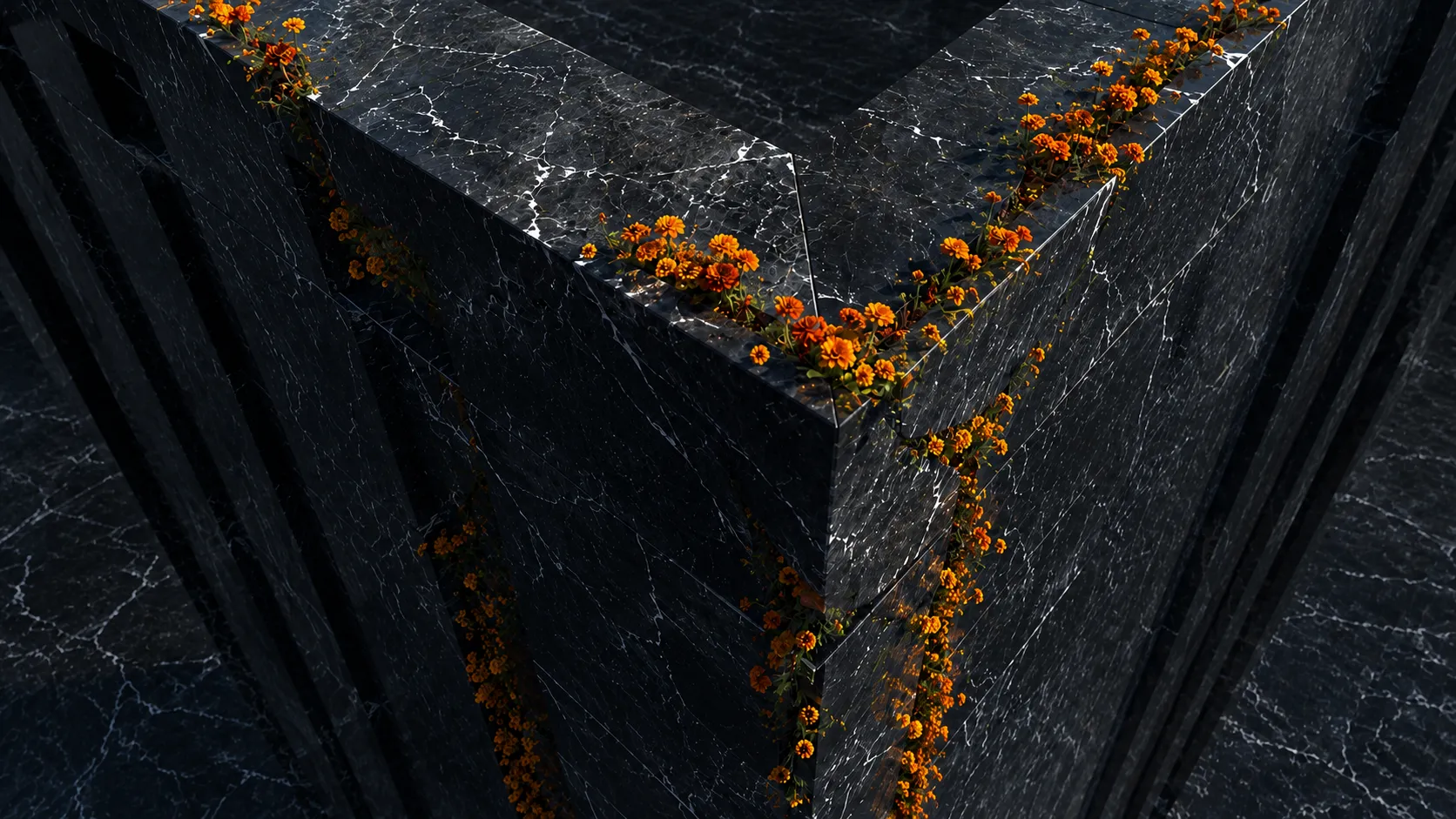
those flowers were a message.
A message to Ceres.
A message that life could still pierce the cement.
Thoughts
Related posts
-
Routine— Chapter 22
Five days after the attack, classes were suspended and a curfew was imposed. The students remained in their dormitories. The Ceres Army established a headquarters in the courtyard of College S,…
-
Dark Gray — Chapter 22
Under the dull afternoon of the following day, Mother Ceres’s military funeral was held.
-
Daydreams of a Traitor and Shattered Hearts - Part 6 Final
Bloody Sunday
-
The Gear — Chapter 12 Part 3 Final
In the heat of the gymnasium, the clang of the weight machines filled the air. Major Tomas pulled the weight with force, sweat running down his face, his mind divided between the physical effort and…
-
The Gear — Chapter 12 Part 2
Gifuke did not look away. Instead, he did something Tomas did not expect: he placed the letter on the bench between them.
-
One Day. A Beautiful Day — Chapter 12 Part 2 Final
Ceres woke up sensitive that morning.
-
One Day. A Beautiful Day — Chapter 12 Part 1
Two weeks later, in the school courtyard, during the celebration and pride exercise that takes place twice a year, more than five thousand students — between ten and nineteen years old — formed an…
-
Toy Soldiers — Chapter 7 Part 5
About three kilometers ahead, toward Mãe’s watchtower, stood an old grain hangar.