🌅 CHHATH PUJA — A FESTIVAL OF FAITH, GRATITUDE & NATURE 🌅
Have you ever seen a festival where people stand in water, offer prayers to the setting Sun, and then return before sunrise to welcome the first rays of a new day?
That is Chhath Puja — one of the most beautiful and deeply devoted festivals celebrated mainly in Bihar, Jharkhand, eastern Uttar Pradesh, and by communities across India and around the world. 🌍✨
But how did it begin?
🌞 The Story Behind Chhath Puja
Chhath Puja has ancient roots in Indian traditions of worshipping the Sun, the source of light, energy, and life. Its exact historical beginning is difficult to trace, and several stories are connected with the festival.
One popular traditional story comes from the Mahabharata. It is believed that Draupadi worshipped the Sun for strength and blessings. Another tradition connects the festival with Karna, who was known for his devotion to Surya, the Sun God.
There is also a belief that Chhathi Maiya, worshipped during Chhath, is associated with Shashthi Devi, a divine mother connected with the protection and well-being of children.
Whether told through these legends or understood through its ancient nature-worship traditions, Chhath carries the same beautiful message: gratitude for life, nature, family, and the Sun that sustains us. 🌞🌿
🪔 How Is Chhath Puja Celebrated?
Chhath is traditionally observed over four days, with each day having its own significance.
🌿 Day 1 — Nahay Khay
Devotees begin by cleansing themselves and their surroundings. A simple, pure meal is prepared, marking the beginning of the sacred period.
🌾 Day 2 — Kharna
Devotees observe a day-long fast and later prepare offerings such as kheer, roti, and fruits. After the evening prayers, the fast continues according to the traditional observance.
🌅 Day 3 — Sandhya Arghya
This is one of the most beautiful moments of Chhath.
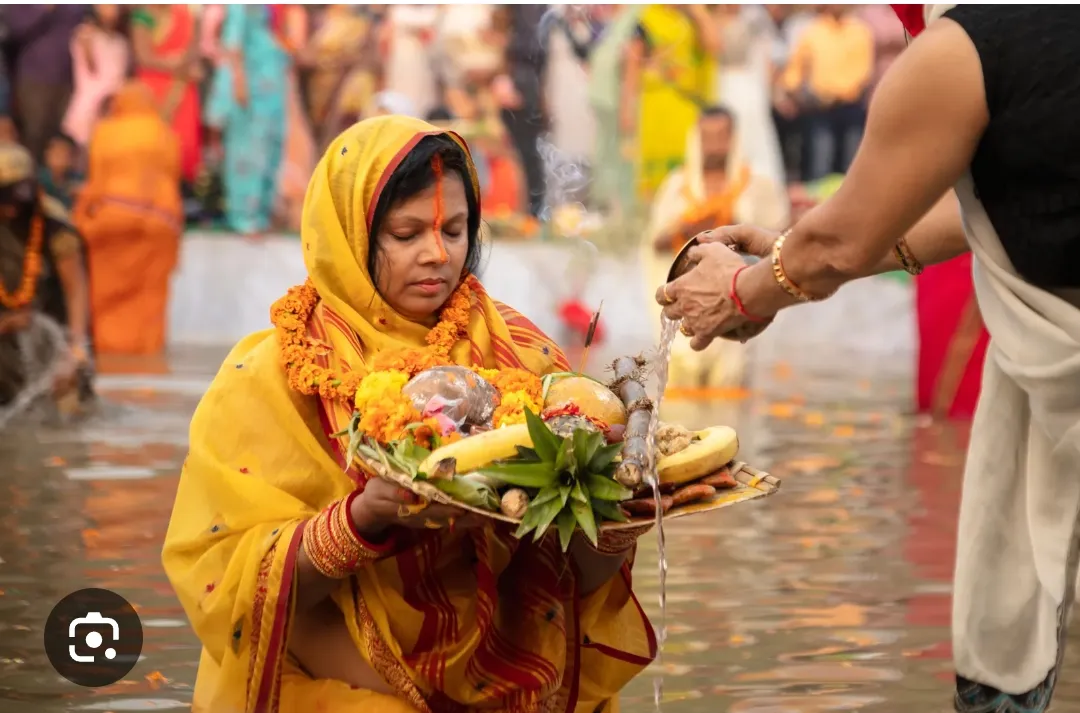
Families carry bamboo baskets filled with fruits and traditional offerings to a river, pond, or other clean water body. As the Sun begins to set, devotees stand in the water and offer Arghya to the setting Sun.
The sky turns golden, lamps glow around the riverbank, traditional songs fill the air, and families pray together. ✨
🌞 Day 4 — Usha Arghya
Before sunrise, devotees return to the water.
Everyone waits quietly for the first golden rays of the morning.
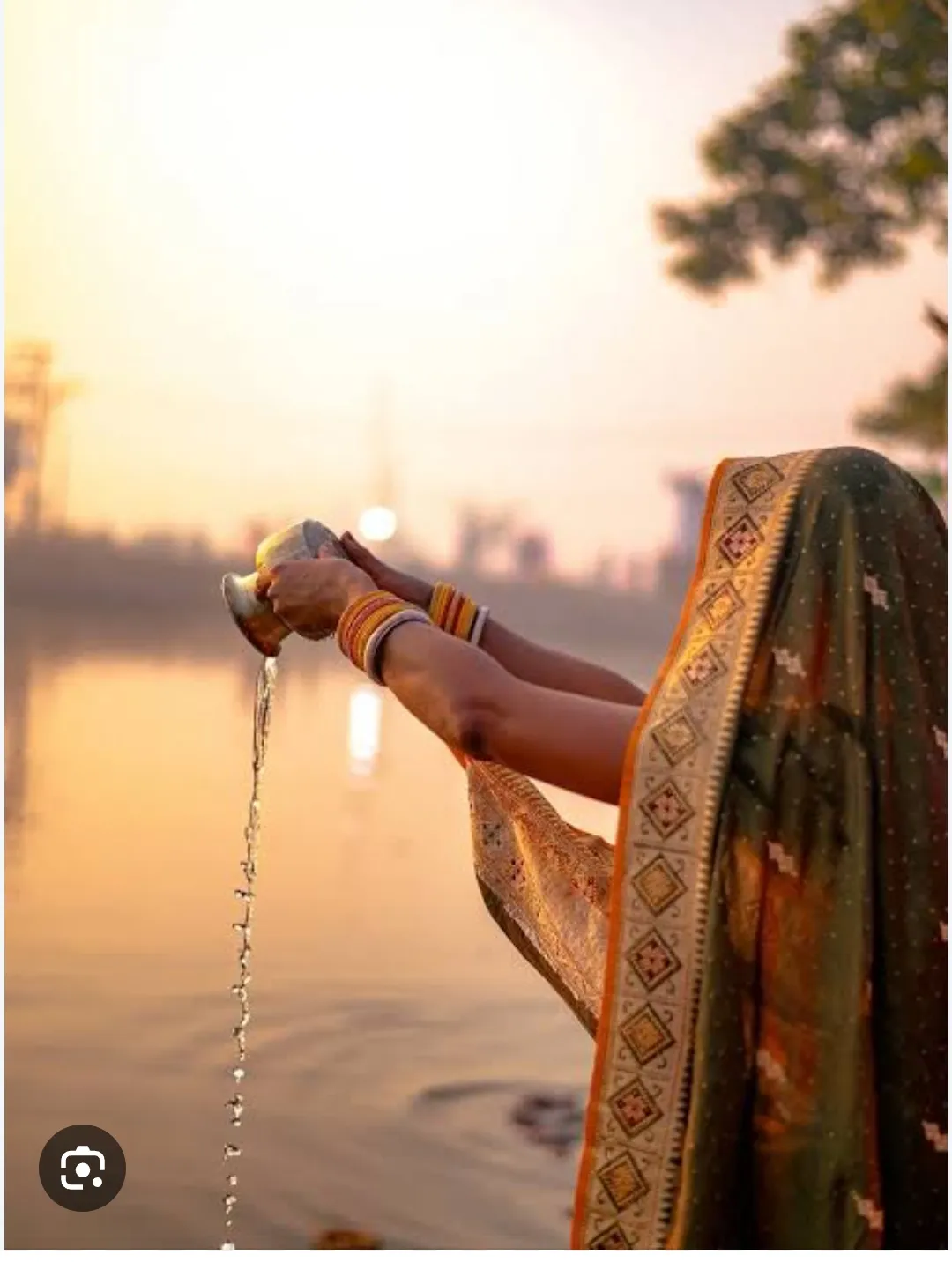
When the Sun rises, Arghya is offered once again. The prayers are completed, and the fast is traditionally broken.
It is a beautiful symbol of hope, renewal, and gratitude.
🌍 Why Is Chhath Puja Celebrated?
Chhath is not simply about asking for blessings.
It is a way of saying thank you.
🙏 Thank you to the Sun for giving us light and energy.
🌱 Thank you to nature for sustaining life.
💛 Thank you for family, health, and happiness.
🌊 And a reminder to respect and protect our rivers and environment.
One of the most beautiful things about Chhath is its simplicity. Devotees traditionally focus on cleanliness, discipline, devotion, and natural offerings rather than elaborate decorations.
And perhaps that is what makes it so powerful.
🌅 More Than a Festival
Imagine this…
The night is slowly disappearing.
The river is quiet.
Hundreds of people wait together.
Then, across the horizon, a tiny ray of sunlight appears.
Everyone raises their offerings toward the rising Sun.
For a moment, there is no difference between people.
Just faith, gratitude, nature, and hope. ❤️
That is the beauty of Chhath Puja.
It reminds us that sometimes the most meaningful celebration is simply to stop, look at the world around us, and say:
“Thank you for this life.” 🌞🙏
🌍 To everyone reading this from India and from different parts of the world — may you discover the beauty behind Chhath Puja, not only as a festival, but as a message of gratitude, purity, nature, and togetherness.
✨ Happy Chhath Puja! ✨
🌅🙏🌿💛
What does gratitude mean to you? Tell me in the comments. ❤️