Have you taken your motorcycle on terrain like that before, or was this full 'what are we doing' mode from the start?
Untold Miles - Chapter 12 — The Waterfall That Google Maps Didn’t Want Us to Find
Thought
Thought
Have you taken your motorcycle on terrain like that before, or was this full 'what are we doing' mode from the start?
Post content
Chapter 12 — The Waterfall That Google Maps Didn’t Want Us to Find
During our conversations with Ikka, we learned about the waterfalls around Luwuk and how adventurous and beautiful they were. And honestly, who better to give us recommendations than someone from the tourism department herself?
We did some quick research on the waterfalls and started figuring out how we could line them up. The first one on our list was Mokokawa, mainly because Google Maps showed it as being very close to our homestay.
Ikka had already given us a warning: the road is not great, but it should be doable on a bike.
That sounded adventurous enough.
We packed some mangosteen, carried some water and got ready. By the way, breakfast that morning was fantastic — proper local cuisine, the kind of breakfast that makes you wonder why you even bother with Indian back home.
According to the map, Mokokawa was only about 5 kilometres away.
Perfect.
We were all set.
Before we left, Ikka gave us one more important piece of advice:
“Don't follow Google Maps. You will end up at Piala Waterfall.”
We nodded confidently.
Got it. No Google Maps.
We followed the route she gave us and, within about ten minutes, reached a point where the road suddenly became a tiny concrete path going almost vertically uphill.
We looked at each other.
The bike looked at us.
The hill looked back.
We immediately decided that climbing it was going to be challenging enough, but coming back down could become a much bigger problem.
So, naturally, we opened Google Maps.
And guess what?
Google Maps confidently pointed us in the opposite direction.
We felt that maybe we had misunderstood Ikka and decided to trust technology.
That was our first mistake.
We followed the map and started seeing small streams along the way. Excitement started building.
Maybe this was it!
That excitement lasted only until we stopped and asked a few villagers.
“Mokokawa?”
They pointed in another direction and told us it was much farther away — around 15 kilometres.
Oh.
So we had officially entered the going-in-circles phase of the day.
As Ikka had predicted, we eventually reached Piala Waterfall.
Since we were already there, we decided not to waste the opportunity. Along the way, we noticed another road leading towards a different waterfall.
We looked at each other.
“Let's do that one first. We can come back to Piala.”
Mokokawa was officially out of our plan — at least temporarily.
Laumarang — The First Surprise
The road towards the next waterfall was terrible.
And when I say terrible, I mean there was hardly a road.
There were patches of broken gravel, uneven concrete and enough bumps to make us question our life choices.
After about 15 minutes of riding through this remote stretch, we reached a hilltop. There were a few bikes parked there and a man sitting near a small waiting shed.
He politely pointed towards a trail.
“Waterfall this way.”
We paid the entrance fee and started walking.
The name of the waterfall was Laumarang.
The trail went down through the forest. We could already hear the sound of running water. It had rained recently, so parts of the trail were slightly muddy, but nothing too difficult.
After around 15 minutes, we got our first glimpse.
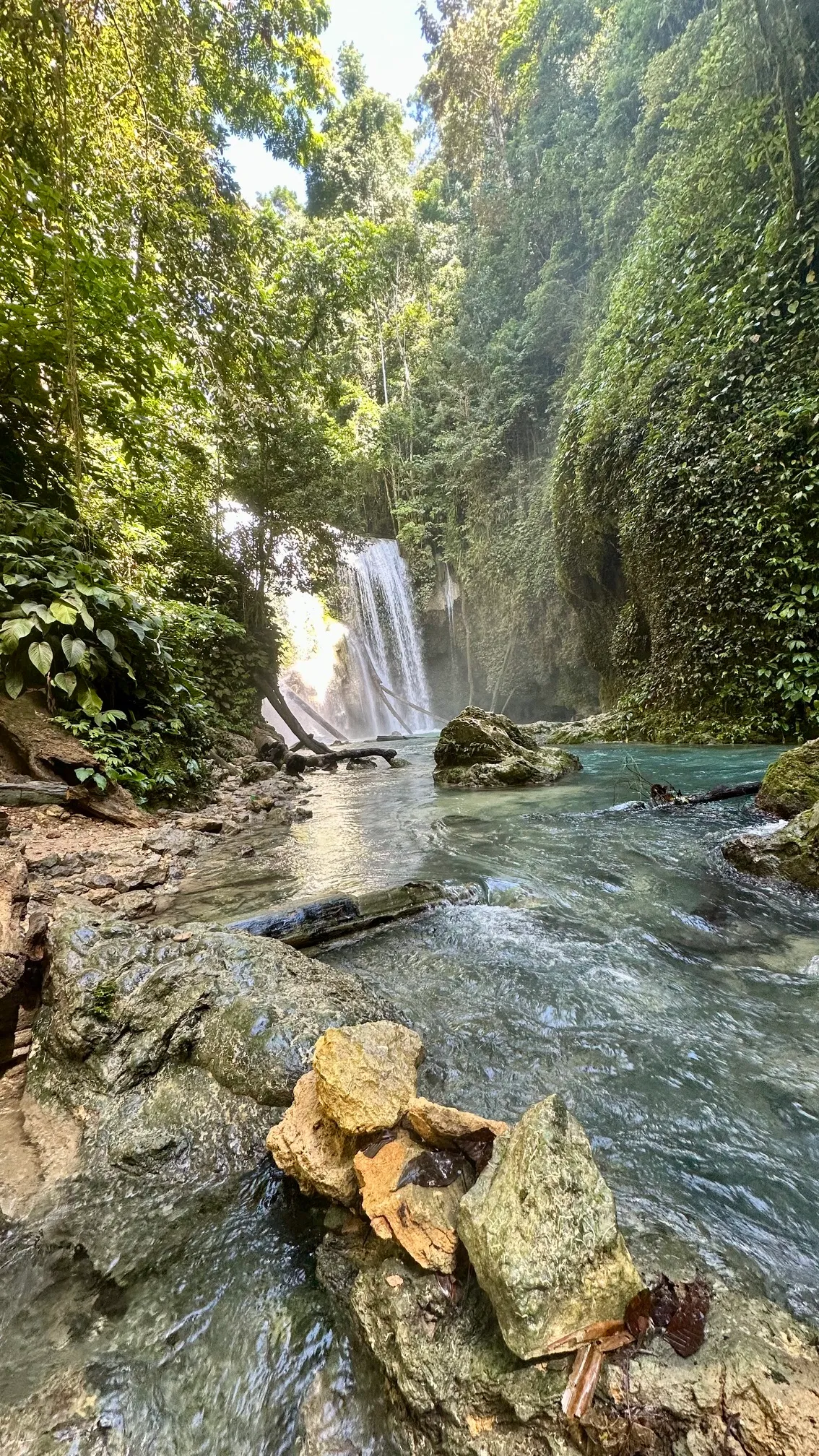
Wow.
We had not even planned to come here, yet suddenly we felt this was one of the best decisions we had made that day.
There were fallen trees around the side, and one of them looked like a perfect spot to jump into the pool.
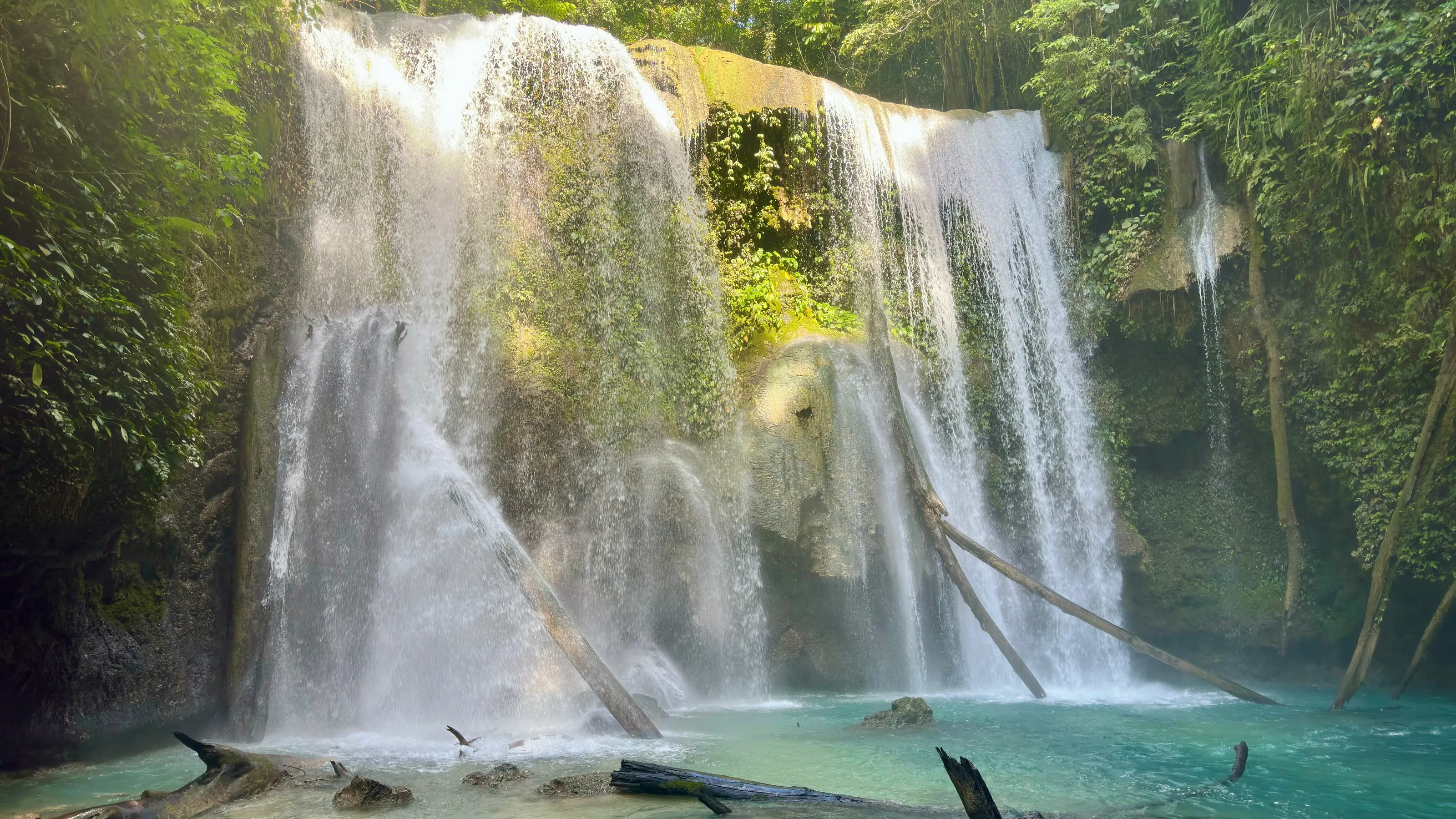
We walked into the downstream area and crossed towards the other side. The water was freezing cold, with a moderate current.
There were only around three to five other people there.
It felt peaceful.
The turquoise water was flowing continuously, and the force of the waterfall was enough to drench you even if you were standing nearby.
We moved closer.
The closer we got, the more we could feel the waterfall and the forest around us. There was tree debris that had probably come down from higher up with the water.
Eventually, we got completely into the water.
Cold?
Absolutely.
Worth it?
Definitely.
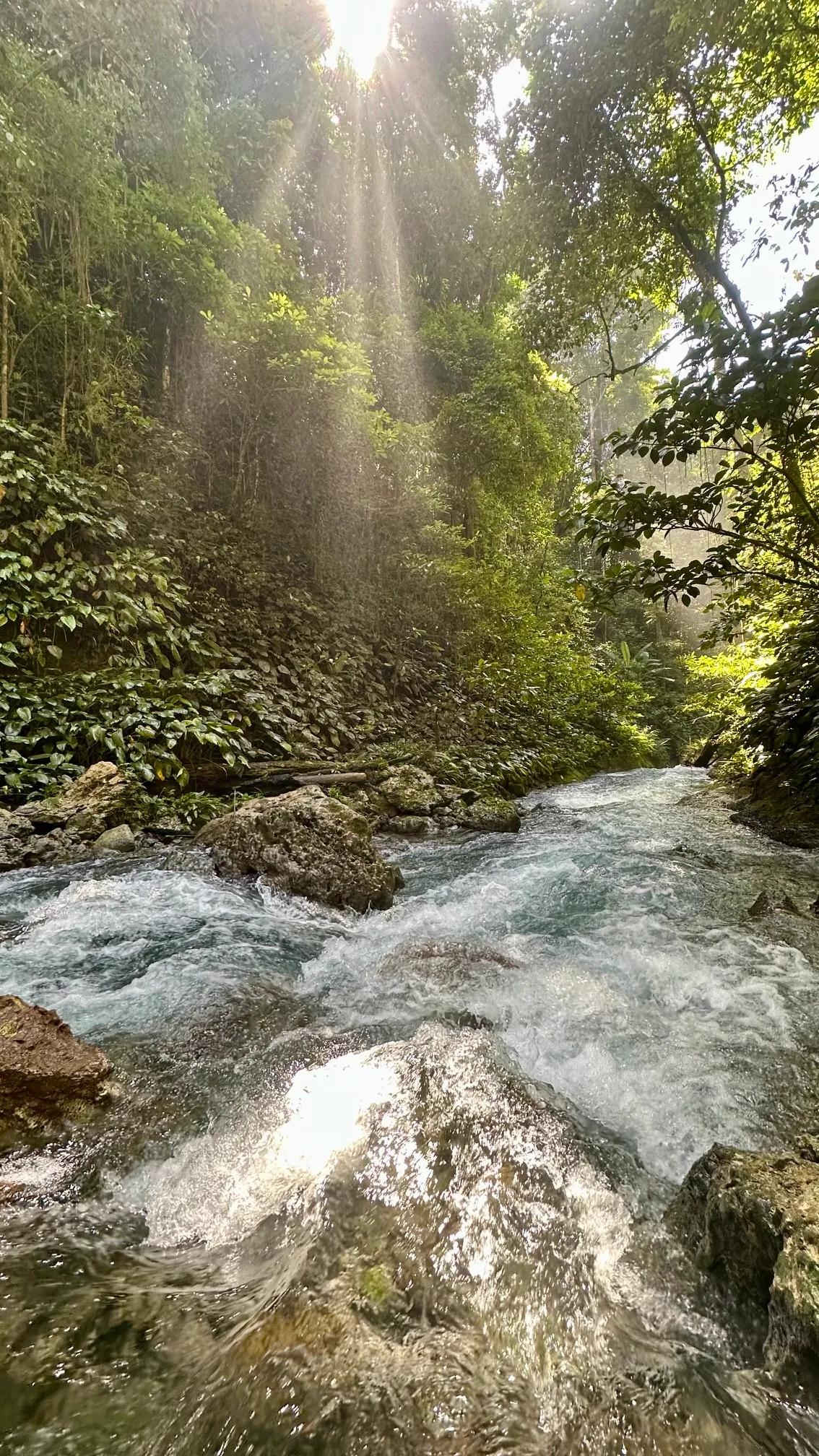
We spent some time enjoying the falls before deciding to head back.
Once we reached the top, we checked the map again.
Mokokawa was still showing as being very close.
We asked around.
What we understood was that Mokokawa was actually on the other side of the hill and there was no proper road from where we were.
At this point, we decided to stop arguing with geography.
Next stop — Piala.
Piala — The Waterfall That Looked AI-Generated
There was an entrance fee for Piala, and from the outside there were some photographs displayed of the waterfall.
We looked at them without much expectation.
Then we started walking.
The trail was easy, with no difficult trekking involved.
And then we saw it.
The turquoise water appeared through the trees.
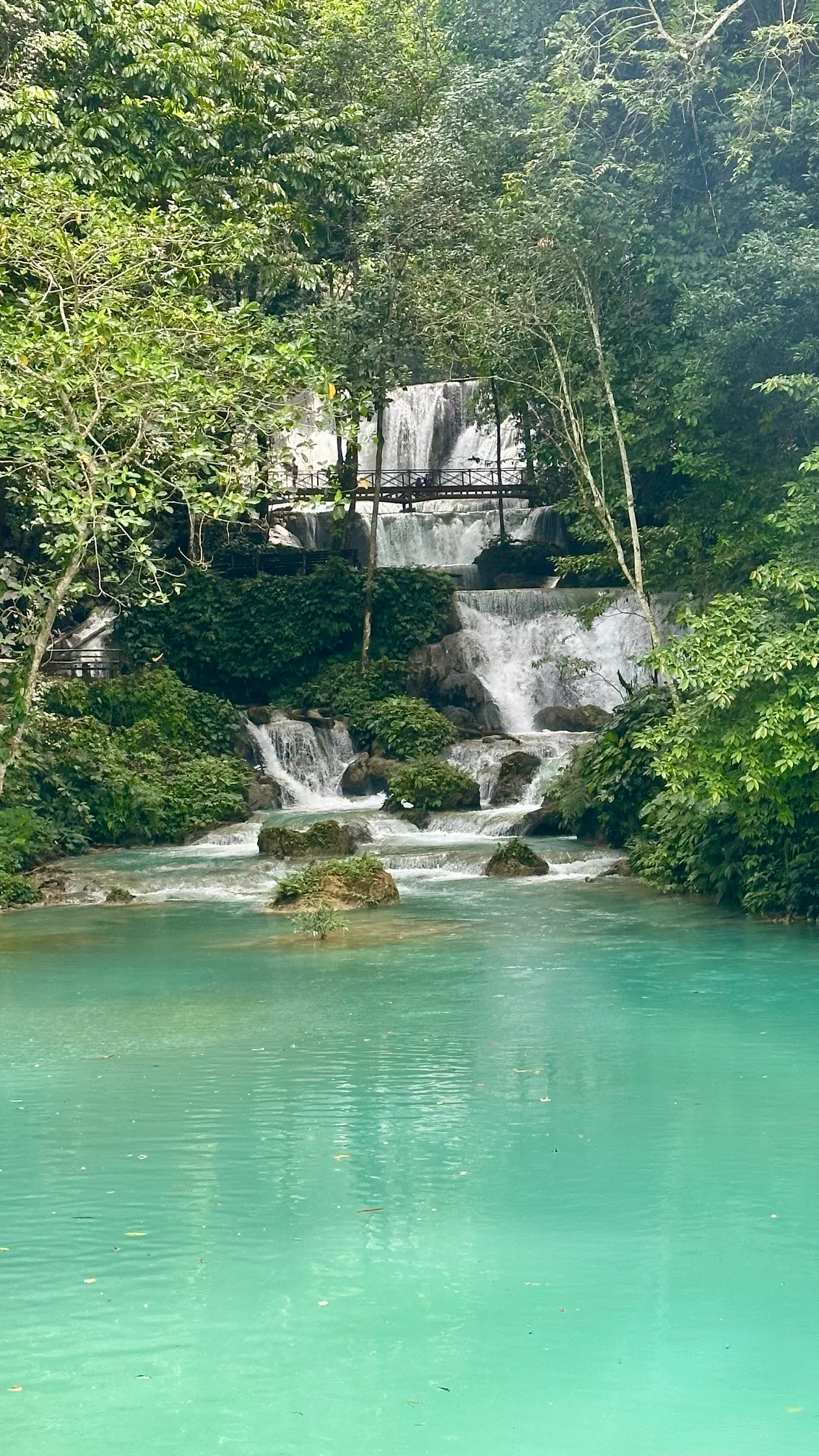
We stopped.
This was not what we expected.
The colour of the water was unbelievably bright, especially where the sunlight hit it. Every angle looked like a photograph.
We started taking pictures.
Then more pictures.
Then more.
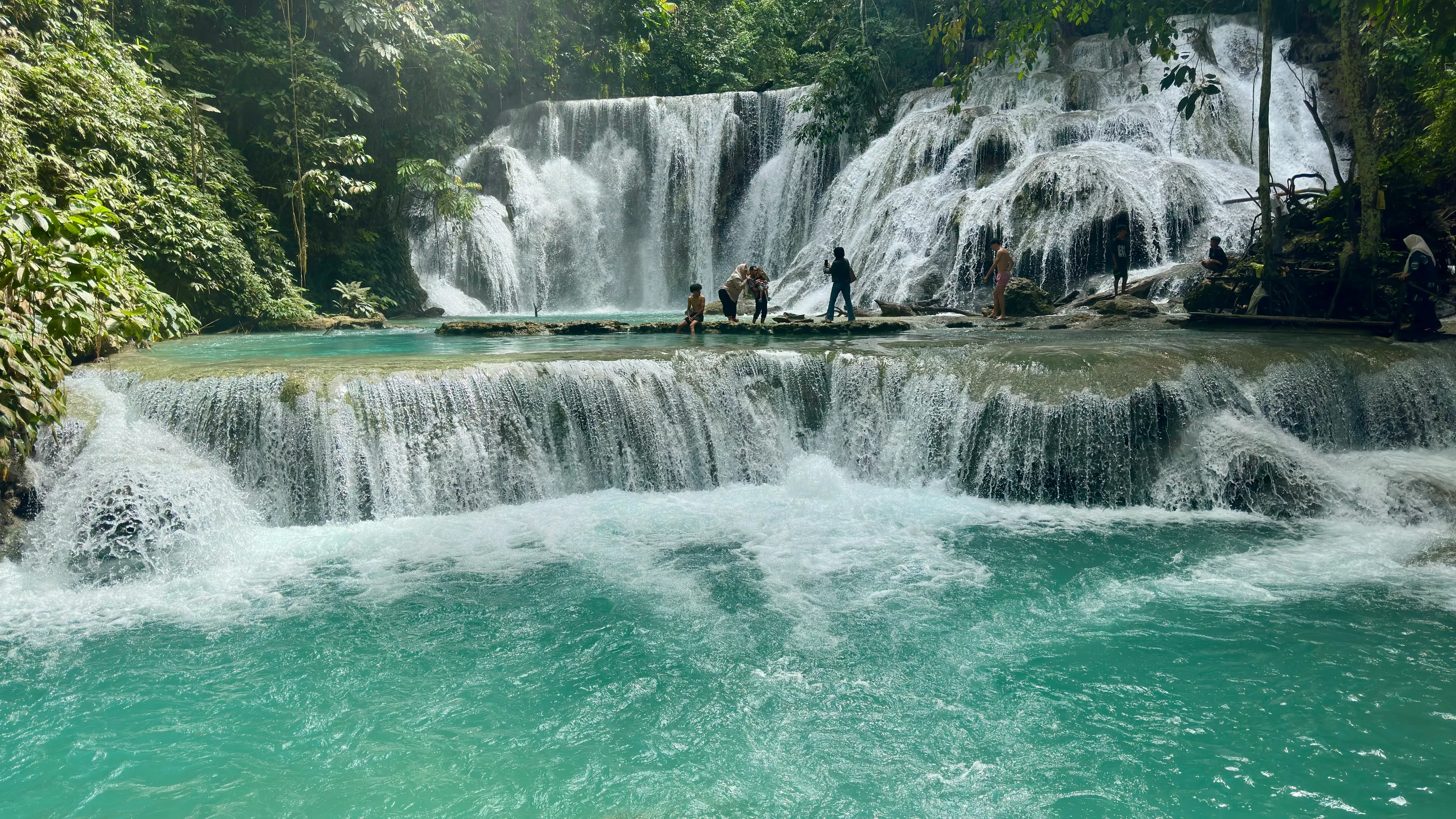
At some point, we had to remind ourselves:
This is real.
I have seen waterfalls like this in movies and photographs, but never really believed that nature could actually produce something that looked this perfect.
Maybe spending too much time in front of computers has damaged my trust level.
These days, when something looks too beautiful, my first thought is:
Is this real or AI-generated?
Piala was definitely real.
There were small eateries along the way selling cup noodles and drinks, and plenty of visitors were busy taking photographs from different angles.
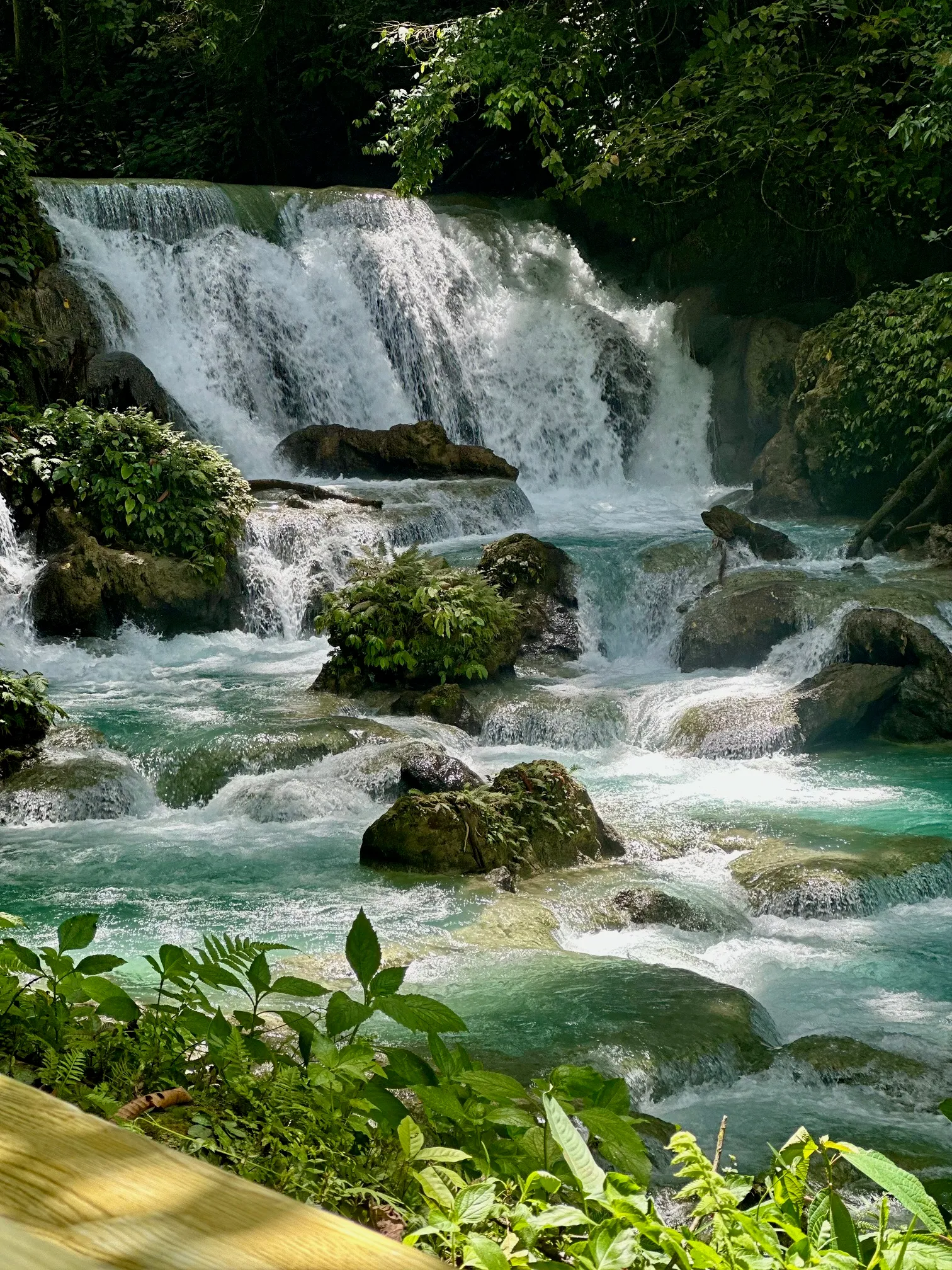
The waterfall itself seemed to change character depending on how the sunlight hit it.
But we weren't satisfied with just taking pictures.
We wanted to get into the water.
So we did.
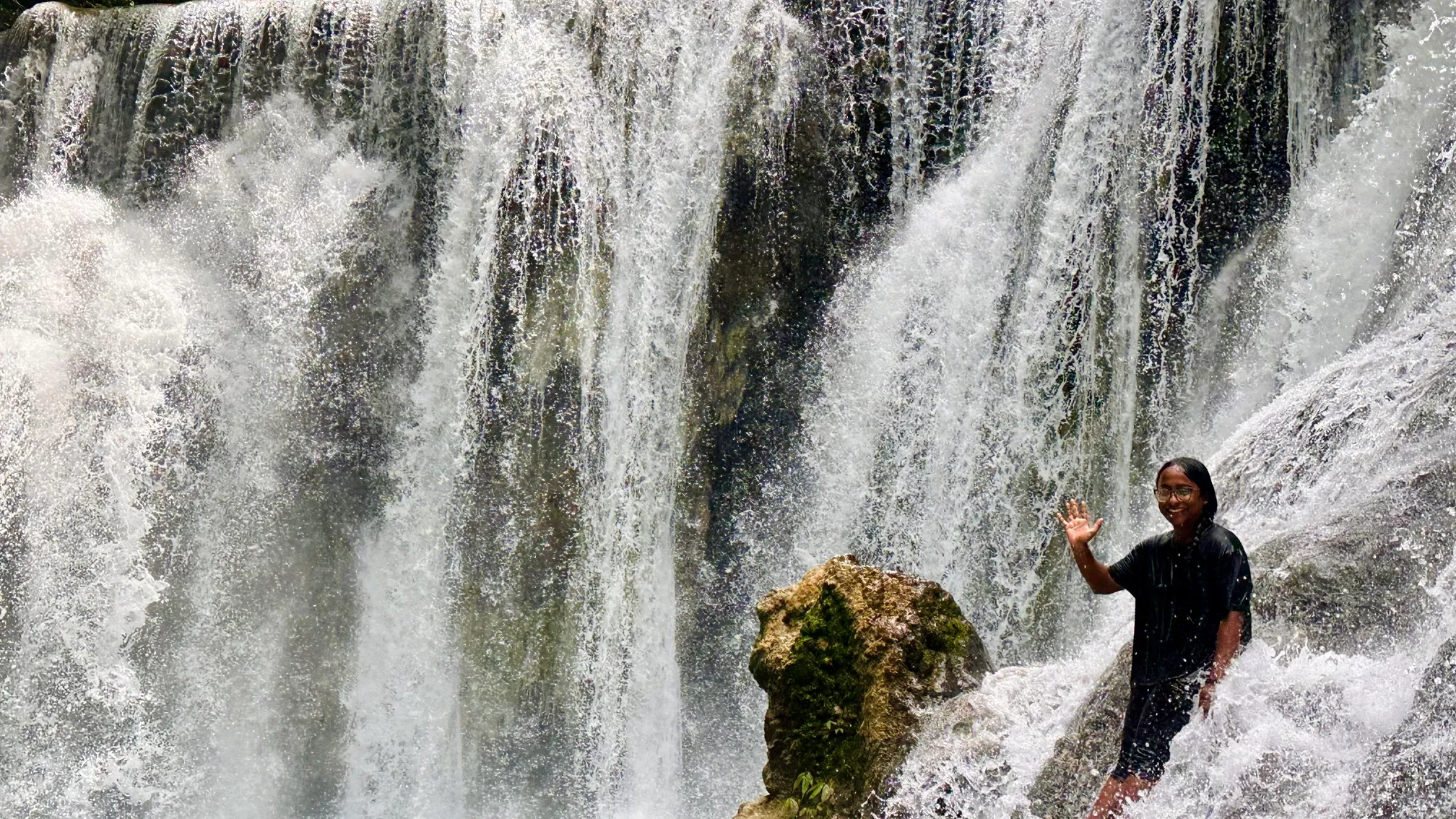
There were rock formations where the water splashed down, almost like a natural water spa. We sat underneath the falling water for a while, enjoying the cold water and the view.
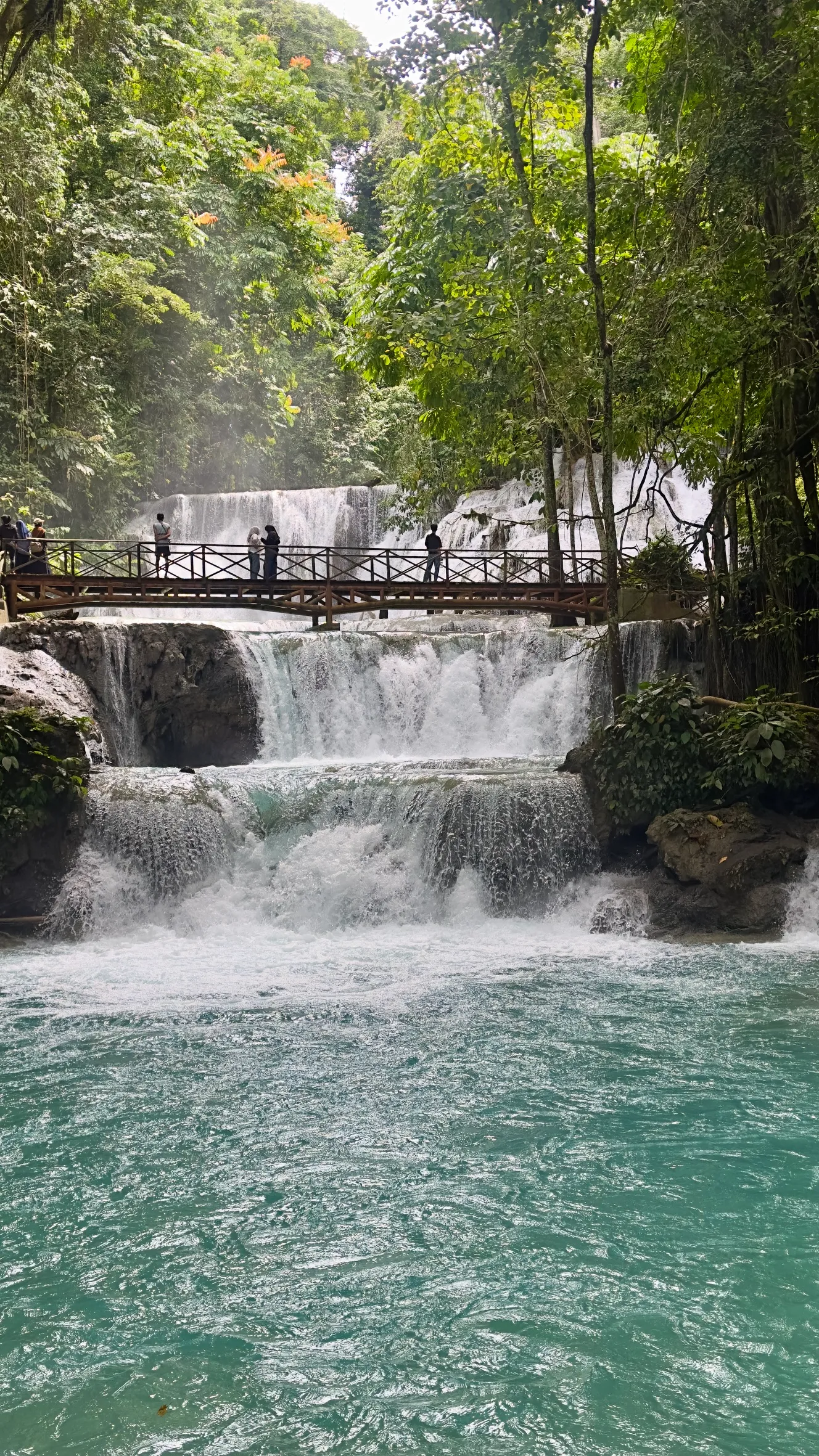
There was also a small bridge across the waterfall, which gave people another great angle for photographs.
And, as usual, we ended up becoming local celebrities.
A few people from the area asked to take pictures with us.
We don't normally get this kind of celebrity treatment back home.
So we happily cooperated.
Thanks to the lack of Indian tourists in this part of Indonesia!
After spending a good amount of time there, we ordered a cup noodle and a juice and sat on a bench looking at the waterfall.
That was lunch.
Simple.
Perfect.
There were butterflies everywhere too, including some beautiful ones we had never seen before.
My butterfly-stalking partner was officially back on duty.
After enjoying Piala for a while, we decided to return to the homestay and perhaps explore another waterfall on the other side of Luwuk.
We still had one unfinished mission.
Mokokawa.
Mission Mokokawa — Round Two
We reached the homestay after about 30 minutes.
Ikka was there.
Naturally, her first question was:
“So… did you find Mokokawa?”
I gave her a look that probably answered the question before I said anything.
No.
We failed.
Again.
She explained the route one more time.
This time, my studiosity went up several levels.
I became the first-bench student.
I listened carefully.
I memorised the route.
I was ready.
There was another guy nearby listening to our conversation. He probably looked at my face and realised:
This student has already failed the first exam. Better help him before he attempts the second.
He pulled me aside and explained the route using Google Maps. He asked me to pin a location on my phone.
The strange thing was that the location didn't even have a proper name.
He told me:
“Go here. From there, there is only one road. You won't get lost.”
That sounded reassuring.
Ikka also gave us one final push.
“You can still make it today. But if it rains, don't go. The road will become very bad.”
I looked at my wife.
She looked at me.
We didn't need to say much.
Mission Mokokawa was back on.
We started immediately.
The main road was good at first.
Then it became narrower.
Then narrower.
And then the road disappeared into something that looked more like a construction project than a road.
There was no tar.
There were stones everywhere.
There was a steep climb.
I looked at the road and thought:
This has all the ingredients required for falling off a bike.
Going uphill was still manageable.
Coming back down?
That was a problem for future us.
We continued carefully.
There were no houses.
No people.
No traffic.
Nothing.
Just us, the bike and the road.
One kilometre felt like ten.
The road was under construction, with trees being cleared and the route still incomplete.
Then the terrain changed completely.
Clay.
Wet clay.
Slurry.
The kind of road where one wrong move could turn a motorcycle trip into a very different kind of story.
I slowed down even more.
Eventually, we saw a guy on a scooter.
Finally!
A human being!
We asked him about Mokokawa.
“Straight ahead. About three kilometres.”
Three kilometres.
At this point, we knew what three kilometres meant in this part of Luwuk.
Probably another lifetime.
We continued.
The road became nothing more than a muddy clearing.
And then, after climbing another hill, we suddenly saw something big.
A road roller.
A JCB.
Construction equipment everywhere.
Okay.
That explained the road.
The bike clearly wasn't going any farther.
We asked the workers how far the waterfall was.
“About two kilometres.”
I stopped calculating.
The mathematics of this trip had already lost credibility.
Then something unexpected happened.
The same guy we had spoken to earlier appeared again.
He said:
“I will take you to the waterfall.”
It turned out he was actually a guide from the tourism department. He normally stayed around the road to help visitors find Mokokawa.
Perfect.
There was also a lady from the construction team who wanted to visit the waterfall, so she joined us.
And just like that, the four of us started walking.
The trail wasn't too bad.
The road we had ridden on the bike was much worse.
But it was muddy.
Very muddy.
We started wondering whether this waterfall was actually worth all this trouble.
Two kilometres through that terrain was not an easy walk.
And I could only imagine what this place would be like after heavy rain.
Definitely not a place to visit on a rainy day.
After walking for a long time, we started hearing the sound of water.
We got excited.
We thought we were close.
But the guide pointed ahead.
“Not that one. Keep going.”
Of course.
We kept walking.
Eventually, we reached what looked like an old plantation area. There was a small gate, and nearby were the remains of what seemed to have once been a government-run homestay.
Now it was mostly ruins.
We followed the stream.
The colour of the water immediately caught our attention.
Turquoise.
Just like Piala.
We walked further.
And then...
Mokokawa appeared.
Mokokawa — The Reason We Didn't Give Up
I genuinely couldn't believe what I was looking at.
It took me a few seconds to process that this was actually real.
More than 20 layers of waterfalls, rock formations between them, lush green plants everywhere and a small bamboo pathway leading towards the centre.
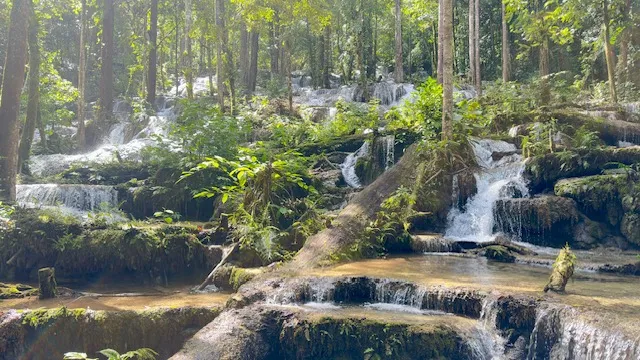
It was difficult to describe.
This wasn't just a waterfall.
It felt like nature had decided to show off.
The sunlight was filtering through the trees and changing the entire landscape every few minutes.
Suddenly, the terrible roads didn't matter.
The confusion with Google Maps didn't matter.
The wrong turns didn't matter.
The kilometres that magically kept multiplying didn't matter.
This was why we came.
This was the kind of place that makes you forget about the journey it took to get there.
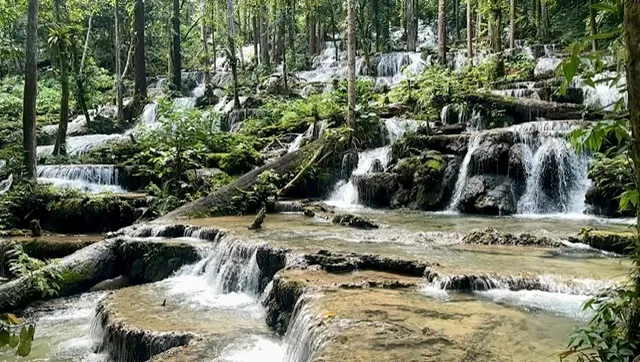
We got into the water and spent some time enjoying the falls.
The surroundings were incredibly peaceful.
No crowds.
No noise.
Just the sound of water.
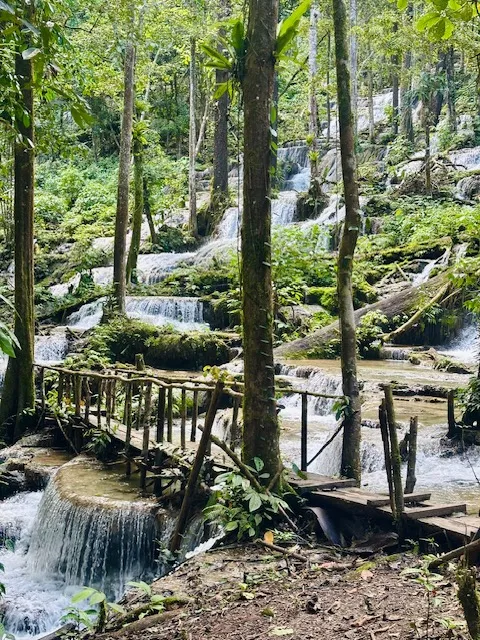
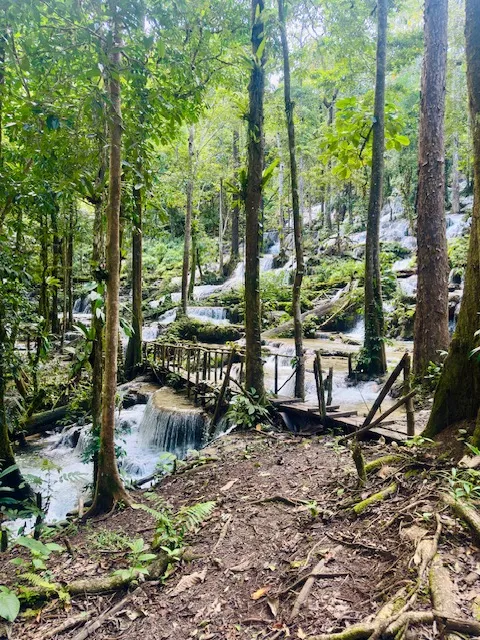
And then reality returned.
We had to go back.
It was already getting darker, and there was always the possibility of rain in the afternoon.
And unlike the journey in, the journey back involved one major problem:
Going downhill on that road with a motorcycle.
We took one last dip, said goodbye to Mokokawa and started walking back.
The return walk was easier in some places because it was downhill, but my shoes were now completely covered in mud.
There were sections where you stepped into the ground and your foot simply disappeared into it.
Finally, we reached the bike.
We thanked the guide and prepared for the most exciting part of the adventure.
The ride back.
We already knew the road.
We knew it was bad.
And now we knew that going down was even more dangerous.
So, on a few of the worst sections, I asked my wife to get off and walk while I carefully brought the bike down.
Slowly.
Very slowly.
One mistake and we would have become part of the landscape.
Eventually, we reached the main road.
Safe.
Alive.
And covered in mud.
We decided the first priority was to find water.
So we headed towards 5 Kilo Beach and cleaned our shoes and slippers.
We also rewarded ourselves with a tender coconut.
Our mangosteen supply had finished too.
Naturally, we bought another kilogram.
Some priorities never change.
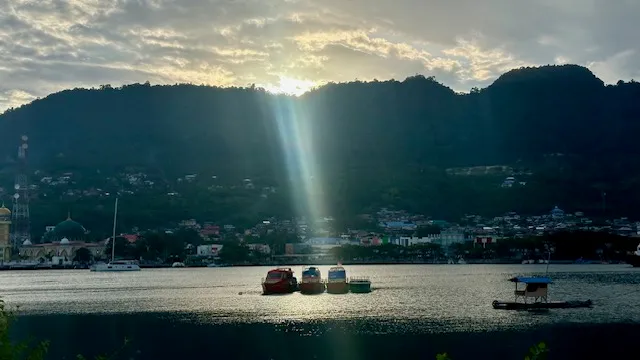
By now it was already late evening. We made a few purchases from Indomart and finally headed back to the homestay.
As we rode back, I looked at my muddy shoes and thought about the day.
Three waterfalls.
One wrong turn.
One wrong map.
A terrible road.
A construction site.
A two-kilometre muddy trek.
And finally, a waterfall that looked like something from another world.
Maybe Google Maps didn't really fail us.
Maybe it simply wanted us to work harder for the best waterfall of the day.
And the waterfalls of Luwuk are still not over...
Thoughts
-
That mud on the way down would've gotten to me. The watching every move, the bike feeling like it could slip any second. How long were you actually on that road before you got back somewhere with proper pavement?
-
The part about spending too much time on computers and not trusting that beautiful things can be real, that hit different.
-
When you got to Mokokawa after all of that, did the effort make it feel different than if you'd just walked in?
-
We didn't need to say much. that whole dynamic between you and your wife just comes through in every part of this.
-
The construction crew guy who just decided to help you find it, like he saw you'd failed twice and went 'okay, i'm taking this personally now.' That kind of thing sticks with you.
-
the fact that you went back for mokokawa is actually so cool. most people would've given up after piala
-
Have you taken your motorcycle on terrain like that before, or was this full 'what are we doing' mode from the start?
-
The bit where Ikka said don't follow google maps and you immediately did made me actually laugh. That's so human.
Related posts
-
Untold Miles - Chapter 10 – Coral Kingdom, Turtle Mission & One Last Sunset in Paradise
Chapter 10 – Coral Kingdom, Turtle Mission & One Last Sunset in Paradise
-
Untold Miles - Chapter 9 - Jellyfish, Jungle Trails & the Best Sunset in Togean
Chapter 9 - Jellyfish, Jungle Trails & the Best Sunset in Togean
- Untold Miles - Chapter 6 - Goodbye Manado... Hello Luwuk! A Journey That Felt Like Family
- Untold Miles - Chapter 8 – Welcome to Paradise! Life Without Wi-Fi, Electricity... and Stress
- Untold Miles - Chapter 5 – Waterfalls, Tropical Rains & Chasing the Sunset
- Untold Miles - Chapter 7 – Fire on the Beach? Our Most Magical Evening in Sulawesi
- Untold Miles - Chapter 4 - Hot Springs, Banana Fritters & One Crazy Tuk-Tuk Ride
- Untold Miles - Chapter 1
Public
46 conversations
54 thoughts
34 upvotes
0 downvotes
0 series
During our conversations with Ikka, we learned about the waterfalls around Luwuk and how adventurous and beautiful they were. And honestly, who better to give us recommendations than someone from…