The circularity charge against Williams is fair, but the fish line cuts against you too. Nobody has been immortal, yet plenty of people have had thirty rich, idle years after work, and boredom and drift show up there often enough. That's the nearest real case to his hypothetical, and it doesn't help the optimist.
Immortality Is Not in Time, It Is in the Ability to Reinvent Yourself
Public
1 conversation
3 thoughts
26 upvotes
0 downvotes
1 series
There is an idea that has been repeated for centuries: that awareness of death is what makes us live intensely. The German philosopher Martin Heidegger defended something similar... he called it…
In series
Topics
In groups
Thought
Thought
The circularity charge against Williams is fair, but the fish line cuts against you too. Nobody has been immortal, yet plenty of people have had thirty rich, idle years after work, and boredom and drift show up there often enough. That's the nearest real
Post content
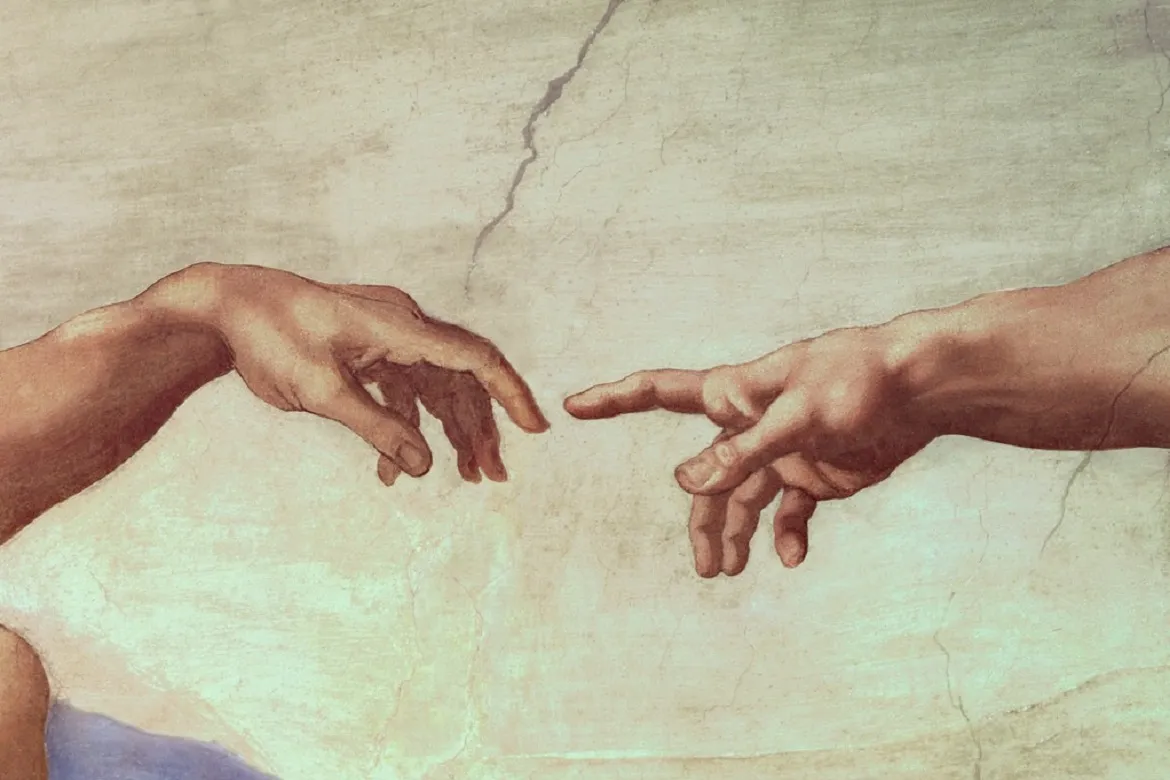
There is an idea that has been repeated for centuries: that awareness of death is what makes us live intensely. The German philosopher Martin Heidegger defended something similar... he called it "being-toward-death," the experience of facing one's own finitude, something that, according to him, would pull us out of automatic living and push us toward living more authentically.
But there is a problem with this idea, and it is a simple one: no philosopher who has ever written about death has lived to tell what it is like to be dead... or immortal. This entire tradition of thought was built by mortal people trying to imagine a condition they themselves will never experience. It is like asking a fish to describe what it would be like to live outside water, while being a fish.
The same applies to those who defend the opposite; that immortality would be unbearable boredom. Philosopher Bernard Williams, in the essay "The Makropulos Case" (1973), argued that living forever would lead to the exhaustion of all possible projects and relationships. But this idea carries a similar problem: it imagines an immortal thinking and making decisions as if they were still in a hurry; in other words, it imports into the hypothetical scenario the same urgency of someone who knows that time is short, and then uses that exhaustion to prove that immortality would be bad. It is a circular argument.
Culture reinforces this distrust through fiction. Characters such as Bram Stoker's Dracula are eternal, but isolated... they live hidden away, have lost everyone they loved, exhausted by centuries. But this is not a truth about immortality itself: it is a narrative choice. Every story needs conflict, and a happy immortal does not create a plot. There is also a collective psychological interest in this: stories that portray immortality as a curse serve as consolation for those who have no choice but to accept their own finitude.
This resembles human behavior toward wealth. Almost nobody says "it is better to be poor" simply because "money does not bring happiness" - the phrase is used as a warning, not as a reason to give up trying to make money. Only when the subject is immortality does the same logic ("it does not bring happiness") become an argument for rejecting the entire idea. It is the fable of the fox and the grapes: we devalue what is beyond our reach.
And here lies the central point of the conversation: wealth, in practice, is a partial and imperfect simulation of immortality. It buys other people's time, better medical treatments, the possibility of starting over without collapsing. It gives the feeling that the normal rules of scarcity do not fully apply. But it is an illusion... the billionaire dies just like everyone else. They simply lived, for decades, as if they were not going to die.
In light of this, the most important turn emerges: happiness is not a consequence of wealth, success, or lifespan... it is the baseline condition. The dictionary itself defines happiness as an internal state of well-being, without mentioning money or longevity as prerequisites. To have everything... including infinite time... without happiness would be equivalent to having nothing: infinite time would not be a gift, it would simply be the infinite extension of an emptiness.
This leads to the final conclusion: perhaps true immortality is not biological, but psychological — the ability to remain curious, hungry to learn, and willing to reinvent yourself, in any decade of life: at 10, at 50, at 90. It is not about being a good person; it is about never becoming completely stuck. Those who cultivate this do not need the urgency of the clock to move forward, because they are not in a race against time, trying to prove something before it ends; and precisely because of that, they can be more patient, more selective, understanding that reinvention is a process, not a single event.
In the end, the question was never "would immortality be good or bad?" The right question is: what needs to be resolved within a person for time; whether little or infinite ... to mean something?
References mentioned:
Martin Heidegger, Being and Time (1927) — concept of "being-toward-death"
Bernard Williams, "The Makropulos Case: Reflections on the Tedium of Immortality" (1973)
Albert Camus — the idea of revolt in the face of the absurdity of finite existence
Bram Stoker, Dracula (1897) — cultural archetype of immortality as a curse
#immortality #lifelonglearning #reinvention #selfreinvention #philosophy #existentialism #death #happiness #wisdom #humanity #humancondition #selfreflection #personalgrowth #curiosity #meaningoflife #lifepurpose #mindset #psychology #authenticity #time
Thoughts
-
The circularity charge against Williams is fair, but the fish line cuts against you too. Nobody has been immortal, yet plenty of people have had thirty rich, idle years after work, and boredom and drift show up there often enough. That's the nearest real case to his hypothetical, and it doesn't help the optimist.
-
Two separate claims travel under the word immortality in this piece. The Williams section is about living forever as the same person; the last paragraph swaps in staying curious at any age. Those don't compete, so the Makropulos objection never gets answered, it gets retired. My bet is Williams would have liked the second version fine.
Related posts
-
Paranoya
Do you get dejavu?