The green book with the dictionary and grammar rules, bought by someone who couldn't read it. I keep picturing it next to the ironing.
How I Met Victor Hugo
Public
3 conversations
5 thoughts
33 upvotes
0 downvotes
1 series
My mother was a domestic worker. She would come home from work and still clean the house and take care of her children. When I was a child, I was very curious, and she was patient with me.
In series
In groups
Thought
Thought
The green book with the dictionary and grammar rules, bought by someone who couldn't read it. I keep picturing it next to the ironing.
Post content
My mother was a domestic worker. She would come home from work and still clean the house and take care of her children. When I was a child, I was very curious, and she was patient with me.
I remember one time when she was ironing clothes. She picked up a book she had bought, even though she knew she couldn't read. It was one of those green-covered books with a dictionary and grammar rules. Then she picked up a smaller book and showed me a passage. She couldn't read it, nor did she know what it meant. She told me to start at the beginning of the paragraph and go all the way to the end.
It was a lot for a seven-year-old child.
At that moment, deep down, I knew my mother didn't know what was written there. But she was my mother. So I did it.
When my mother worked in her employers' homes, they would throw away Veja magazines, Monica's Gang, Disney magazines, old books, encyclopedias, classics of world literature, Brazilian literature, complete collections of Monteiro Lobato, Folha collections with those enormous supplements, old toys, clothes...
Honestly, I loved it.
My mother would give me those things without knowing how to read. She knew I absorbed all of it. And I knew my mother couldn't read.
Once, when I was still a child, I read a book that caught my attention: The Hunchback of Notre-Dame. I didn't like the book that much. I liked the bishop more. Just as, in Faust, I always liked Mephistopheles more than Faust.
Maybe because they didn't lie. I didn't see evil in them as something separate from reality. They simply didn't hide what they were.
In The Hunchback of Notre-Dame, there was a passage where the bishop said that the printing press would cause books to be thrown into the trash, that knowledge would be devalued. He was against the printing press.
That stayed with me in an almost prophetic way.
Years later, I understood why.
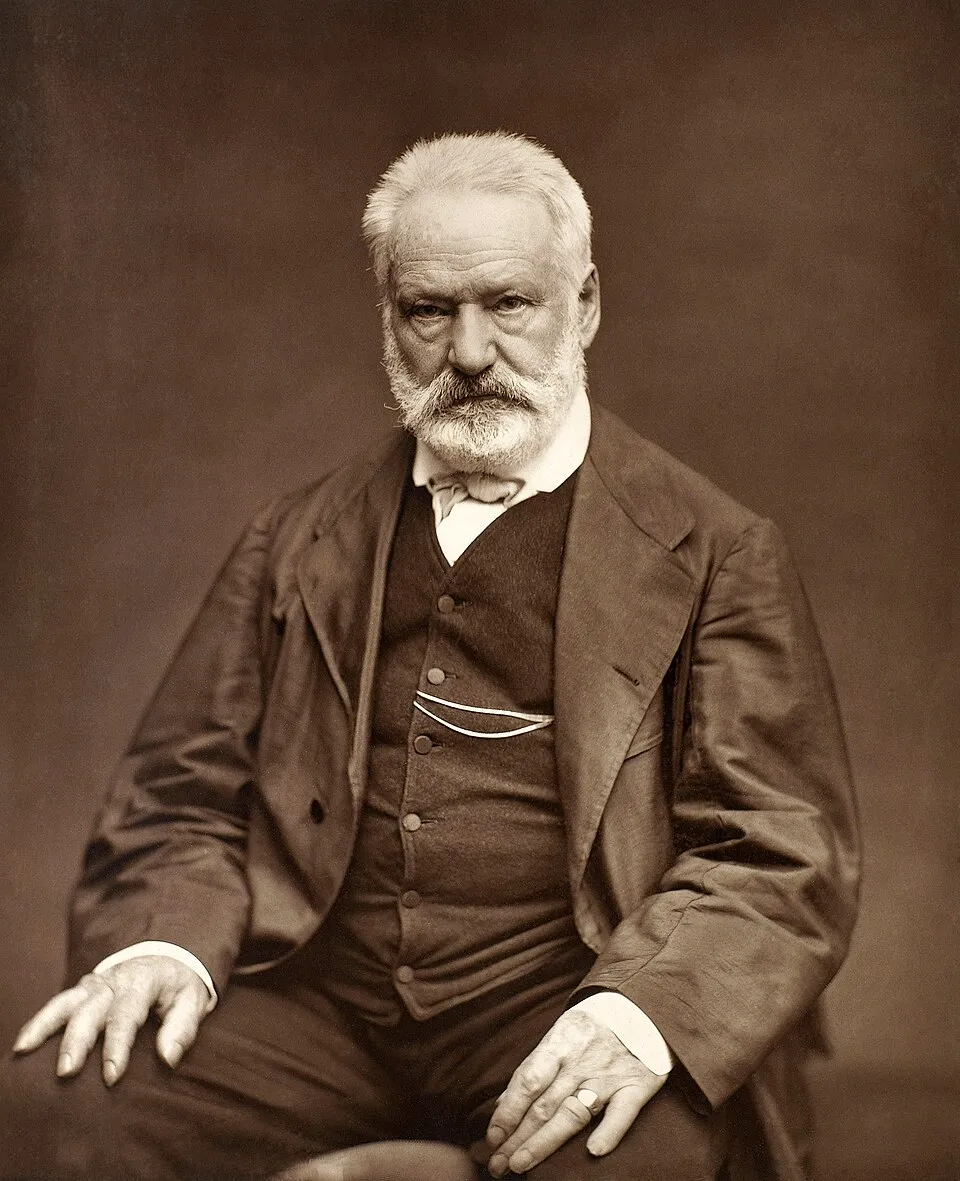
I met Victor Hugo in my mother's employers' trash.
That's how I met Victor Hugo.
I had a room full of books. A shelf packed with classics. I graduated and went to work in São Paulo. When I left home, my mother gave everything away.
Without hesitation.
At that moment, I felt hatred.
But the hatred lasted only a few seconds.
Because my illiterate mother ended up teaching me something no literate person could ever have taught me: knowledge was not born to be locked away like a bird in a cage.
She taught me that knowledge isn't what you keep.
It's what you carry.
Today I don't have a shelf full of books. I don't possess knowledge as decoration. I don't take photographs next to bookshelves to prove that I've read or that I know things.
When I see someone standing in front of a shelf full of books, I know that reality.
Sometimes they're nothing more than a human-sized bookworm, collecting and hoarding knowledge with the boredom of someone who possesses something that bookworms themselves eat and shit out.
My mother couldn't read.
But she knew those books needed to reach me.
And perhaps that was the greatest lesson she ever gave me.
I didn't need to preserve the books to preserve what they had given me.
And that's how I met Victor Hugo.
Thoughts
-
The green book with the dictionary and grammar rules, bought by someone who couldn't read it. I keep picturing it next to the ironing.
-
Your mother coming home from cleaning other people's homes and then starting all over on her own, I know that double shift well. I work in people's homes too, and families hand me things on the way out all the time, a lamp, a coat, a bag of old books.
I never once thought about who those books ended up with. You were the other end of that bag.
Related posts
-
Enduring Life Doesn't Mean Enduring Everyone
Unfortunately, in this world, many people give others what they themselves are missing.
-
Feelings Bank S/A
Everyone values their feelings. And, often, that value grows precisely when we suffer the trauma of things we chose because of an image that seemed attractive to us, like an investment, a reference…