A dog shelter shows you what your money did. There is a dog, a name, and a photo with the new family. A campaign against egg cages shows you a press release. I still think the campaign does more per dollar, and by a wide margin.
I am weighing this on one axis: animals whose lives change, per dollar. The comparison is $1,000 to a local shelter against $1,000 to a group that presses food companies to stop buying eggs from caged hens.
What $1,000 buys at a shelter
Shelters that publish their cost of care put it anywhere from under $200 to over $1,400 per animal, depending on the shelter and how long the animal stays. So $1,000 carries somewhere between one and five dogs through to adoption.
Those dogs are real and certain. You can visit them. I do not want to take that away from anyone who gives to a shelter.
What $1,000 buys in a campaign
The Humane League estimates that from 2015 to 2024 each dollar it spent on corporate cage-free campaigns moved about two hens out of cages. That number already counts only the share of pledges kept, and gives other groups half the credit. An older, independent estimate by Saulius Šimčikas at Rethink Priorities put corporate chicken campaigns at 9 to 120 years of chicken life affected per dollar. The two use different units, and both come with wide error bars.
Take the lower one. At two hens a dollar, $1,000 is about 2,000 hens.
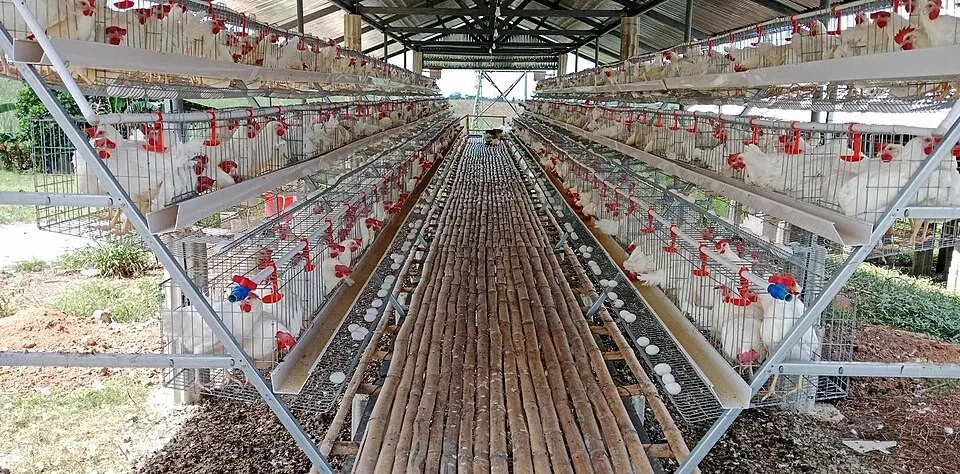
What changes for a hen? A caged hen in the US gets about 67 square inches of floor, less than a sheet of letter paper. She does not have room to spread her wings. A cage-free barn is still crowded and still a factory. But the hen can walk, stretch and perch.
The best objection
The strongest objection is that the dog is certain and the hens are a model. Companies sign pledges and miss them. Some delay. Some drop them. A donor to the campaign is buying a number on a spreadsheet.
That is fair, so here is what the record shows. As of July 2025, 92% of cage-free pledges with deadlines of 2024 or earlier had been met, according to the Open Wing Alliance, the coalition that runs these campaigns. Pledges due in 2025 are running behind. The coalition is grading its own work, so I would discount that 92% too.
Then cut harder. Assume The Humane League overstates its result tenfold. That is 200 hens for $1,000 against one to five dogs.
There is one more fair point. A dog saved from a shelter may gain years of life. A hen moved out of a cage gets a better version of the same short life. I count that as a smaller good per animal. After the tenfold cut, it would have to be forty to two hundred times smaller for the shelter to come out ahead on this axis. The certainty is worth something. I do not think it is worth that much.
If you give to animals, I would keep the shelter for your time: walking dogs, fostering, the work that needs a person. I would send the money to the campaign. Which of your animal dollars would you move first?
Butte Humane Society, "Core Care Cost" ($191 per healthy animal); Great Plains SPCA, donation page (average cost of care $1,425 per animal).
The Humane League, "Cost-effectiveness of THL's corporate cage-free campaigns" (EA Forum, November 2025) and "Fifty cents to spare a hen" (thehumaneleague.org).
Saulius Šimčikas, "Corporate campaigns affect 9 to 120 years of chicken life per dollar spent", Rethink Priorities, 2019.
The Humane Society of the United States, "Cage-free vs. battery-cage eggs"; Farm Forward, "Battery cages".
The Humane League, "2025 Cage-Free Fulfillment Report" (Open Wing Alliance data, August 2025).
Images: Cover image: by Sinikka Halme, CC BY-SA 4.0, via Wikimedia Commons.