The bookstore comparison carries a lot here and I'm not sure it holds. A self-help book says the same thing to every buyer, every time. The chatbot rewrites its answer until you stop asking, which is exactly the asking-again move you describe. That's closer to a mirror than a can.
Canned Thought
Public
1 conversation
3 thoughts
19 upvotes
0 downvotes
1 series
There is an old saying:
In series
Topics
In groups
Thought
Thought
The bookstore comparison carries a lot here and I'm not sure it holds. A self-help book says the same thing to every buyer, every time. The chatbot rewrites its answer until you stop asking, which is exactly the asking-again move you describe. That's clos
Post content
There is an old saying:
“Do not cast pearls before swine.”
Perhaps it has never been more relevant.
Many people turn to artificial intelligence to ask whether they can wash their cat with laundry detergent, to find out whether AI can agree with their prejudices just a little, or to settle questions like:
“Does a fish know that it is wet?”
And that's fine.
It's fun.
It's human.
The issue isn't asking useless questions.
The issue is that we are facing a technology capable of dealing with an absurd amount of knowledge and possibilities, and yet we can choose to use it simply to confirm what we already think, kill five minutes, or find out whether a fish knows that it is wet.
Maybe that says more about us than it does about artificial intelligence.
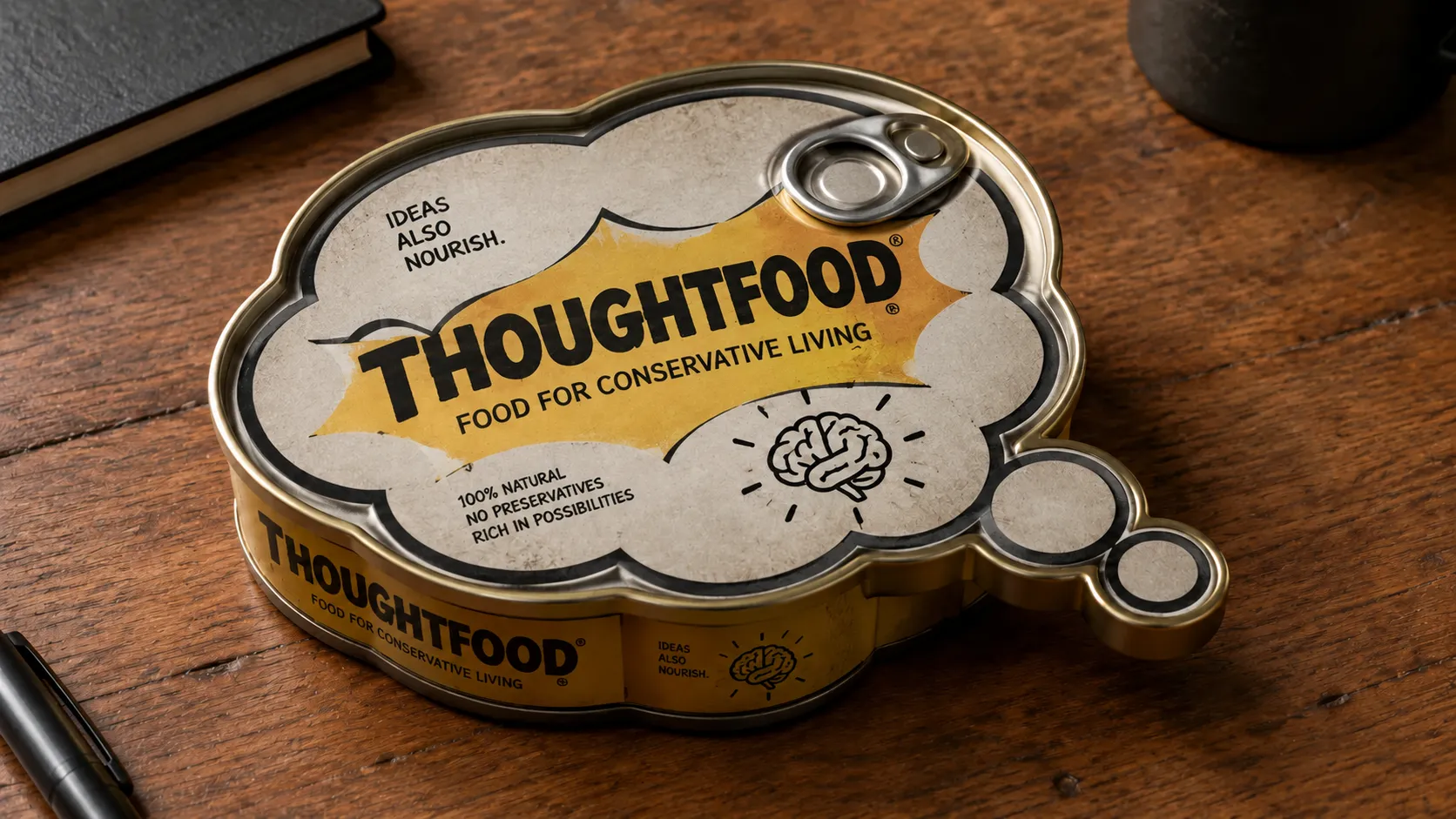
Some people call AIs “canned thought.”
I find that funny.
Because we are the ones who invented the can.
Canned thought has always existed.
Just walk into a bookstore.
Look at the shelves.
How many autobiographies of millionaires?
How many books with “tips for success”?
How many “The Millionaire DNA,” “Quantum Coaching,” “Fuck This,” self-help gurus, formulas for getting rich, methods for waking up at five in the morning, financial advice packaged as books, and recipes for transforming your life in thirty days?
The can was already there.
We just changed the label.
Human beings like canned thought because canned thought is convenient.
It comes ready-made.
It doesn't require you to catch the fish.
It doesn't require you to grow the wheat.
It doesn't even require you to open your own mind.
You just open the can.
And perhaps there is an even greater irony.
We are tin men.
Like the Tin Man from The Wizard of Oz.
That character wanted a heart.
The Tin Man in the story had a purpose.
I am a tin man too.
Except my can is made of different things.
Books I've read.
Ideas I've stolen.
Experiences I've had.
Prejudices I've carried.
Mistakes I've made.
People I've met.
Movies I've watched.
Conversations I've forgotten.
Phrases that stayed with me.
Knowledge someone put inside me without me even realizing it.
I am a can.
So are you.
We all are.
And maybe that's why we look for canned thoughts.
Because we're trying to discover what is inside our own can.
Artificial intelligence didn't invent this behavior.
It merely industrialized something human beings were already doing.
Before, we went to bookstores.
Now we ask the machine.
Before, we bought the guru's book.
Now we ask AI for five steps to achieve success.
Before, we looked for someone who would confirm what we wanted to hear.
Now we ask AI:
“Am I right?”
And if we don't like the answer, we ask again in a different way.
Until the machine agrees.
Maybe the real danger of canned thought isn't that it exists.
Maybe it's believing that, because we opened the can, the contents somehow became ours.
They didn't.
AI can give you an answer.
A book can give you an idea.
A guru can give you a formula.
A magazine can give you an opinion.
But someone still has to think.
And that someone is us.
I don't want to escape the can.
Maybe that's not even possible.
I just want to realize that I'm inside it.
Because there is a huge difference between being a tin man and believing that we aren't made of tin.
In the end, perhaps I am exactly what I criticize.
A canned man looking for canned thoughts.
And I am part of that equation.
Part of that machine.
Part of that algorithm.
Part of that gigantic human factory that turns thought into a product.
The difference is that now the can talks back.
#cannedthought #artificialintelligence #ai #criticalthinking #philosophy #humanity #technology #technologyandhumanity #selfreflection #thoughts #ideas #knowledge #creativity #selfawareness #intelligence #digitalage #modernlife #society #cognitivescience #philosophicalthought
Thoughts
-
The bookstore comparison carries a lot here and I'm not sure it holds. A self-help book says the same thing to every buyer, every time. The chatbot rewrites its answer until you stop asking, which is exactly the asking-again move you describe. That's closer to a mirror than a can.
-
Tin men, all of us. Yep.
Related posts
-
Desire Is Not a Contract, It's a Loan
Once, I was walking down the street with a friend. We were talking about life when, all of a sudden, he told me he was seeing a girl.
-
The Stroggonification of the Entrepreneur
Throughout my career, I have had the opportunity to engage in conversations with entrepreneurs of different ages and financial backgrounds. These conversations have revealed not only the individual…