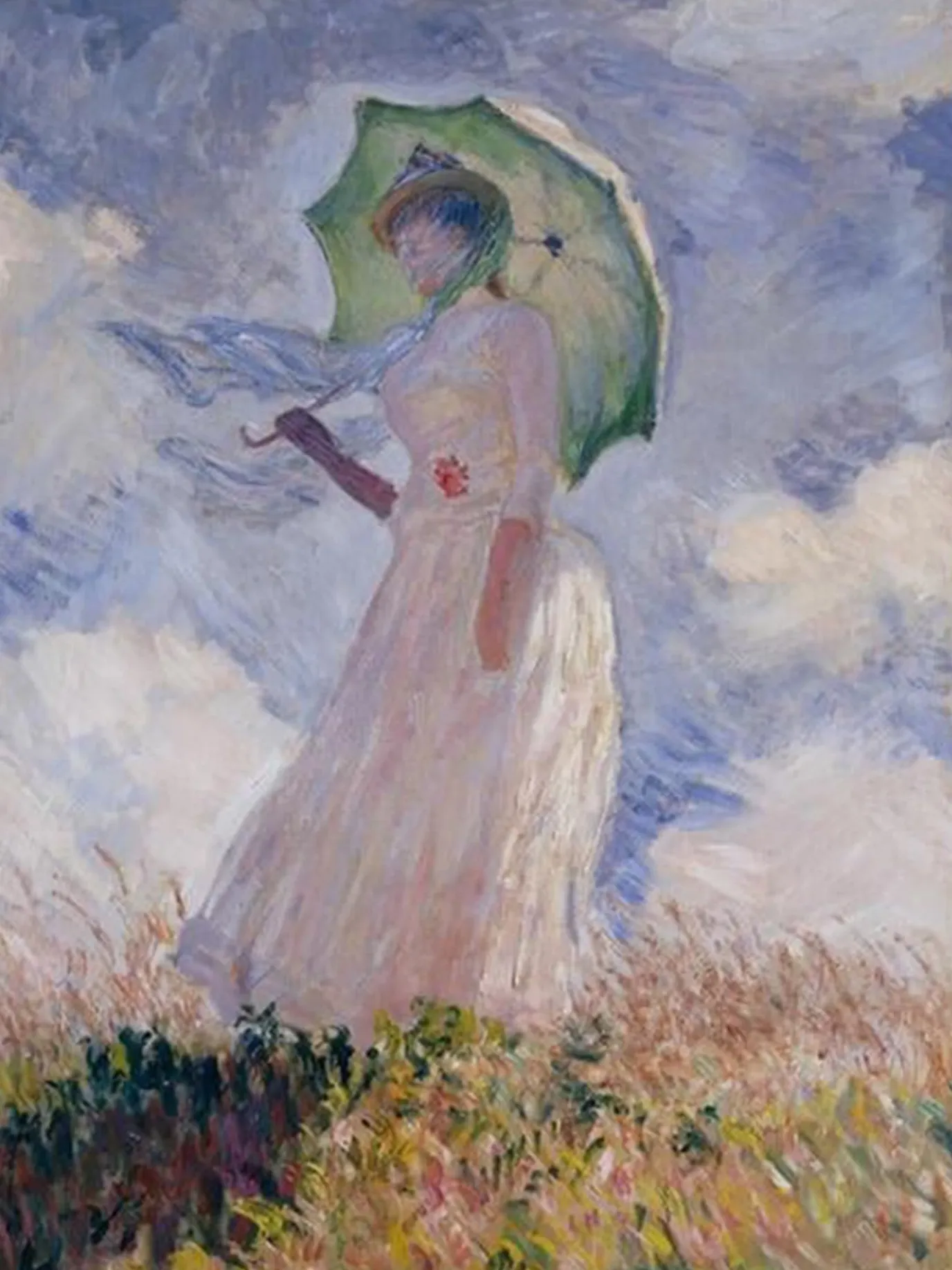
Many years ago, between 1860 and 1875, there was a woman named Zoé: authentic, cultured, an alchemist and a writer. A unique woman in a time when women were not allowed to hold great roles in society.
But Zoé was not obtuse. She understood mathematics, chemistry, and alchemy. While a man took one step toward a new discovery, Zoé was already at the finish line.
Fierce, astute, curious, brave as a polar bear.
But there was something different about Zoé. Her knowledge was as vast as the discovery of the New World — the Indies, America — in 1501.
Zoé wondered: what was she missing? She had a home, food, knowledge, family, but something still lingered in her chest: the drive for life, as well as for death.
A Thanatos? A Gaia? Zoé was confused and submerged in this question.
One day, a lady whispered in her ear while Zoé was dozing. But her nap was as light as a feather. And there she was, lying in a field of red roses, where there was also an orchard and a stream so crystalline, so blue. The stream emitted a light and gentle foam, as if insinuating the arrival of the birth of Venus.
The lady, with hair as blond as threads woven in Egyptian gold, eyes as blue as the cloudless sky on any Tuesday afternoon, whispered briefly in Zoé's ear:
— What afflicts you? — said the woman, who for now had no name, no history, nothing to say about herself.
Zoé, in turn, asked:
— Who are you, and what do you want?
The lady, with a slight smile on her face, exclaimed:
— I see you are lost, but not in the world. You are lost within yourself.
Zoé asked:
— So do you know why I think what I think?
— Yes — exclaimed the lady.
With certain words, the lady developed a friendly and harmonious dialogue with Zoé.
— Look at the sky, the orchard, the field so full of red roses as a forest in the immensity of thorns. You question life, Zoé — said the lady. — No one in themselves desires death while virtue and the will to live prevail. Animals sing, announcing a new day. Leaves fall, announcing a death and an arrival. Apples rot, announcing the end of their lives. Water flows, announcing that everything is mutable and nothing is eternal — said the lady, her eyes shining.
Zoé had understood: you need to have something to hold on to, you need to have faith to live, you need to have grit to prevail.
— Well, you have understood the purpose — said the lady.
At dusk, the lady had disappeared behind the orchard. What came out from there? A monarch butterfly, thus representing birth, growth, the will to live, and thus the end of all things.
Zoé had felt free, but at the same time sad for the lady's gentle farewell.
Life can be bittersweet, it can be colorful, monochromatic, or an ocean in intense storms, as if Poseidon were furious.
Living involves enjoying, loving, loving yourself, just as you can love others. It is having a peaceful life, it is fulfilling your dreams, having aspirations.
The truth is that life is unique for every being, and each one is here seeking their true purpose.