Buying a workshop sanding extraction system is an important investment for businesses that perform regular sanding, grinding, polishing, or surface preparation work. The right equipment can help control airborne dust, maintain cleaner workstations, protect nearby machinery, and support consistent production quality. However, purchasing decisions should not be based on the initial price alone. Workshop owners need to evaluate the system's technical specifications, dust collection capacity, filtration performance, installation requirements, maintenance needs, and suitability for their particular application. Different workshops handle different materials and production volumes, so the most suitable solution depends on the actual working conditions. Before placing an order, businesses should understand what the equipment is expected to achieve and which features are essential for reliable operation. A carefully evaluated Workshop Sanding Extraction solution can provide long-term value when its design matches the sanding process and the business has considered the complete cost of ownership rather than only the purchase price.
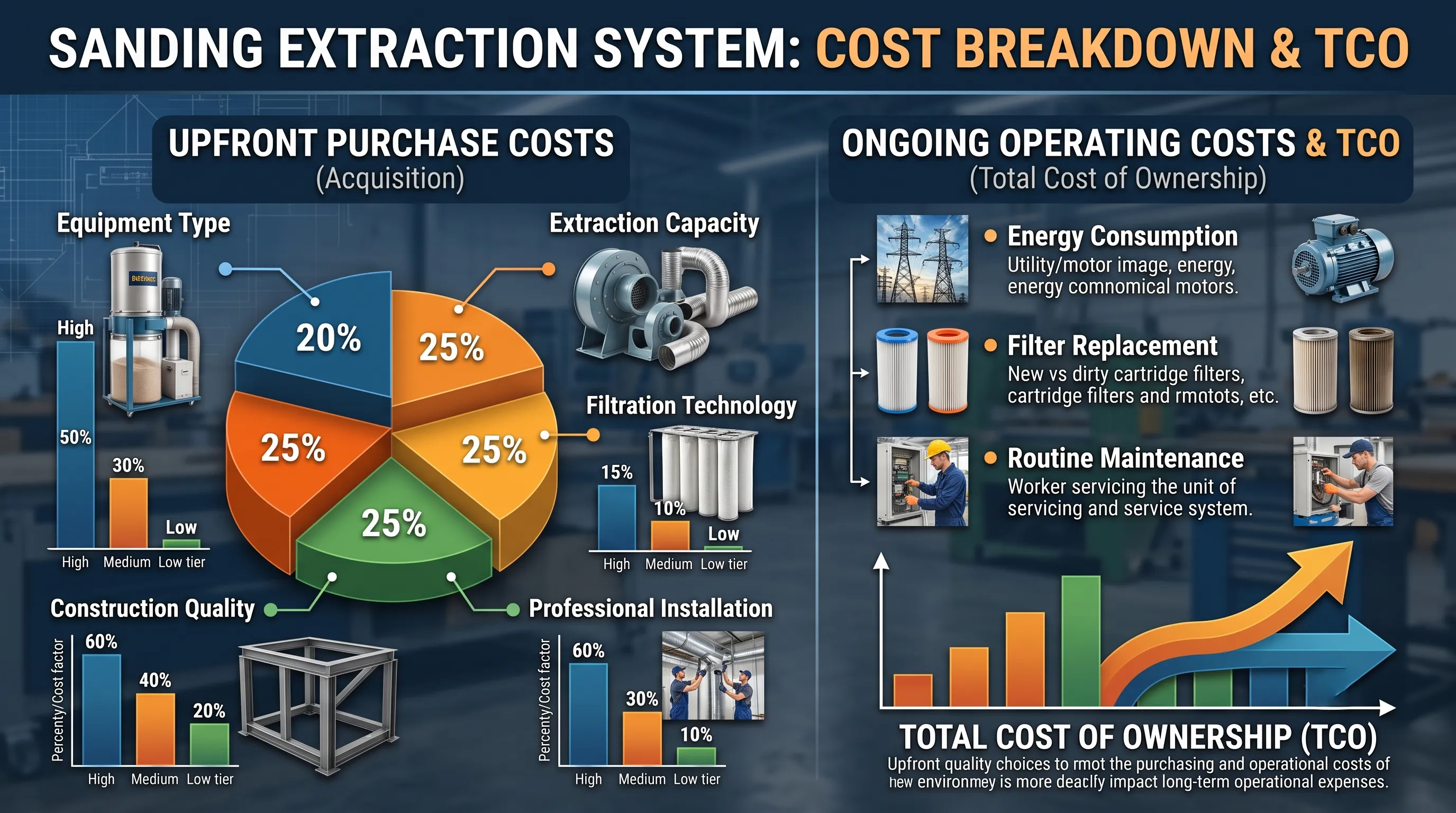
One of the first factors to consider is the type of sanding work performed in the workshop. Some facilities carry out occasional sanding on small components, while others process large panels, fabricated metal parts, wooden products, furniture components, or industrial assemblies throughout the day. These applications can produce different quantities and types of dust. Consequently, the extraction equipment must be appropriate for the material, the sanding method, and the expected production workload. Buyers should explain their complete process to the supplier, including the materials being treated, the abrasive tools used, the size of the workpieces, and the duration of daily operation. This information helps establish whether a compact extraction unit, a fixed extraction wall, a downdraft table, a tool-connected extractor, or a larger centralized arrangement would be appropriate. Selecting equipment without understanding the application can result in inadequate dust capture or unnecessary expenditure on features that the workshop does not need. A clear assessment of the intended use provides a reliable starting point for comparing available systems.
The extraction capacity should receive careful attention during the purchasing process. Buyers often compare equipment according to motor power or fan specifications, but these details do not independently establish how effectively a system will collect dust at the workstation. Effective performance depends on airflow, static pressure, duct dimensions, capture design, filter resistance, and the number of extraction points operating simultaneously. A system serving multiple sanding machines may require a different configuration from one designed for a single operator. Similarly, long ducts and poorly arranged connections can create resistance that reduces the airflow available at the source. Workshop owners should ask the supplier to explain how the proposed system is sized for the intended application and what operating conditions are assumed in the design. They should also confirm whether the stated capacity applies to the complete installed arrangement or only to the fan under specified test conditions. Understanding these details helps buyers compare technical proposals more accurately and avoid choosing equipment based on a single impressive specification.
Filtration performance is another important purchasing consideration because the extraction system must handle the dust produced by the actual sanding process. Different filter designs have different dust-holding capacities, cleaning methods, and operating characteristics. Cartridge filters, bag filters, and other industrial filtration arrangements may suit different applications depending on particle size, dust loading, material properties, and required filtration performance. Buyers should ask about the recommended filter media, the method used to clean the filters, and the expected maintenance intervals under normal working conditions. They should also determine how replacement filters can be obtained and whether consumable components are readily available. If the process produces large quantities of coarse particles alongside fine dust, a suitable pre-separation arrangement may help reduce the load on the main filters. However, the correct configuration depends on the material and system design. It is also important to understand that a filtration unit should not be assumed suitable for every type of dust. Hazardous or potentially combustible materials may require specialized equipment and additional safety measures based on a proper risk assessment.
The design of the extraction workstation should match the size and movement of the workpieces. Buyers handling small components on a bench may need a different arrangement from businesses sanding large doors, panels, fabricated structures, or irregularly shaped industrial parts. An extraction wall can provide a defined working area for suitable applications, while a downdraft table may be appropriate when dust can be captured through the working surface. Tool-connected extraction can be useful for processes in which dust is generated directly at a sanding head. Before buying equipment, workshop managers should measure the available working area and confirm that the extraction opening can accommodate the largest items they normally process. They should also consider whether operators need to rotate components, move around the workstation, or handle materials with lifting equipment. A system that restricts access or forces workers to position items outside the intended capture zone may become inconvenient and less effective. Reviewing these practical details before ordering can help avoid expensive alterations after installation.
The quality of construction and the suitability of the materials used in the equipment should also be reviewed. Industrial extraction systems operate in environments where vibration, dust accumulation, repeated use, and regular cleaning can place demands on the structure and moving components. Buyers should consider the construction of the housing, the quality of duct connections, the accessibility of service panels, and the durability of the fan and filtration arrangement. The equipment should be designed for the intended operating conditions rather than selected solely because it looks substantial. Workshop owners can ask the supplier for technical drawings, specifications, photographs of relevant installations, or details about the components used. They should also clarify the recommended operating limits and any environmental conditions that may affect performance. For customized equipment, the proposed dimensions, access arrangements, and connections should be checked before manufacturing begins. Good construction and a suitable design can support dependable operation, but regular servicing remains necessary to maintain performance over the equipment's working life.
Safety features and operating procedures should be included in the buying decision from the beginning. Sanding dust can present different risks depending on the materials involved, and certain dust types require specialized collection and handling measures. Buyers should explain whether they process wood, metal, plastics, painted components, coated materials, or other substances that may affect the equipment requirements. If dust may be combustible or otherwise hazardous, they should obtain an appropriate risk assessment and confirm that the proposed system incorporates the necessary controls for that specific application. A standard industrial dust collector should not automatically be treated as suitable for hazardous dust. The supplier should also explain the correct method for emptying collection containers, cleaning filters, and inspecting the system. Safe access to service points is important because difficult maintenance procedures can encourage shortcuts during routine work. Clear operating instructions and suitable training help employees recognize reduced suction, unusual noise, visible dust escape, or other signs that the system needs attention. Buyers should ensure that the equipment can be operated and maintained safely under their actual workplace conditions.
Installation requirements can significantly influence the total investment. Depending on the system, installation may involve preparing the floor area, arranging electrical connections, installing ducts, creating suitable access for operators, and coordinating the extraction equipment with existing machinery. A centralized system may require more planning than a standalone unit because duct routes and airflow distribution must be considered across multiple workstations. Buyers should ask whether installation and commissioning are included in the quotation or charged separately. They should also confirm who is responsible for electrical work, duct installation, final testing, and operator instruction. If the equipment must fit into an existing production line, dimensions and connection points should be verified before the order is confirmed. Proper commissioning is particularly important because the installed arrangement must perform as intended under actual operating conditions. A lower equipment price may not represent the best value if substantial additional costs arise during installation. Reviewing these requirements in advance helps businesses prepare a realistic budget and reduce unexpected delays.
Maintenance costs deserve the same attention as the initial purchase price. Filters, seals, hoses, collection bags, electrical components, and other parts may require inspection, cleaning, or replacement over time. The frequency and cost of these activities depend on the dust load, operating hours, filtration design, and quality of maintenance. Buyers should ask for a clear explanation of the routine service schedule and the expected consumable requirements. They should also find out whether maintenance can be completed by trained in-house personnel or whether specialist assistance is normally required. Easy access to filters and collection containers can reduce service time, while complicated procedures may increase downtime. The availability of spare parts is another important consideration, particularly for businesses that depend on continuous production. Before making a decision, workshop managers should compare expected service costs across the options under consideration. A system with a reasonable purchase price and manageable maintenance requirements may provide better long-term value than equipment that is cheaper initially but expensive to operate.
Energy consumption should also be considered when comparing different systems. Extraction equipment may operate for several hours each day, making electrical demand an ongoing operating expense. The fan, motor, filter condition, duct layout, and system controls all influence energy use. Buyers should request relevant motor and operating specifications and discuss the expected duty cycle with the supplier. However, reducing energy consumption should not come at the expense of adequate dust capture. An undersized system may consume less electricity but fail to provide the required performance, while an unnecessarily large system may increase costs without delivering a meaningful benefit. The goal is to select an appropriately designed solution that balances effective extraction with practical energy use. Regular maintenance also matters because loaded filters and restricted airflow can affect operating conditions. Workshop owners should evaluate energy requirements alongside filtration performance, system capacity, and the demands of their production schedule to understand the likely ongoing expense.
The supplier's technical knowledge and after-sales support can influence the overall buying experience. Industrial sanding extraction may involve application-specific requirements that are not obvious from a standard product description. A knowledgeable supplier should be able to explain why the recommended configuration suits the material, sanding process, dust load, and workshop layout. Buyers should ask whether the company can provide installation guidance, technical documentation, replacement filters, spare parts, and service assistance when required. It is also sensible to clarify warranty coverage, exclusions, response arrangements, and the responsibilities of both parties before completing the purchase. For customized systems, communication during design and manufacturing is particularly important because changes made after installation can be expensive. Buyers should keep copies of approved drawings, specifications, operating instructions, and maintenance recommendations. Reliable support can help the business manage future service needs and maintain the equipment more effectively throughout its operating life.
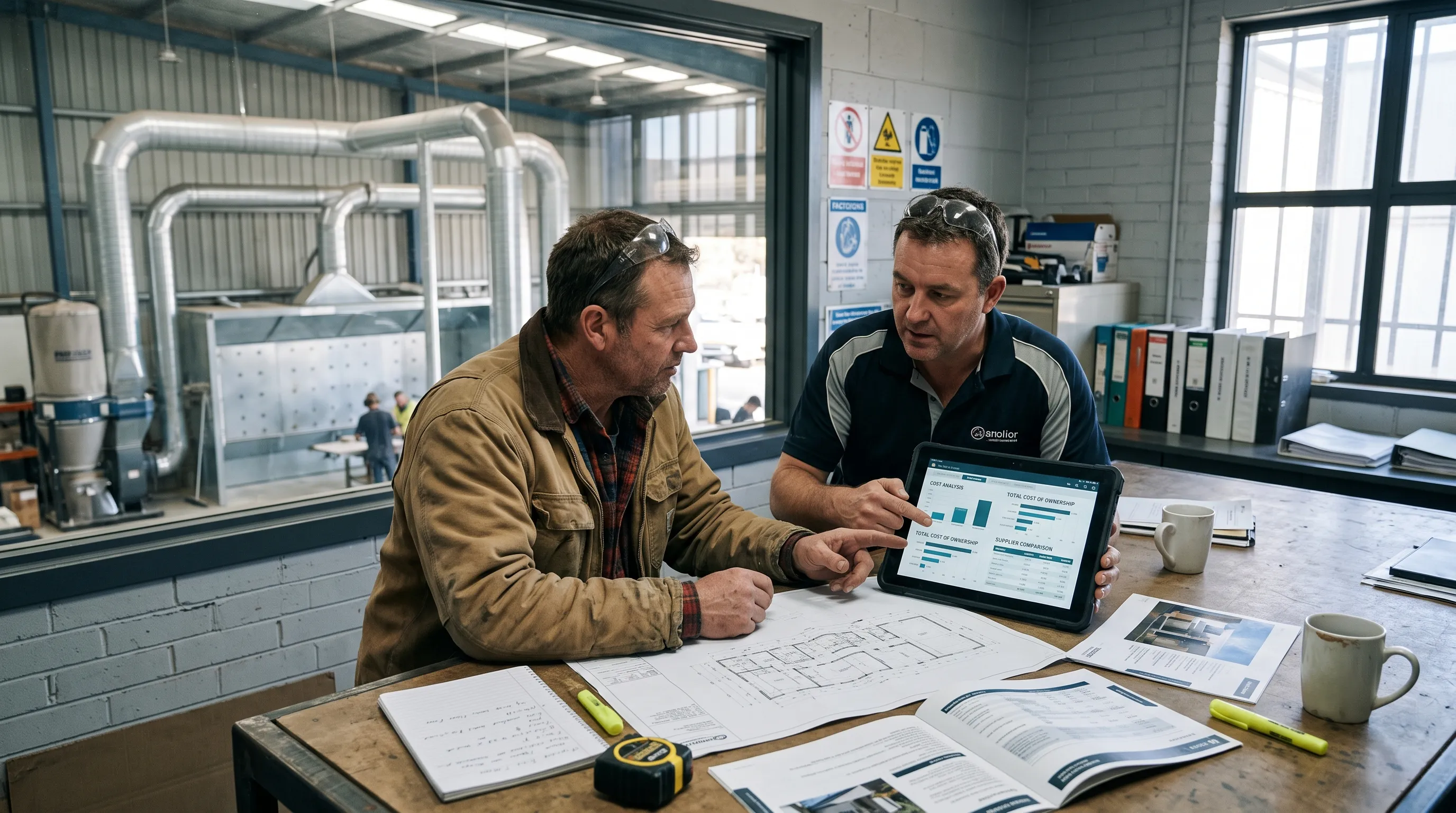
The quotation should be reviewed carefully to ensure that the proposed equipment and commercial terms are clearly defined. A useful quotation should identify the equipment configuration, principal specifications, included accessories, filtration arrangement, installation scope, and any additional services. Buyers should check whether ductwork, hoses, electrical components, collection containers, and commissioning are included or treated as separate items. They should also confirm delivery arrangements, payment terms, warranty conditions, and the expected schedule. When comparing quotations from different suppliers, it is important to compare equivalent specifications and installation scopes rather than simply choosing the lowest figure. One quotation may include essential accessories and commissioning, while another may cover only the main machine. Asking questions before placing the order can prevent misunderstandings and help establish realistic expectations about what the supplied equipment will deliver. A transparent quotation also makes budgeting easier and allows the business to assess the full cost of acquiring and operating the system.
Future production requirements should form part of the purchasing decision as well. A workshop may currently use only one sanding station but plan to add more machinery or increase its daily output. In such cases, buyers should discuss potential expansion before finalizing the system design. A solution that can accommodate future needs may reduce the cost and disruption associated with replacing the equipment later. However, expansion should be planned carefully because simply connecting more machines to an existing extractor can reduce airflow at individual workstations if the system was not designed for the additional demand. The supplier should explain the limits of the proposed arrangement and identify which components could be upgraded if production requirements change. Workshop owners should also consider whether future machinery will use the same extraction connections and produce similar dust characteristics. Planning for realistic growth can help businesses protect their investment while ensuring that future modifications remain technically appropriate.
Before making the final purchase, workshop managers should bring together the technical, operational, safety, and financial requirements of the application. They should verify that the system is suitable for the material being sanded, the number of operators, the dimensions of the workpieces, and the expected production volume. The airflow and filtration arrangements should match the dust characteristics, while installation and maintenance should remain practical for the available workspace and staff. Buyers should also review spare-part availability, energy use, warranty coverage, commissioning, and after-sales support. These considerations provide a stronger basis for comparison than purchase price alone. When a supplier has enough information to assess the actual process, it becomes easier to identify a system that balances performance, cost, and long-term reliability. A carefully evaluated Workshop Sanding Extraction system can support more effective dust management when it is correctly specified, installed, and maintained. Taking time to verify the important details before ordering can help businesses avoid unsuitable equipment, reduce unexpected expenses, and make a more confident investment in their sanding operations.
Conclusion
Buying a workshop sanding extraction system requires a complete evaluation of the application's technical needs and the costs associated with operating the equipment over time. Workshop owners should begin by identifying the materials they process, the quantity and characteristics of the dust produced, and the sanding methods used in daily production. They should then compare extraction capacity, airflow requirements, filtration options, workstation dimensions, construction quality, and compatibility with existing machinery. Safety is especially important when the process involves hazardous or potentially combustible dust, because the collection equipment must be appropriate for the specific risks involved. Installation requirements, energy consumption, routine maintenance, replacement filters, spare parts, and supplier support also influence the overall value of the purchase. A detailed quotation and clear technical proposal can help buyers compare equivalent systems and avoid unexpected expenses after ordering. Businesses should also consider future production changes and confirm whether the proposed design can accommodate additional demand without compromising performance. Ultimately, the best purchasing decision is based on suitability, reliability, safety, and manageable operating costs rather than the lowest initial price. By working with a technically capable supplier and reviewing these factors before committing to an order, workshops can select extraction equipment that supports cleaner working conditions, dependable dust control, and consistent production performance over the long term.