The cost of shot blasting machine services can vary considerably from one industrial project to another because the service involves several technical, operational, material, and logistical factors. There is no single fixed rate that can apply to every component or application. A small metal part requiring light surface cleaning will have very different processing requirements from a large fabricated structure covered with heavy rust, scale, or old coating. The type of component, surface condition, blasting method, abrasive media, processing time, production quantity, handling requirements, dust collection, transportation, and required surface finish can all influence the final service cost. Businesses planning to use Shot Blasting Machine Services should therefore evaluate the complete scope of work rather than considering only the basic blasting charge. Understanding the factors that influence pricing makes it easier to estimate the actual processing requirement, compare quotations, plan production expenses, and select a service approach that matches the technical and commercial requirements of the project.
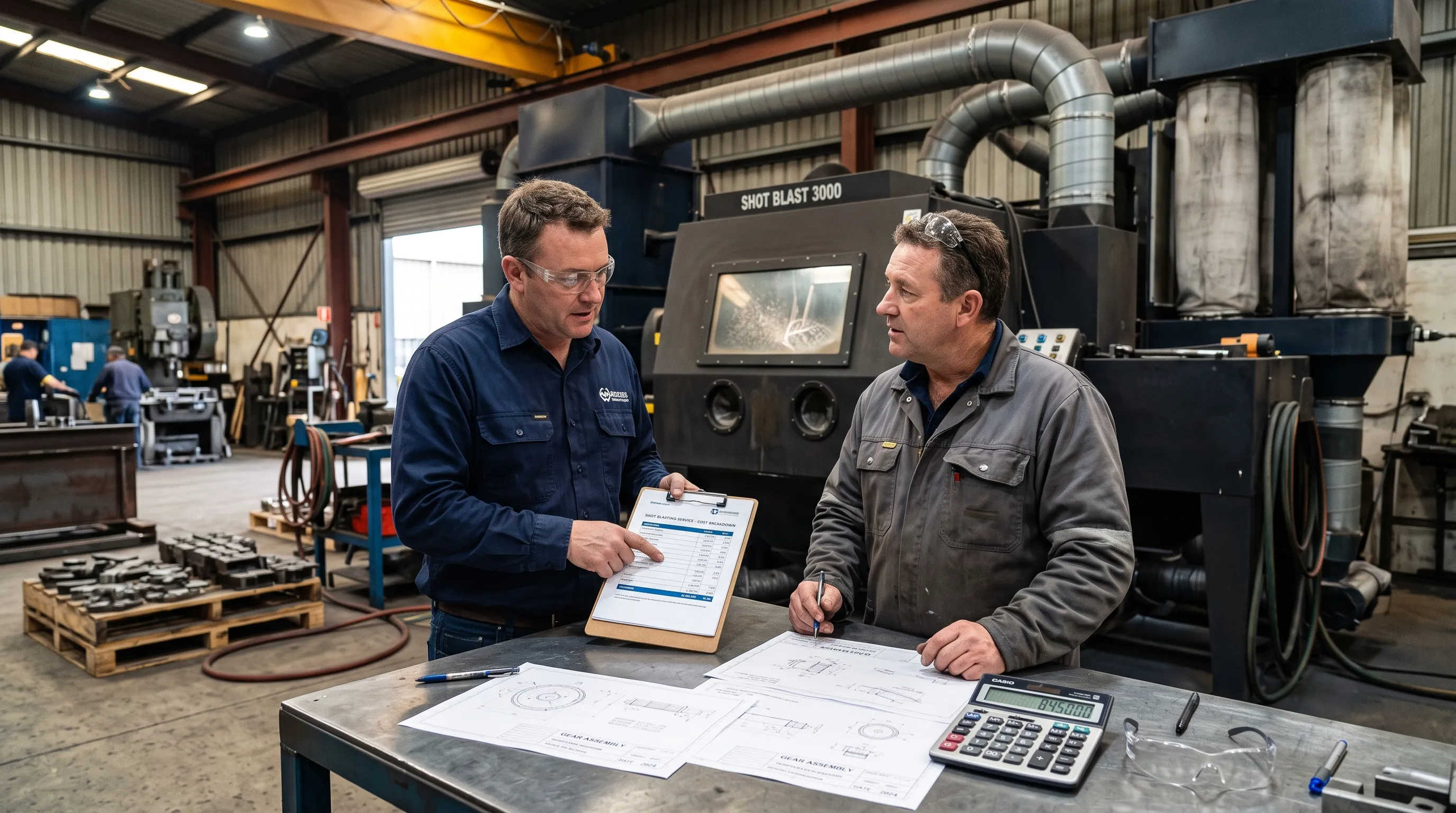
One of the first factors affecting cost is the size and weight of the component. Larger components generally require more space, more handling effort, and potentially longer processing time. Heavy components may also require cranes, lifting equipment, specialized loading arrangements, or a blast room designed for large workpieces. Smaller components can often be processed in batches using suitable equipment, which can reduce handling time per individual piece. The dimensions of the component also influence how effectively the abrasive can reach all surfaces. Large or complex components may require repositioning or additional treatment, which can increase the overall processing requirement.
The material of the component can also affect service cost. Different metals respond differently to abrasive impact, and the blasting process must be selected accordingly. Robust steel components may tolerate a higher level of abrasive impact, while thinner sections or more sensitive materials may require more controlled treatment. If the material requires a specific abrasive type or a carefully controlled blasting intensity, the processing time and media requirements can change. The provider must balance effective cleaning with protection of the underlying material. Therefore, the material should always be considered when estimating the service requirement.
Surface condition is another major cost factor. A component with light dust or minor surface oxidation may require considerably less processing than one covered with heavy rust, mill scale, multiple layers of old paint, or stubborn industrial contamination. The more difficult the existing surface condition, the more abrasive impact and processing time may be required. In some cases, heavily contaminated surfaces may also require additional preparation before blasting. This can increase labor and machine operating time. Businesses should provide accurate information about the current condition of their components when requesting a quotation so that the provider can estimate the work more realistically.
The required level of surface cleanliness has a direct influence on processing time and cost. Not every application requires the same degree of preparation. A component being cleaned for general maintenance may have different requirements from a steel structure being prepared for a high-performance protective coating. More demanding surface preparation generally requires closer process control, additional blasting, and more detailed inspection. If a particular cleanliness standard or surface preparation specification must be achieved, the service provider may need to spend additional time ensuring that the result meets the required condition. The cost should therefore be considered in relation to the final application.
Surface profile requirements can also influence pricing. Shot blasting can create a controlled texture on the metal surface, which can help coatings establish mechanical adhesion. However, the required profile depends on the coating system and project specification. If a particular profile needs to be achieved consistently, the provider may need to adjust abrasive type, size, blasting intensity, and processing time. Additional inspection may also be required. A more demanding surface profile requirement can therefore increase the level of process control needed and affect the overall service cost.
The type of shot blasting machine used for the project is another important factor. Different machines have different operating capacities and handling methods. Cabinet blasting may be suitable for smaller components, while tumblast machines can process certain parts in batches. Roller conveyor machines are suitable for particular long or fabricated products, while blast rooms can handle larger structures. Portable systems may be required for components that cannot be transported easily. The cost of operating these systems differs because equipment capacity, energy consumption, maintenance, labor requirements, and handling arrangements are not identical.
Production quantity can significantly influence the service rate. A large batch of similar components may be processed more efficiently than a small number of individually handled parts. Once the machine is set up and the process parameters are established, repeated components can often be handled with greater consistency and efficiency. High-volume orders may therefore have a different cost structure from small or irregular jobs. However, the actual pricing depends on the equipment, component characteristics, loading method, and production schedule. Businesses should discuss expected quantities and repeat requirements with the service provider rather than assuming that every unit will have the same processing economics.
Batch size also affects machine utilization. If only a few components are processed, a larger portion of the operating time may be spent on loading, positioning, setup, inspection, and unloading. When many similar components are processed together, these activities can be distributed across a larger production quantity. This can reduce the effective processing cost per component. On the other hand, very large batches may require additional shifts, scheduling, or dedicated production capacity. Therefore, the relationship between quantity and price is not always linear. The provider needs to evaluate the complete production schedule before determining the final service cost.
Abrasive media is another direct operating expense. Different blasting applications may require different types, sizes, and grades of abrasive. The amount of media consumed depends on the blasting method, surface condition, recovery efficiency, machine settings, and component characteristics. If the existing surface is heavily contaminated, more abrasive may be required to achieve the desired result. Abrasive that can be recovered and reused through an efficient separation system can help manage operating costs, while unsuitable or contaminated media may need to be replaced more frequently. The condition of the abrasive also affects blasting performance and therefore influences the amount of processing required.
Abrasive recovery and separation systems can contribute to the overall service economics. Many industrial blasting machines are designed to recover usable abrasive and separate it from dust and removed contaminants. Efficient recovery can reduce unnecessary media waste and help maintain a stable blasting process. However, recovery systems themselves require equipment, maintenance, energy, and periodic servicing. These costs form part of the overall operation. A provider using a more sophisticated blasting and recovery setup may have different service pricing from a provider using a simpler arrangement. The difference should be considered in relation to the processing requirements and expected consistency.
Energy consumption can also affect the cost of blasting services. Shot blasting equipment may use electric motors, blast wheels, dust collectors, conveyors, fans, lighting, and other auxiliary systems. The operating power required depends on the machine type and production arrangement. Longer processing times naturally increase energy consumption. Large machines may also require higher power capacity. While energy is only one part of the overall service cost, it becomes more relevant for high-volume or extended production jobs. Efficient machine operation and appropriate processing settings can help prevent unnecessary energy consumption.
Labor requirements are another important factor. Components need to be loaded, positioned, processed, inspected, unloaded, and possibly prepared for the next manufacturing stage. Large or heavy workpieces may require additional handling personnel or lifting equipment. Complex components may require more operator attention because certain areas need controlled treatment. Quality inspection also requires time, particularly when the customer has specific surface preparation requirements. A service provider's labor cost therefore depends not only on the blasting operation but on the complete handling and quality process surrounding it.
Dust collection and filtration can influence service costs as well. Blasting creates dust from the removed surface material and abrasive particles, so industrial extraction and filtration equipment is needed to maintain controlled working conditions. Dust collectors require electricity, filter maintenance, replacement components, cleaning, and periodic servicing. If a project involves extensive removal of old coatings or heavy contamination, the dust load can increase. The service provider may therefore need to operate extraction systems more intensively and maintain them more frequently. These operating requirements can form part of the total service price.
Component handling is particularly important for large industrial jobs. Heavy structures may require cranes, lifting systems, fixtures, trolleys, conveyors, or other material handling equipment. Complex components may need to be rotated or repositioned during blasting to achieve proper coverage. Each additional handling step can increase labor and processing time. If the component requires special fixtures or supports, these may also add to the project cost. Businesses should communicate handling requirements in advance because they can have a significant effect on the quotation.
Transportation can also affect the total cost when components are sent to an external blasting facility. Heavy or oversized components may require specialized vehicles, loading arrangements, and additional handling. Transportation costs can become significant when the distance is large or the component is difficult to move. For some projects, on-site or portable blasting may be considered to avoid transporting large structures. However, on-site work can introduce other requirements related to containment, dust control, equipment mobilization, site preparation, and safety. The most suitable approach depends on the component and project conditions.
The complexity of the component can influence cost even when its overall dimensions are not particularly large. A simple flat plate may be easier to blast than a component containing numerous corners, holes, recesses, welds, internal areas, or irregular surfaces. Complex geometry may require more careful positioning and additional blasting passes. Some areas may need manual attention or special handling. The provider must consider the time required to achieve adequate coverage. Therefore, component complexity should be included when discussing the scope of work.
The condition and type of existing coating can also influence the service requirement. Removing a thin and weak coating may require less processing than removing several layers of hardened industrial paint or other strongly bonded material. Some coatings may generate significant dust during removal and require additional extraction capacity. If the existing coating is damaged or contaminated with other materials, the process may need to be adjusted. Businesses should provide information about previous coatings whenever possible because this helps the provider understand the expected blasting workload.
Quality requirements can increase the cost when more detailed inspection or documentation is required. Standard visual inspection may be sufficient for some applications, while critical industrial projects may require more systematic verification of cleanliness and surface profile. Documentation, sample approval, repeat inspections, or additional quality controls can require extra labor and processing time. These requirements should be agreed upon before the job begins so that they can be included in the quotation and production plan.
Urgency can also influence service pricing. A normal production schedule allows the provider to plan machine utilization, labor, abrasive management, and component handling efficiently. An urgent order may require rescheduling existing work, adding shifts, prioritizing the customer's components, or arranging additional handling resources. These changes can increase the operating cost. Businesses that can provide advance notice may have greater flexibility in scheduling and may avoid unnecessary urgency-related expenses.
Customization can affect the price when the blasting process needs to be adapted specifically to the customer's components. Special fixtures, protected areas, unique handling arrangements, customized machine settings, or dedicated production sequences may require additional preparation. Customization can be valuable when standard processing cannot provide the required result, but the additional engineering and operating effort should be considered in the service quotation. The provider should explain any special requirements before processing begins so that the customer understands the scope of the work.
Maintenance and machine wear are also included indirectly in service pricing. Shot blasting machines operate under abrasive conditions, and components such as blast wheels, liners, wear plates, conveyors, separators, and other parts require regular inspection and replacement. Dust collection equipment also requires filter maintenance and other servicing. These maintenance expenses are necessary to keep the equipment operating reliably and consistently. A service provider must account for these operating costs when setting sustainable service rates. Extremely low pricing may not provide a realistic indication of the actual equipment and process resources required for quality blasting.
The geographical location of the service provider can influence pricing through transportation, labor, energy, and logistics costs. Regional operating conditions can differ, and businesses may need to consider the total delivered cost rather than the processing rate alone. A nearby provider may reduce transportation requirements, while a specialized provider farther away may have equipment better suited to a particular component. The most useful comparison therefore considers the complete cost of moving, processing, inspecting, and returning the components.
When comparing quotations, businesses should ask for a clear description of what is included. Some quotations may cover only the blasting operation, while others may include loading, unloading, abrasive handling, inspection, dust management, transportation, and other services. Comparing only the headline price can create confusion if the scope differs between providers. A detailed quotation allows the customer to understand the cost structure and identify which factors are driving the price. It also makes it easier to discuss possible changes, such as different batch sizes, scheduling arrangements, or surface preparation requirements.
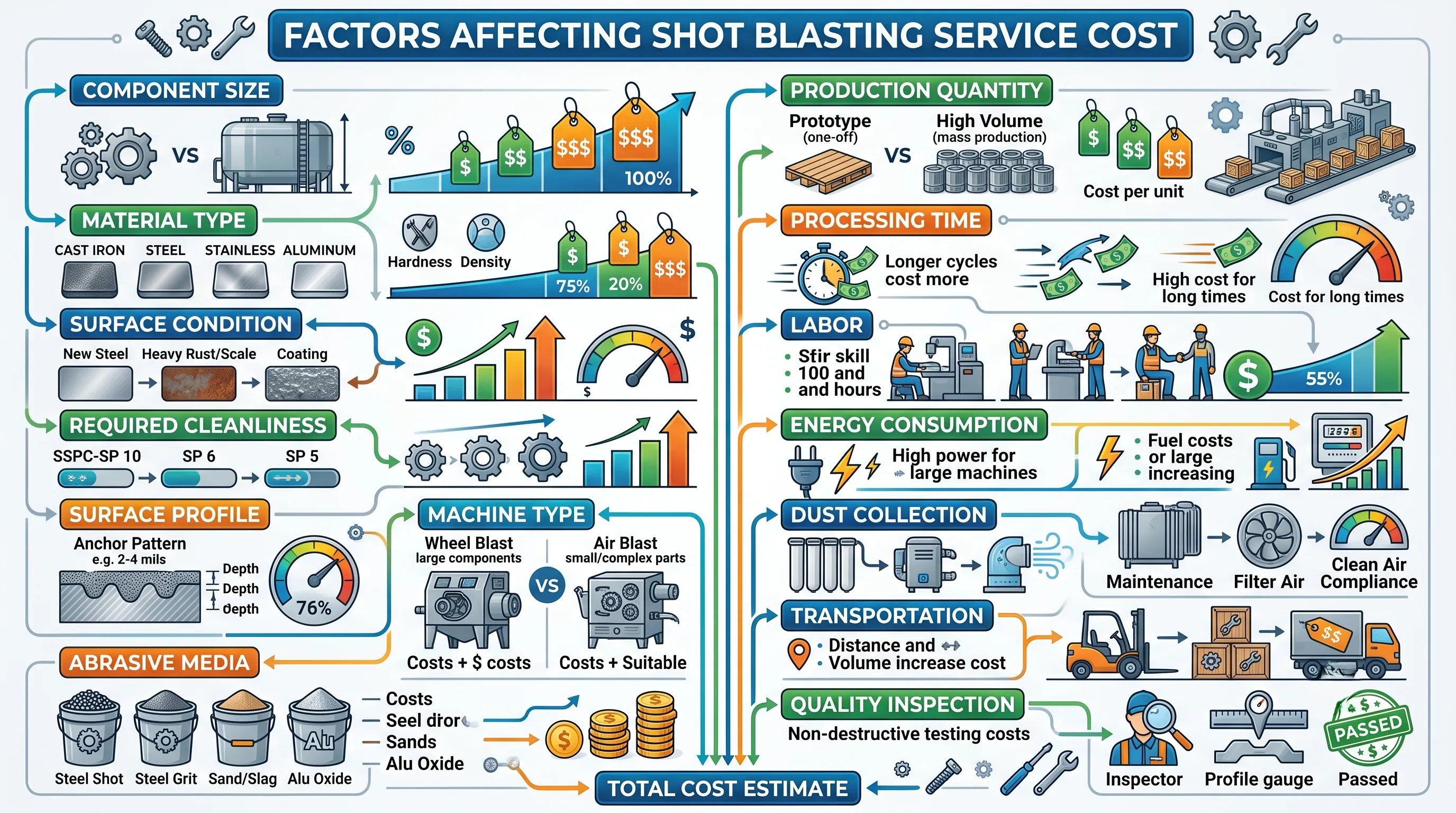
Ultimately, the cost of shot blasting depends on the complete processing requirement rather than on one isolated factor. Component size, material, surface condition, required cleanliness, surface profile, machine type, abrasive media, production quantity, processing time, labor, energy, dust collection, handling, transportation, quality inspection, urgency, and customization can all contribute to the final price. A realistic quotation should consider these factors together and reflect the actual work required to achieve the desired surface condition. Businesses that understand these cost drivers can plan their projects more effectively and make informed comparisons between service providers. By selecting Shot Blasting Machine Services according to both technical requirements and overall project economics, manufacturers can balance surface preparation quality, processing efficiency, production schedules, and operating costs without focusing only on the initial service rate.
Conclusion
The cost of shot blasting machine services is influenced by a combination of technical, operational, material, handling, and logistical factors. Component size and complexity, surface condition, required cleanliness, abrasive type, machine selection, production quantity, processing time, labor, energy use, dust collection, transportation, inspection, and special requirements can all affect the final quotation. A clear understanding of these factors helps businesses evaluate service proposals more accurately and avoid unexpected costs during production. Instead of comparing only the basic blasting price, manufacturers should consider the complete scope of work and the quality of preparation required for the next production stage. When the service is planned according to the actual component and application, businesses can manage their surface preparation budget while maintaining suitable quality, productivity, and process consistency.