The cost of dust collector system services can vary significantly from one industrial application to another because every facility has different dust generation levels, equipment configurations, airflow requirements, maintenance conditions, and service needs. A simple inspection and routine maintenance visit may require considerably less work than a complete system overhaul, duct modification, filter replacement, fan repair, or installation of additional extraction points. The type of dust collector also influences service requirements because cartridge collectors, bag filters, cyclone collectors, wet scrubbers, pulse jet systems, and centralized extraction systems use different components and maintenance procedures. Professional Dust Collector System Services are therefore generally priced according to the technical scope of work rather than through one fixed rate for every industrial facility. Understanding the factors that influence service costs can help businesses prepare realistic maintenance budgets, compare quotations more effectively, and identify the type of support required for their particular dust collection system.
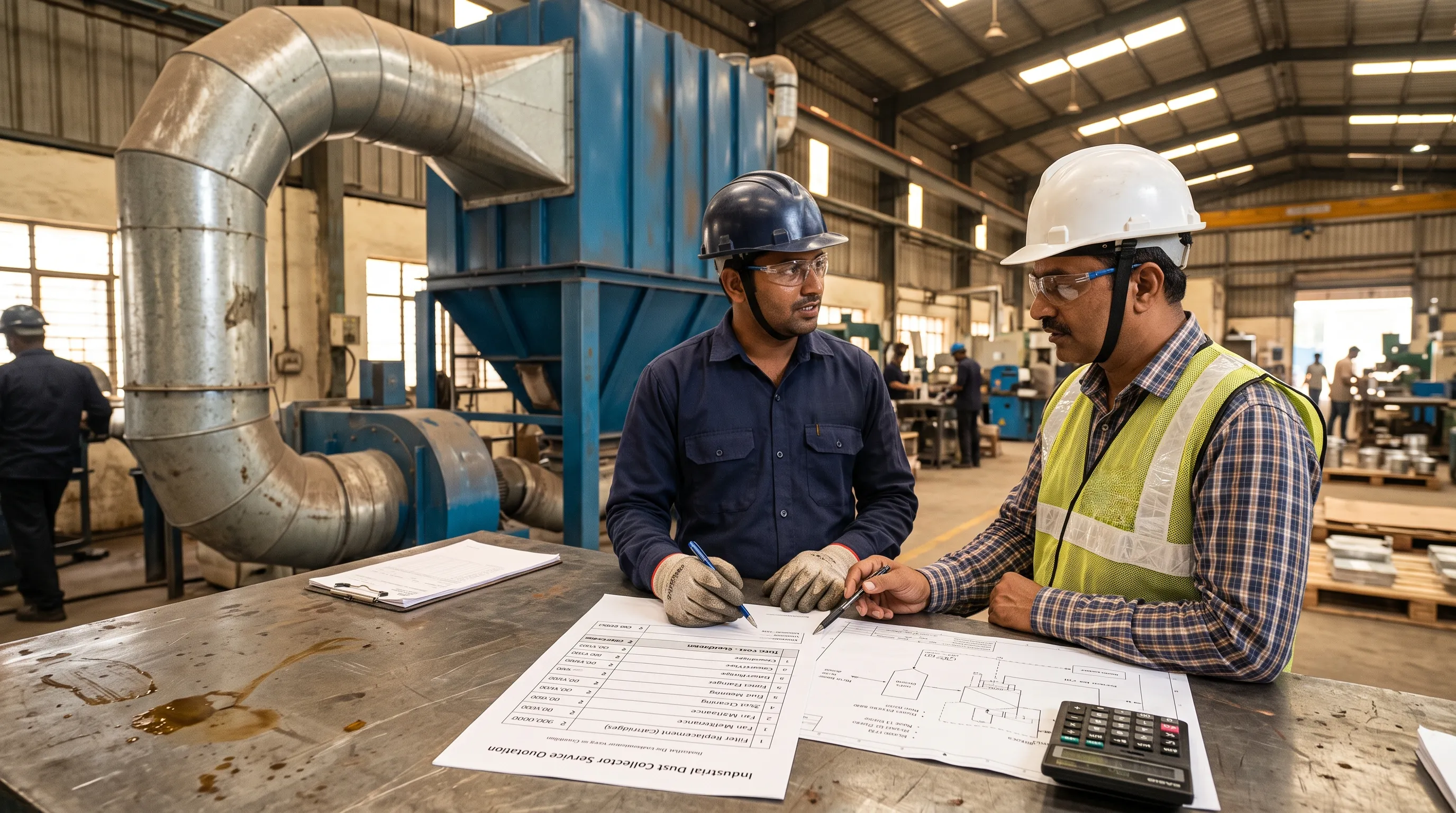
One of the first factors affecting service cost is the type and design of the dust collector. Different collection technologies require different inspection procedures, replacement components, cleaning methods, and repair work. A cartridge dust collector may require cartridge inspection and replacement, pulse cleaning checks, fan servicing, and housing inspection. A bag filter system may involve filter bags, cages, cleaning mechanisms, valves, and dust discharge equipment. A cyclone collector may require inspection of the cyclone body, inlet, outlet, discharge section, and wear areas. Wet scrubbers can require inspection of pumps, spray nozzles, water circulation components, tanks, and separators. Because each system has a different construction and maintenance requirement, the service scope can have a direct effect on cost.
The size and capacity of the dust collection system can also influence the overall service expense. A compact collector connected to one machine may require less inspection and labor than a large centralized system serving several production lines. Larger systems can have more filters, longer duct networks, multiple collection points, larger fans, more valves, and additional control components. Servicing these systems may require more technicians, longer working hours, specialized equipment, and more extensive testing. Therefore, the physical size and complexity of the system are important factors when estimating the service requirement.
The number of extraction points is another consideration. A centralized dust collection system may serve grinding machines, sanding stations, cutting equipment, shot blasting machines, or other production equipment through several branches. Each collection point needs to provide suitable capture airflow. During service, technicians may need to inspect individual hoods, branch ducts, dampers, flexible connections, and airflow conditions. If there are many extraction points, the inspection and balancing process can take more time. Additional service work may also be required if some branches have poor suction or unequal airflow distribution.
The condition of the existing equipment can have a major effect on service cost. A system that receives regular preventive maintenance may require routine inspection, cleaning, adjustment, and minor component replacement. In contrast, a neglected collector may require extensive repair before it can operate effectively. Filters may be heavily loaded, ductwork may contain accumulated dust, fans may have worn bearings, belts may need replacement, and electrical components may require attention. Severe deterioration can increase both labor and spare-part requirements. Regular maintenance can therefore help businesses avoid larger corrective service expenses over time.
Filter replacement is one of the most common cost components in dust collector maintenance. Filters have a finite service life, and their replacement cost depends on the filter type, size, material, quantity, and design. Cartridge filters can vary considerably in dimensions and filtration media, while filter bags can differ in fabric, construction, length, diameter, and treatment. Specialized filters may cost more than standard components because of their material or application requirements. The number of filters installed in the collector also affects the total replacement expense. A large bag filter system with many filter bags can naturally require a larger replacement budget than a small unit.
The condition and type of filter media also influence how frequently replacements are required. Filters that operate under high dust loading may reach their service limit sooner than filters used in lighter applications. Dust particle size, moisture, temperature, material characteristics, and cleaning effectiveness can all influence filter life. If a filter cleaning system is not functioning properly, filters may load more rapidly. Repeated premature filter replacement can increase maintenance costs. Investigating the reason for early filter loading can sometimes be more useful than simply replacing the filters each time.
The condition of the fan and blower can also affect service cost. Fans operate continuously or frequently in many industrial facilities, and components such as bearings, belts, couplings, motors, and fan blades can experience wear. Minor maintenance may involve alignment, belt adjustment, bearing lubrication, or cleaning. More extensive problems may require bearing replacement, motor repair, blade balancing, or complete fan servicing. If vibration or mechanical damage is ignored for an extended period, secondary damage can develop and increase repair requirements. The actual condition of the fan therefore needs to be considered when estimating the service cost.
Ductwork inspection and repair can add to the total service expense. Duct networks may develop leaks, corrosion, dents, blockages, damaged joints, or wear caused by abrasive materials. Dust can also accumulate inside ducts when airflow conditions are unsuitable. Cleaning and repairing a large duct network can require considerable labor, especially when access is difficult. If ducts need to be redesigned or replaced, material and fabrication costs can also increase the overall project value. Simple sealing work is generally a different scope from complete duct modification, so businesses should confirm what duct-related work is included in a quotation.
The accessibility of the dust collector is another practical factor. Equipment located in an easily accessible area may be serviced more quickly than equipment installed in a restricted or elevated location. Difficult access can require additional labor, lifting equipment, scaffolding, or other arrangements. The same equipment may therefore have different service requirements depending on its installation environment. Before service begins, businesses should provide accurate information about the collector's location and accessibility so that the provider can plan the work properly.
The operating environment can also influence maintenance costs. Dust collectors installed in harsh industrial environments may experience higher levels of dust, heat, moisture, vibration, or corrosive exposure. Equipment operating continuously for long production shifts can also require more frequent inspection than systems used occasionally. Shot blasting, grinding, foundry, metal processing, powder handling, and similar applications can place different demands on filtration equipment. Service schedules and component replacement requirements should therefore reflect the actual operating conditions rather than using a standard interval for every facility.
The type of dust being collected is another important factor. Heavy abrasive dust can cause wear in ducts, cyclones, and other components. Fine dust can load filters rapidly and may require carefully selected filtration media. Sticky or moist material can create different filtration challenges from dry particulate matter. Some processes may also produce mixed dust containing particles with different characteristics. Because the dust affects filter loading, duct wear, cleaning requirements, and discharge behavior, it can influence the overall service cost.
Dust discharge equipment can also contribute to maintenance expenses. Depending on the system, collected material may be removed through bins, rotary airlock valves, screw conveyors, or other mechanisms. These components contain moving parts that may require inspection and replacement. A damaged rotary airlock, for example, may require replacement of seals, bearings, or other internal parts. If collected dust is not discharged properly, it can create additional problems within the collector. Service providers may therefore include discharge system inspection as part of a complete maintenance program.
Pulse cleaning components can affect both maintenance requirements and cost. Pulse jet collectors depend on compressed air, valves, solenoids, controllers, and air manifolds to clean filter bags or cartridges. If one or more components fail, cleaning efficiency can decline and filter resistance can increase. Replacing individual valves or solenoids may be relatively straightforward, while repairing a larger control system can involve additional work. The number and type of pulse cleaning components installed in the collector will therefore influence the service scope.
Electrical and control system requirements can also affect the cost of servicing a dust collector. Control panels may include motor starters, timers, pressure switches, sensors, relays, variable-speed drives, or automated cleaning controls. Troubleshooting electrical faults can require specialized technical knowledge and testing equipment. If the facility needs control system upgrades rather than simple repairs, the project scope can become more extensive. Businesses should therefore identify whether they need mechanical maintenance, electrical servicing, automation support, or a combination of these services.
Airflow testing and system balancing can add to service costs but may be necessary when performance problems exist. A dust collector may be operating mechanically while individual extraction points still have insufficient suction. Testing airflow at different points can help determine whether the system is balanced correctly. In centralized systems, dampers may need adjustment and duct branches may require modification. More extensive balancing work can require additional measurement, adjustment, and testing time. The cost therefore depends on the number of extraction points and the complexity of the system.
System upgrades are generally more expensive than routine maintenance because they involve additional equipment, fabrication, installation, and commissioning. A business may need to add new extraction points, increase filtration capacity, upgrade the fan, modify ductwork, install a larger filter, add a pre-separator, or replace outdated control equipment. The final cost will depend on the required capacity and the components involved. However, the exact upgrade should be determined after evaluating the existing system so that unnecessary changes can be avoided.
Installation and commissioning services can also affect the overall cost when a new collector is being installed. New installations may involve equipment transportation, positioning, foundation or support arrangements, duct fabrication, electrical connections, fan installation, filter assembly, and commissioning. The distance between the collector and production equipment can affect duct length and installation effort. Complex layouts can require additional fabrication and fitting work. Commissioning may include airflow checks, damper adjustment, operational testing, and verification of the complete extraction arrangement.
Labor requirements are another direct cost factor. The number of technicians required and the amount of time needed for the job depend on the service scope. A basic inspection may require limited labor, while a major repair or system modification may require mechanical, electrical, fabrication, and installation personnel. Work performed during restricted production hours may also require special scheduling arrangements. Businesses should review the labor component of a quotation to understand what activities are included.
Replacement part quality can influence both immediate and long-term cost. Low-cost components may have different service characteristics from components selected for the specific operating conditions. Filters, bearings, belts, valves, seals, and other parts should be suitable for the equipment and application. The correct component can help maintain expected performance and reduce the risk of repeated replacement. When comparing quotations, businesses can consider the specifications and suitability of the parts rather than comparing only their purchase price.
Preventive maintenance programs can change the way businesses manage dust collector costs. Instead of dealing with unexpected breakdowns, a scheduled maintenance program can spread service activities across planned intervals. Routine filter inspection, fan checks, duct inspections, cleaning system testing, and dust discharge checks can help identify developing issues early. Although preventive maintenance has an ongoing cost, it can provide greater predictability for maintenance planning. The appropriate schedule depends on equipment type, dust loading, production hours, and operating conditions.
Emergency repair requirements can increase service expenses because urgent breakdowns may require rapid mobilization, immediate troubleshooting, replacement parts, or work outside normal maintenance schedules. A dust collector failure can be particularly disruptive when the connected production process depends on extraction for continued operation. Maintaining critical spare parts and following a preventive maintenance schedule can help reduce the likelihood of emergency service requirements. Businesses should also understand the service provider's response arrangements when evaluating long-term maintenance support.
Travel distance and site location may also affect service costs, particularly when specialized technicians need to travel to the facility. Transportation, accommodation, equipment movement, and other logistical requirements can contribute to the overall service quotation. The effect depends on the provider's location, project size, and duration. For larger service projects, these costs may form a smaller proportion of the total project value, while short service visits may be more affected by travel requirements.
The best way to understand the actual cost is to request a detailed quotation based on the specific dust collection system. A service provider should ideally review the equipment, understand the dust-generating process, identify the required work, and provide a clear scope before final pricing. The quotation can then distinguish between inspection, maintenance, replacement parts, repair, testing, installation, and additional modifications. This makes it easier for the customer to compare proposals and understand what is included.
Businesses should also consider the long-term operating cost rather than looking only at the initial service price. A maintenance approach that keeps filters functioning properly, reduces unnecessary pressure losses, maintains fan efficiency, and prevents recurring failures may help control operating expenses over time. Similarly, identifying the cause of repeated breakdowns can be more valuable than repeatedly repairing the same component. Service decisions should therefore consider equipment reliability, maintenance frequency, component life, energy requirements, and production continuity along with the immediate service quotation.
Ultimately, the cost of Dust Collector System Services depends on the condition, design, size, complexity, and operating requirements of the dust collection system. Routine maintenance, filter replacement, fan servicing, duct repairs, airflow balancing, electrical troubleshooting, system upgrades, and complete installations can all have different cost structures. The type of dust, production process, number of collection points, accessibility, replacement parts, labor requirements, and service urgency can further influence the final price. A detailed technical assessment is therefore the most practical way to determine the actual service requirement and develop a realistic budget for maintaining reliable dust collection performance.
Conclusion
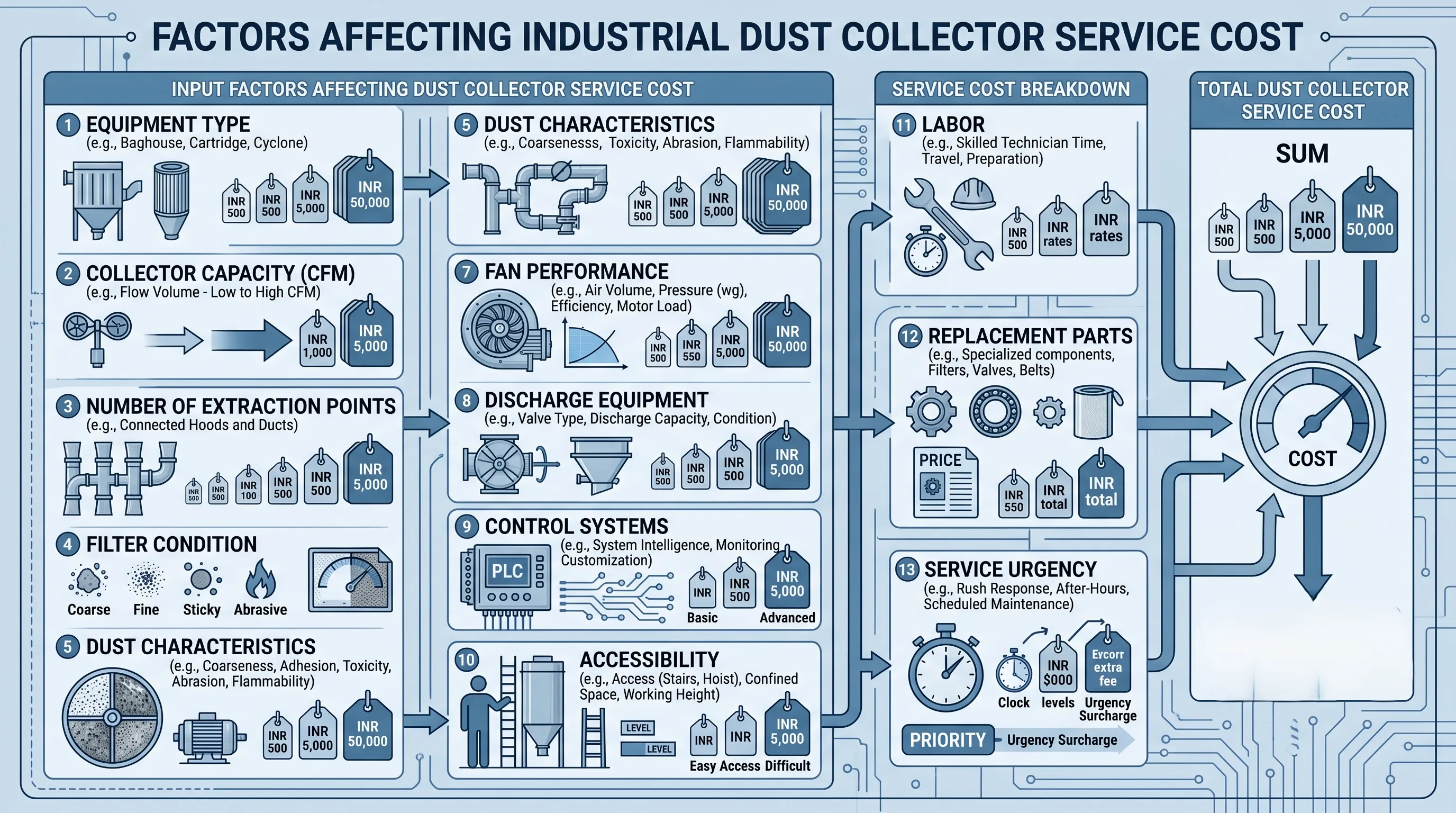
Dust collector service costs are influenced by many technical and operational factors rather than one fixed price. Equipment type, collector capacity, filter condition, dust characteristics, ductwork, fan performance, extraction points, discharge equipment, control systems, accessibility, labor, replacement parts, and service urgency can all affect the total expense. Routine preventive maintenance generally has a different cost structure from major repairs, system modifications, or complete installations. Businesses can manage these expenses more effectively by maintaining equipment regularly, identifying problems early, comparing detailed service scopes, and selecting components that suit the operating conditions. A proper technical assessment allows the service requirement to be understood before work begins and helps businesses plan maintenance budgets around the actual needs of their dust collection systems.