The cost of an industrial sanding extraction wall depends on several factors, including the size of the extraction surface, the required airflow capacity, the filtration technology, the type of dust being collected, and the overall configuration of the equipment. Different workshops have different requirements, so there is no single price that applies to every installation. A small workstation designed for occasional sanding may require a simpler arrangement than a large industrial system intended for continuous production and heavy dust loads. The total investment can also change according to construction materials, fan specifications, dust collection capacity, electrical controls, installation requirements, and additional safety features. Before requesting a quotation, manufacturers should identify the materials they process, the dimensions of their workpieces, their daily production volume, and the level of dust control required. These details help equipment suppliers recommend a suitable solution instead of estimating the cost based on size alone. A properly specified Industrial Sanding Extraction Wall can provide long-term operational value by helping control sanding dust, maintaining a cleaner working area, and supporting consistent surface preparation. Understanding the factors that influence its price allows businesses to compare equipment options more accurately and plan their investment according to their actual production needs.
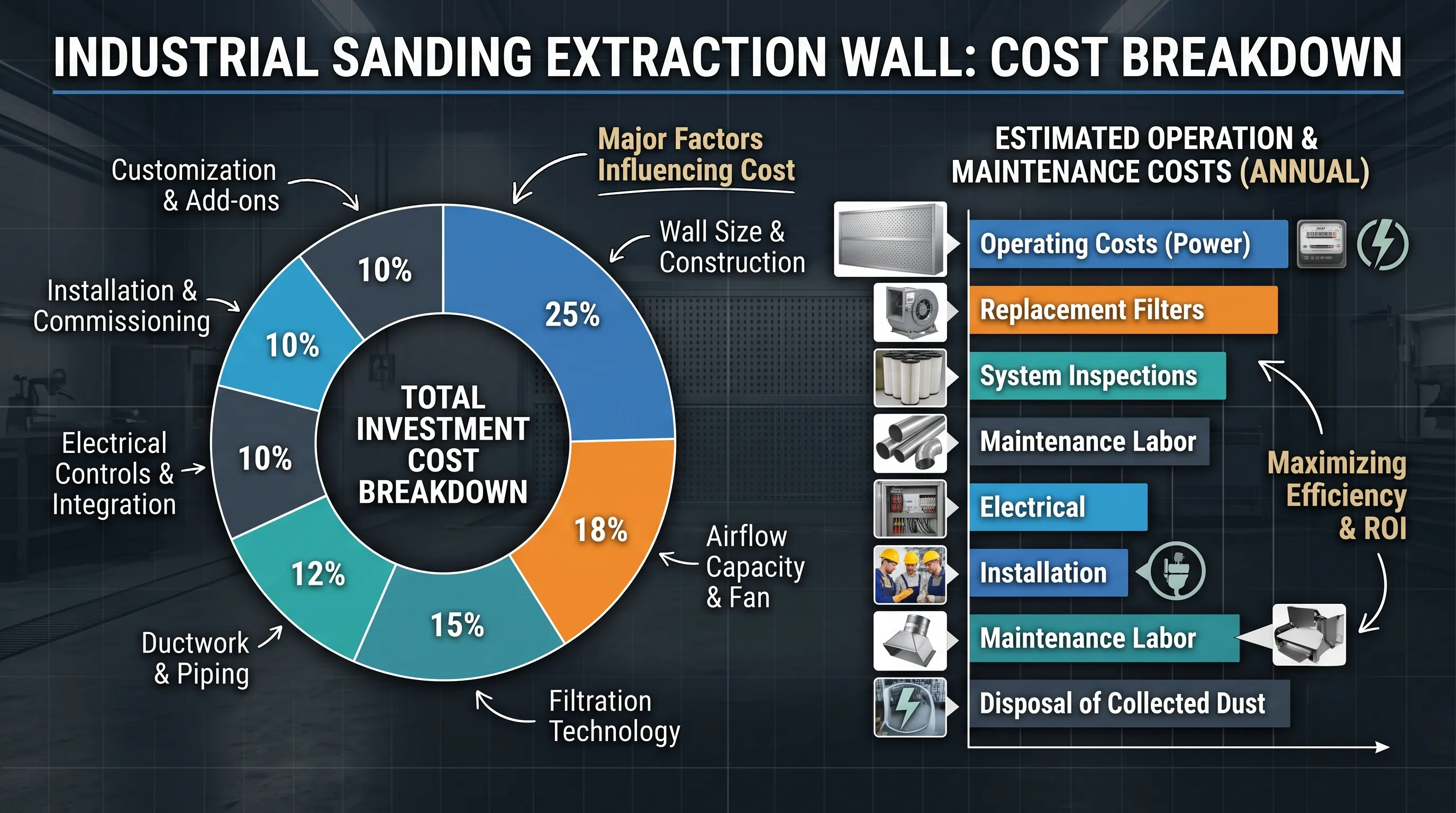
The size of the extraction wall is one of the first factors that affects the purchase price. A larger wall generally requires more material for the frame, extraction panel, internal plenum, and supporting structure. It may also need a larger fan or blower to maintain suitable airflow across the working surface. Small components can often be handled at a compact workstation, while large fabricated parts, furniture panels, automotive components, and industrial assemblies may require a wider or taller extraction area. The dimensions should therefore be selected according to the actual products being processed. Purchasing a wall that is too small can restrict operator movement and reduce effective dust capture, while choosing an unnecessarily large unit can increase the initial investment and consume valuable workshop space. A practical design balances the working area, extraction performance, and available budget.
The required airflow capacity also has a major influence on equipment cost. The fan or blower must move enough air through the extraction panel and filtration system to capture and transport the dust generated during sanding. Systems designed for heavier dust loads or larger extraction surfaces may require more powerful fans, stronger electrical components, and filtration equipment capable of handling greater airflow. However, choosing a fan based only on its power rating is not an effective way to compare quotations. The available airflow under actual operating resistance is more important because filters, ducts, bends, and extraction openings all affect system performance. Manufacturers should request technical details about the proposed airflow and the conditions under which it is specified. This helps them determine whether the equipment is suitable for the application and whether the quoted price reflects an appropriate system design.
The filtration technology selected for the equipment can significantly affect the total price. Industrial dust collection systems may use fabric bag filters, cartridge filters, or other filtration arrangements depending on the dust characteristics and required performance. Each configuration has different requirements for filter media, housing dimensions, cleaning mechanisms, and servicing. Cartridge filters may offer a large filtration area within a relatively compact arrangement, while bag filters can be suitable for many industrial dry-dust applications. Neither option is automatically the best choice for every workshop. The selection depends on particle size, dust concentration, material properties, operating conditions, and the filtration performance needed. A higher initial filtration cost may be justified when the application requires a particular level of performance or a specialized filter configuration. Manufacturers should compare suitability and maintenance requirements rather than choosing equipment based only on the lowest purchase price.
The type of material being sanded can introduce additional costs. Wood, metal, composite materials, painted surfaces, and other industrial materials generate dust with different physical and chemical characteristics. Some dusts may require specialized filter media or a collection arrangement designed to handle abrasive particles. Others may contain substances that need particular exposure controls or careful disposal procedures. Certain fine combustible dusts can create fire or explosion hazards under appropriate conditions, and these applications may require a formal risk assessment and additional protective equipment. Such requirements can influence the collector design, electrical components, isolation arrangements, and other safety features. Businesses should disclose the materials and processes involved before obtaining a quotation. If the application presents special hazards, a standard extraction wall may not be sufficient, and the complete system must be specified accordingly.
The design and construction quality of the extraction wall also influence the purchase price. Industrial equipment may be built using different sheet thicknesses, frame designs, support structures, and surface finishes. The appropriate construction depends on the intended operating environment, expected workload, component size, and durability requirements. A system used daily in a busy manufacturing facility may need a more robust structure than a workstation used occasionally for light-duty sanding. The extraction panel should also be designed to provide suitable airflow distribution across the working area. Additional structural supports or customized dimensions can increase fabrication costs, but they may be necessary to accommodate particular components or installation conditions. Businesses should evaluate construction specifications and expected service requirements to determine whether the quoted equipment offers suitable value for their application.
Customization is another factor that can affect the final price. Standard equipment may meet the needs of workshops with common workpiece dimensions and straightforward extraction requirements. However, some manufacturing facilities process unusually shaped components, long fabricated structures, or products that require a specific workstation arrangement. These applications may need customized wall dimensions, special workpiece supports, modified extraction openings, or a different position for the fan and filtration unit. Customization can also be necessary when the equipment must fit into an existing production layout or operate alongside other machinery. Additional design and fabrication work can increase the initial cost, so businesses should identify essential requirements before placing an order. A well-planned customized system can be worthwhile when it improves accessibility, workflow, or dust capture without introducing unnecessary complexity.
The dust collection unit should be included when calculating the total equipment cost. The extraction wall captures dust-laden air, but the collected air must be directed to an appropriate filtration and dust collection arrangement. The collector housing, filter area, dust hopper, collection container, and filter cleaning mechanism all contribute to the overall configuration. A larger production workload may require a collector with greater capacity or a design that supports longer operating periods between servicing. The collection container should also be convenient to empty and suitable for the material being collected. If the system requires frequent container changes or specialized dust handling, these considerations can affect both the initial design and the ongoing operating budget. Businesses should confirm whether the quoted price includes the complete collector or only the extraction wall and associated fan.
The ductwork and air distribution arrangement can create additional expenses, particularly when the collector is installed away from the sanding workstation. The length and diameter of the ducts, the number of bends, the required supports, and the complexity of the installation all affect the overall project cost. Poorly planned ductwork can increase airflow resistance and reduce extraction performance, so it should be designed to match the fan and filtration system. Some installations may use a compact arrangement with limited ducting, while others require longer routes around existing machinery or structural obstacles. Businesses should provide accurate workshop dimensions and installation details when requesting a quotation. They should also clarify whether ducts, fittings, supports, and related installation materials are included in the quoted amount.
Electrical controls and monitoring features can also influence the price. A basic system may use a straightforward fan control arrangement, while more advanced configurations may include additional monitoring, automatic functions, or controls intended to support a particular production process. Depending on the application, the equipment may require suitable motor protection, electrical isolation, control panels, or specialized components. Systems handling hazardous dust may need further protective measures based on a competent assessment of the risks. These features should be selected according to the actual operating and safety requirements rather than added without a clear purpose. When comparing quotations, manufacturers should ask which electrical components and control features are included, what power supply is required, and whether any additional electrical work will be necessary at the installation site.
Installation conditions can make a noticeable difference to the total investment. A workshop with an accessible installation area and suitable electrical connections may require less preparation than a facility where machinery must be relocated or new supporting structures are needed. Installation costs can include positioning the extraction wall, assembling the collector, connecting ducts, establishing electrical connections, and checking the system's operation. The final amount depends on the equipment configuration and the work required at the site. If the supplier provides installation support, businesses should confirm the scope of that service and identify any responsibilities that remain with the customer. Preparing the site before delivery can help reduce delays and avoid unexpected expenses during installation.
Operating costs should be considered alongside the purchase price. The fan or blower consumes electricity whenever the system operates, and the amount used depends on the motor, operating schedule, airflow requirements, and overall system resistance. Facilities that run sanding operations for several shifts may have substantially different energy requirements from workshops that use the equipment intermittently. Filter replacement, routine inspection, cleaning, servicing, and dust disposal also contribute to the cost of ownership. A system with unsuitable filtration or poorly designed airflow may require more frequent maintenance or struggle to maintain effective collection. Manufacturers should ask about the expected filter service life under their operating conditions and the recommended maintenance schedule. These details help provide a more realistic picture of the long-term investment.
Filter cleaning arrangements deserve particular attention because they can influence both equipment cost and maintenance effort. Depending on the collector design, filters may need manual cleaning, mechanical cleaning, or an automated cleaning mechanism. The appropriate arrangement depends on the dust load, filter type, operating schedule, and system design. A more advanced cleaning mechanism may increase the purchase price but could be beneficial in an application where dust accumulation would otherwise require frequent manual intervention. However, automated cleaning does not remove the need for inspection or filter replacement. Businesses should compare the maintenance process, the availability of replacement parts, and the expected service requirements before choosing a configuration. The aim should be to select a system that supports reliable operation without creating unnecessary maintenance complexity.
The availability of spare parts and after-sales support can also affect the long-term value of the equipment. Replacement filters, fan components, motors, seals, and other service parts may be needed during the system's working life. If these parts are difficult to obtain, maintenance can take longer and production interruptions may become more expensive. Businesses should ask about replacement part availability, technical support, warranty conditions, and service arrangements before purchasing. They should also confirm whether the supplier provides operating instructions and guidance for routine maintenance. A clear support arrangement can help the facility maintain extraction performance and manage unexpected service needs more effectively. The cheapest quotation may not provide the best overall value if ongoing service is difficult to arrange.
Production requirements should guide the final budget. A small workshop performing occasional sanding may be able to use a simpler system that meets its needs without unnecessary additional features. A larger manufacturer operating continuously may need a higher-capacity fan, greater filter area, a larger collection unit, and more durable construction. Facilities that process several different materials may also need to account for the compatibility of the filtration system and any special safety requirements. Instead of selecting equipment based on the size of the available budget alone, businesses should first define the performance they need. They can then compare configurations that meet those requirements and determine which option offers the best balance of initial cost, operating expenses, maintenance, and reliability.
The supplier's quotation should clearly explain the equipment included in the proposed package. Some quotations may cover only the extraction wall, while others may include the fan, dust collector, filter media, collection container, controls, ductwork, and installation support. Differences in the scope of supply can make two prices appear comparable when they actually represent different levels of equipment. Manufacturers should check the specifications, airflow information, filter type, construction details, electrical requirements, warranty conditions, and installation responsibilities before making a decision. They should also ask about any additional costs that may arise during commissioning or routine maintenance. A clear quotation helps the business understand what it is purchasing and reduces the possibility of unexpected expenses after the order is placed.
The cost of an extraction wall should ultimately be evaluated in relation to the operational benefits it can provide. Effective dust capture can help reduce the spread of sanding particles, support cleaner workstations, and lower the opportunity for dust to settle on prepared components. In facilities where sanding is followed by painting or coating, improved dust management may also help reduce some contamination-related cleaning and rework. These benefits depend on proper system design, correct operation, and regular maintenance. Equipment should not be purchased on the assumption that extraction alone will eliminate every dust-related problem. The overall process may also require suitable ventilation, housekeeping, surface cleaning, operator training, and additional controls for hazardous materials. A realistic evaluation considers the extraction system as one part of the facility's complete dust management strategy.
When requesting a quotation, Industrial Sanding Extraction Wall should be specified according to the actual sanding process, the size of the workpieces, the material being processed, the expected dust load, and the available installation space. Providing this information allows the supplier to recommend a suitable extraction surface, fan capacity, filtration system, and collection arrangement. Businesses should also identify any special requirements related to combustible dust, hazardous substances, operating hours, or integration with existing equipment. Comparing complete technical specifications and long-term operating expenses provides a more dependable basis for making a purchasing decision than comparing initial prices alone. A system that is properly matched to the application can support consistent production, practical maintenance, and effective dust management throughout its service life.
Conclusion
The cost of an industrial sanding extraction wall is determined by the complete equipment design rather than by the wall dimensions alone. Extraction surface size, fan capacity, filtration technology, dust collection arrangements, construction quality, customization, ductwork, electrical controls, and installation requirements can all influence the final quotation. The type of material being sanded is equally important because certain applications require specialized filtration or additional safety measures. Businesses should also consider electricity consumption, filter replacement, routine maintenance, spare parts, and after-sales support when estimating the long-term cost of ownership. Before purchasing, manufacturers should provide clear details about their production process and compare quotations that include equivalent equipment and services. By selecting a system that meets the workshop's actual requirements, businesses can make a more informed investment in dust control, workplace cleanliness, and consistent surface preparation.