When I was younger, my mother asked me what I wanted. I wanted a computer. She wanted to buy me a motorcycle. In the end, I got the computer.
I still remember the computer course I took back then. I used to draw freehand, and suddenly I was using Paint. Later, I discovered design software through some friends. I taught myself how to use the tools. Back then, there wasn't much design content on the internet, so I turned to magazine stands and CDs packed with thousands of tutorials and images to study, experiment with, and use to create art.
The internet began to take off, and I started absorbing everything I could find. I collected tutorials on how to do this or that. I studied programming, animation in the now-defunct Macromedia Flash 5, and anything else that could expand my possibilities. I had a hard drive full of tutorials showing me how to recreate effects, make animations, and master different tools.
When I landed an internship at an advertising agency, I began putting that knowledge into practice.
I kept collecting tutorials even after switching fields and entering the world of video. How to do this, how to produce that, how to achieve a particular effect. There was always another technique to learn, another tool to master, something I might be able to use someday.
But over time, I noticed something: you start collecting knowledge to use in your own creative work, but eventually you end up collecting just for the sake of collecting. You know how to create the effect, understand the technique, and know the tool, but you have no idea how any of it fits into one of your own ideas. You learn how to execute, but not necessarily what you want to say.
In video production, countless videographers and filmmakers create beautiful images, elaborate camera movements, and cinematic sequences that they post online for others to draw inspiration from—and, naturally, collect as references.
I spent years in that field wanting to create the things I saw, but I kept running into the high cost of equipment and production.
I clearly remember a time when, whenever a TV soap opera was airing, some videographers would get together to talk about it. But they weren't necessarily watching the show to follow the story. They had something else in mind: how it had been filmed.
— I know the colorist. He did the color grading for a movie.
— Look at the HDR this guy used!
— This camera records in ProRes 4444!
And the conversation went on like that. Everyone knew something about the show: the equipment used, the lighting, the camera movements, the professionals involved, and the post-production process.
It was fun, but exhausting, too. Sometimes, downright pretentious.
I remember asking those people whether they wanted to produce something of their own. A story, a short film, a universe they could build using all that accumulated knowledge.
Often, it was as if I had triggered a system error. They didn't know what to say. They changed the subject.
Years later, with the arrival of artificial intelligence, that question came back to me. I spoke with several people in the field, but I kept encountering the same recurring difficulty: many people knew how to execute techniques, reproduce styles, and manipulate tools, but they had no original idea they genuinely wanted to develop.
When an idea did come up, it often involved a movie character, a meme, or some reference the audience already knew. It was easier to work with something that already had cultural weight than to build something entirely new.
And often, the people doing this didn't even realize it.
Creating something new, even after watching hundreds of tutorials, is difficult. Creating a world, characters, conflicts, and images that don't depend on something familiar requires more than technical mastery. It requires an idea capable of standing on its own.
It's easy to take Batman and put him inside a medieval Japanese suit of armor. You recognize Batman. Even transformed, he still carries decades of references, stories, and meaning.
Now try creating a completely new character.
People may find it strange. They may say it looks like something else, search for references, or try to fit it into a category. And if they can't recognize it quickly, many will simply lose interest.
The problem is that a creation can be very good and still feel strange. Not because it's bad, but because it doesn't offer the immediate recognition that makes it easy to consume.
The creator may also end up giving up. Instead of sticking with what they're building, they return to familiar ground, where the references have already been tested and acceptance seems more likely.
Today, we collect prompts.
We learn to write commands that generate images, videos, characters, and settings. We save formulas, styles, parameters, and combinations that have worked for other people. We believe that the more material we accumulate, the better prepared we are to create.
But are we creating, or are we just preparing ourselves to begin forever?
Prompts change. Tools evolve. Technology becomes more accessible. Even so, much of what we produce remains rooted in ideas we already know, characters we already love, and aesthetics that have already been accepted.
We find something new inside something old and reproduce that novelty until it, too, becomes familiar.
Perhaps that's why we live surrounded by nostalgia, sequels, remakes, and reboots. We revisit old franchises because they already carry emotional value. We don't have to start from scratch, introduce an unfamiliar world, or win over an audience without the help of its memories.
Is there anything wrong with that?
Not necessarily. Reinterpreting, paying homage, and rebuilding are also legitimate forms of creation. The problem begins when familiarity becomes a condition for acceptance. When we stop asking what we can still create and start asking only what we can remake.
And there is a particular risk in tampering with works that have already set such a high standard.
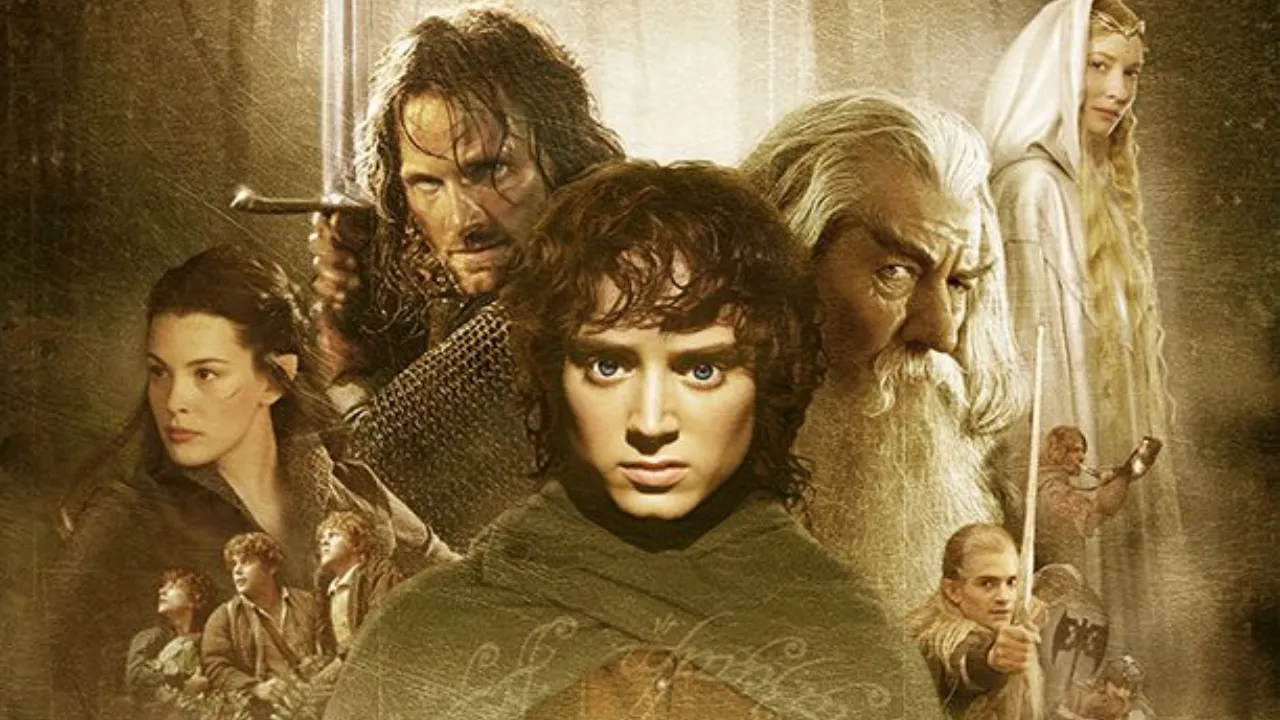
Imagine remaking The Lord of the Rings. Peter Jackson's films, released more than two decades ago, remain a benchmark that is difficult to surpass in fantasy cinema. Even though some fans have reservations about the differences between the films and the books, those images, those performances, and that music are already part of millions of people's memories.
A remake would face more than the task of retelling Tolkien's story. It would have to contend with the memories of everything audiences have already experienced through the original trilogy.
Being good wouldn't be enough. It would have to justify its existence against something that, for many people, is already irreplaceable.
Harry Potter faces the same burden. When a work spans generations, its characters stop being just characters. They come to embody faces, voices, settings, and memories that audiences don't necessarily want to see replaced.
And the more we try to reproduce what once moved us, the harder it can become to create a different kind of emotion.
Perhaps the problem isn't collecting tutorials, references, equipment, or prompts. I spent much of my own life doing exactly that, and the knowledge was valuable. Learning to use tools opened doors, allowed me to experiment, and gave me resources to work with.
The problem is confusing the accumulation of tools with the development of an idea.
We can spend years learning how to do anything and still have no idea what we want to do.
We can know every lighting technique, master dozens of programs, reproduce any style, and generate thousands of images without being able to create a single universe that is truly our own.
Because learning how to make something is one thing. Having something to say is another.
And perhaps the hardest question isn't how many more tutorials we need to watch, how many prompts we need to collect, or what equipment we need to buy.
Perhaps it's this:
What do you want to create that doesn't exist yet?
#creativity #artificialintelligence #aiart #digitalart #innovation #inspiration #originality #tutorials #filmmaking #design #creativeprocess #newideas #contentcreation #popculture #nostalgia #remakes #promptengineering #stopcopying #createsomethingnew #becreative