Skippi Ice Pops Marketing Strategy: Shark Tank, D2C & the Journey to a ₹100 Crore+ Brand
An in-depth analysis of how India's first natural ice pops brand transformed a nostalgic summer treat into one of the country's fastest-growing FMCG startups through Shark Tank India, digital marketing, omnichannel distribution, and consumer-first branding.
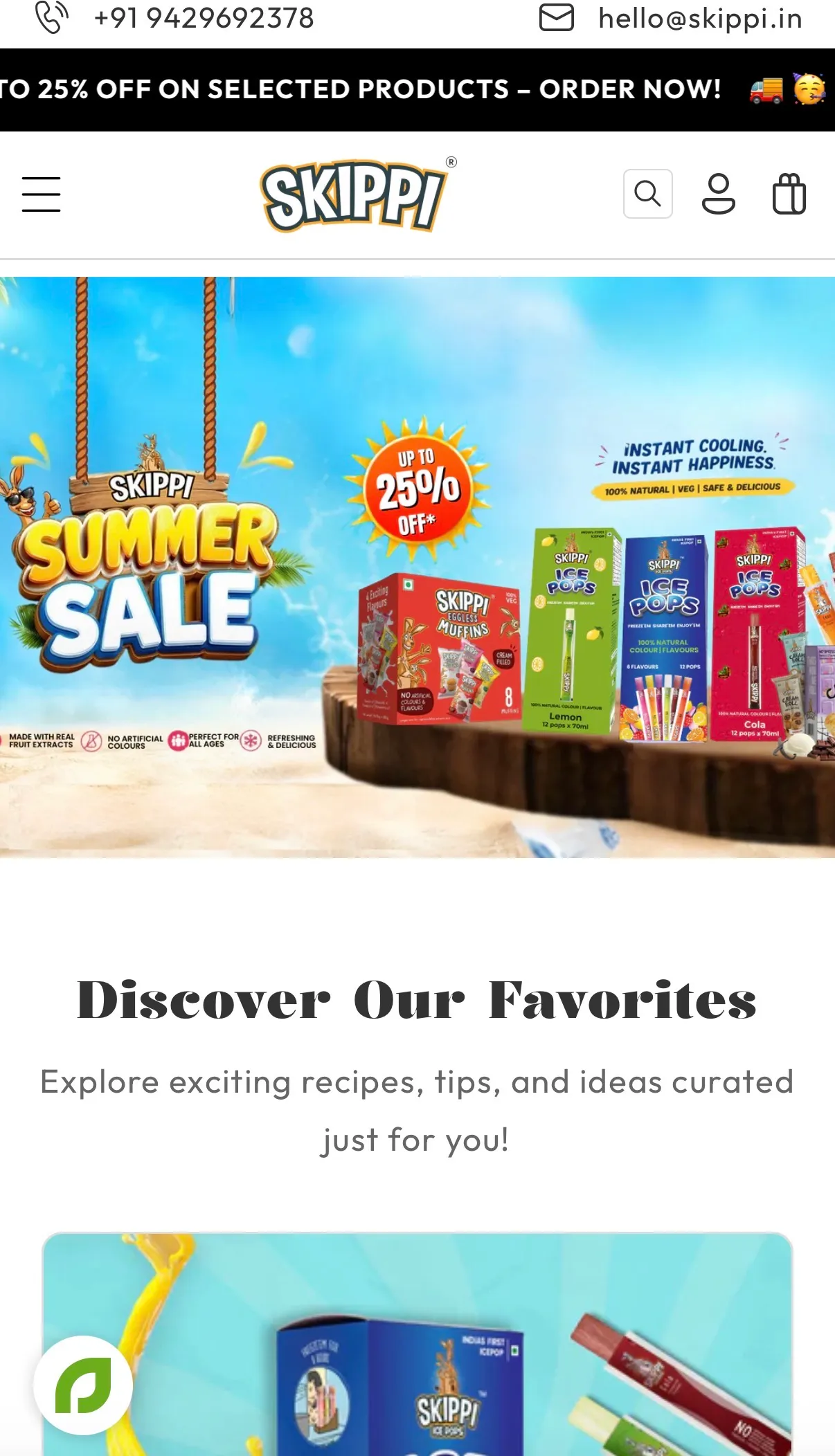
Introduction
The Indian frozen dessert market has traditionally been dominated by ice creams, kulfis, and artificially flavoured ice candies. While consumers had countless choices, very few brands focused on offering healthier frozen treats made with natural ingredients. This gap in the market created an opportunity for innovation.
Recognizing this unmet need, Skippi Ice Pops entered the market in 2021 with a simple yet differentiated proposition—India's first preservative-free natural ice pops. Instead of competing directly with established ice cream giants like Amul or Kwality Wall's, the brand created a new category by combining childhood nostalgia with modern consumer preferences for clean-label products.
Skippi's biggest breakthrough came after its appearance on Shark Tank India Season 1, where it became the first startup in the show's history to receive investment offers from all six Sharks. The founders eventually secured ₹1 crore in funding, instantly bringing national visibility and credibility to the young brand.
The Shark Tank appearance acted as a catalyst for explosive growth. Within months, Skippi reported a dramatic increase in website traffic, retail inquiries, distributor partnerships, and monthly sales. The company expanded rapidly across India through its direct-to-consumer (D2C) website, marketplaces like Amazon and Flipkart, quick-commerce platforms, and offline retail stores.
Today, Skippi has built a nationwide presence with 10,000+ retail outlets, 200+ distributors and super stockists, and availability across 25+ states. The company has also reported monthly revenues exceeding ₹2 crore and has publicly shared ambitions of building a ₹100 crore+ FMCG brand.
Rather than relying solely on television advertising or heavy discounting, Skippi built its growth engine by combining:
Digital-first storytelling
Social media marketing
Shark Tank-driven PR
Influencer collaborations
Omnichannel distribution
Health-focused positioning
Nostalgia marketing
This case study explores Skippi Ice Pops' marketing strategy through a business, branding, and consumer psychology lens. Instead of merely describing the company's activities, it examines the strategic decisions behind its rapid growth and highlights practical lessons that startups, marketers, and D2C brands can apply in today's competitive FMCG landscape.
Brand Overview & Market Context
Skippi Ice Pops was founded in 2021 by Ravi Kabra, Anuja Kabra, and their family, with a mission to reinvent India's traditional ice candy category using healthier ingredients and modern branding.
Growing up, ice candies were a favourite summer treat for many Indians. However, most products available in the market contained artificial colours, preservatives, and synthetic flavours. As consumers became increasingly health-conscious, especially parents buying snacks for children, demand for cleaner and safer alternatives began to grow.
Skippi capitalized on this opportunity by introducing natural fruit-based ice pops made without preservatives. Instead of positioning itself as another frozen dessert company, the brand focused on becoming a healthier, family-friendly alternative that parents could trust.
Its product portfolio includes:
Natural Ice Pops
Mixed Fruit Ice Pops
Party Packs
Family Combo Packs
Seasonal Flavours
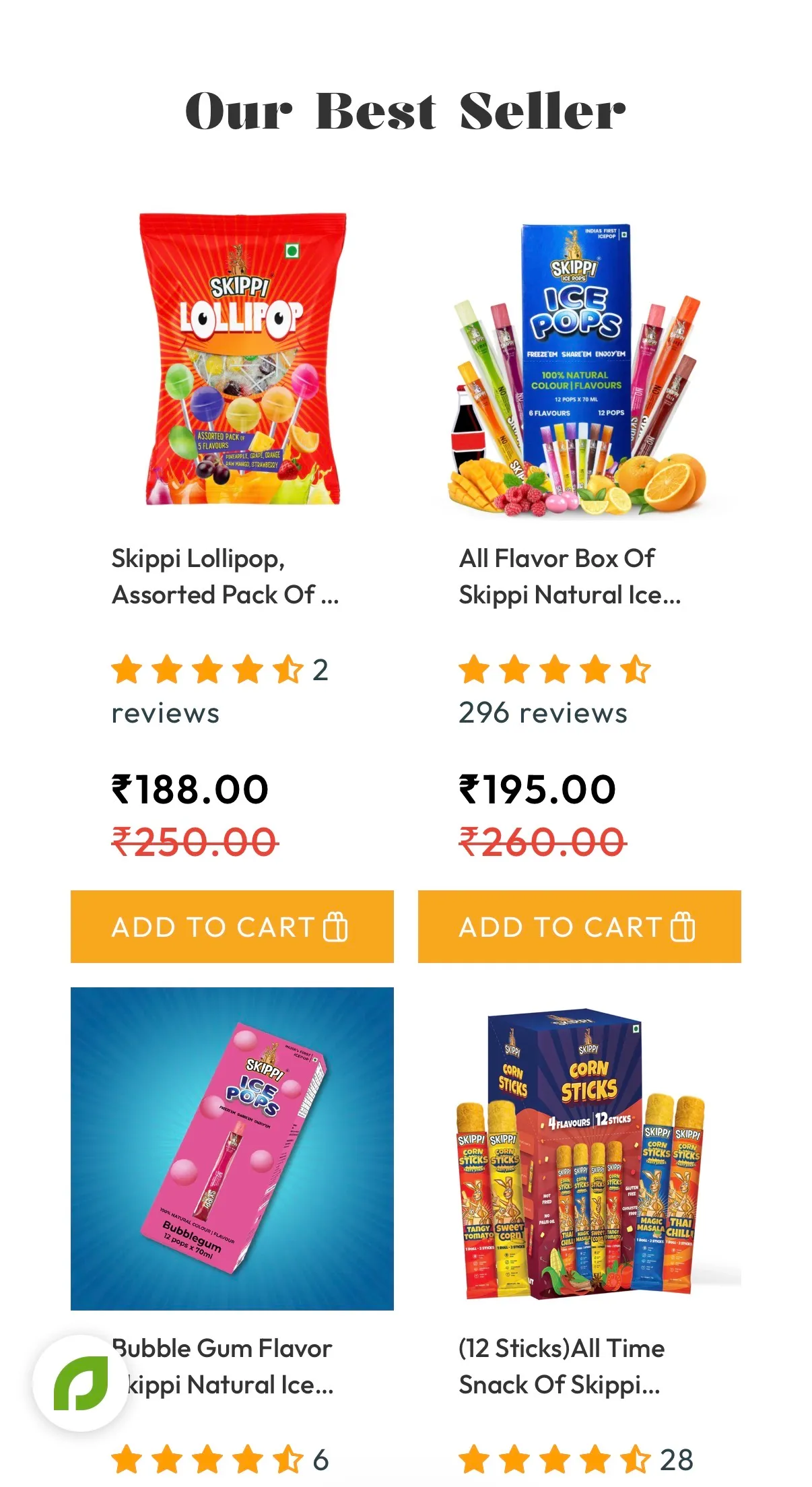
Unlike premium ice cream brands that compete on indulgence, Skippi competes on health, convenience, affordability, and nostalgia.
The company's journey changed dramatically after appearing on Shark Tank India. The founders impressed investors with their differentiated product and scalable business model, becoming the first startup on the show to receive offers from all six Sharks. This achievement significantly increased brand awareness and accelerated expansion into modern trade, quick commerce, and online marketplaces.
Today, Skippi follows an omnichannel business model, ensuring customers can purchase its products through:
Official D2C website
Amazon
Flipkart
Modern retail chains
General trade stores
Quick-commerce platforms
Institutional sales
Instead of depending on a single sales channel, Skippi has built multiple revenue streams, reducing risk while improving customer accessibility.
Brand Snapshot
Category | Details |
Brand | Skippi Ice Pops |
Founded | 2021 |
Founders | Ravi Kabra, Anuja Kabra & Family |
Industry | FMCG / Frozen Desserts |
Headquarters | Hyderabad, India |
Core Product | Natural Ice Pops |
USP | India's First Preservative-Free Ice Pops |
Shark Tank Deal | ₹1 Crore |
Retail Presence | 10,000+ Stores |
Distribution Network | 200+ Distributors & Super Stockists |
Geographic Reach | 25+ States |
Monthly Revenue | ₹2–2.8 Crore (reported after Shark Tank growth) |
Business Goal | Build a ₹100 Crore+ FMCG Brand |
Growth Timeline
Year | Milestone |
2021 | Skippi Ice Pops launched |
2022 | Appeared on Shark Tank India and secured ₹1 crore investment |
2022 | Became first startup to receive offers from all six Sharks |
2022–23 | Expanded rapidly across D2C and retail channels |
2023 | Crossed 10,000+ retail outlets and 200+ distributors |
Present | Expanding across India with a vision of becoming a ₹100 crore+ consumer brand |
Market Positioning
The Indian frozen dessert industry is valued at several thousand crores and continues to grow due to rising disposable incomes, urbanization, and increasing demand for convenient packaged foods. However, most traditional frozen treats still compete primarily on price, taste, and availability.
Skippi chose a different path.
Instead of competing directly with established ice cream companies, it created a niche within the frozen dessert category by positioning itself around four key pillars:
Natural ingredients
Childhood nostalgia
Family-friendly consumption
Modern convenience
This positioning allows Skippi to appeal not only to children but also to parents looking for healthier snack options.
Competitive Landscape
Brand | Positioning | Key Differentiator |
Skippi | Natural Ice Pops | Preservative-free, fruit-based, family-friendly |
Amul | Dairy Desserts | Extensive distribution and affordability |
Kwality Wall's | Premium Ice Cream | Wide product portfolio |
Havmor | Frozen Desserts | Variety and premium flavours |
Local Ice Candy Brands | Budget Frozen Treats | Low price and local availability |
Rather than trying to outspend established competitors on advertising, Skippi differentiated itself through product innovation, storytelling, and health-focused branding.
STP Analysis (Segmentation, Targeting & Positioning)
Segmentation
Skippi segments the market based on demographic, behavioural, and psychographic factors.
Demographic
Families
Children
Millennials
Young Parents
Geographic
Tier 1 Cities
Tier 2 Cities
Emerging Urban Markets
Behavioural
Summer snack buyers
Health-conscious consumers
Impulse buyers
Online shoppers
Psychographic
Parents seeking healthier alternatives
Consumers who value convenience
Families looking for nostalgic experiences
Lifestyle-conscious buyers
Targeting
Primary Target Persona
"The Health-Conscious Parent"
Attribute | Details |
Age | 30–45 Years |
Income | ₹8–20 LPA |
Occupation | Working Professional / Homemaker |
Pain Point | Wants healthier snacks for children |
Buying Trigger | Natural ingredients and preservative-free products |
Trust Builders | Shark Tank recognition, positive reviews, clean-label messaging |
Preferred Channels | Instagram, Amazon, Blinkit, Retail Stores |
Secondary Target Persona
"The Fun-Loving Young Consumer"
Attribute | Details |
Age | 18–28 Years |
Income | ₹3–8 LPA |
Occupation | Student / Early Professional |
Pain Point | Affordable summer refreshment |
Buying Trigger | Colourful packaging, nostalgia, social media trends |
Preferred Channels | Instagram, Zepto, Flipkart, Swiggy Instamart |
Positioning Statement
"A healthier, colourful, preservative-free ice pop that combines childhood nostalgia with modern nutrition, creating a frozen treat parents trust and children love."
Unlike traditional ice candies that compete primarily on low prices, Skippi builds its positioning around trust, health, fun, and family experiences.
Marketing Channels Overview
Skippi follows an integrated marketing strategy where every channel supports a specific stage of the customer journey—from awareness to repeat purchase.
Marketing Channel | Activity Level | Primary Objective | Funnel Stage |
Social Media Marketing | Highly Active | Awareness & Engagement | Awareness |
Influencer Marketing | Highly Active | Build Trust & Social Proof | Awareness + Consideration |
Shark Tank PR | Highly Active | National Brand Credibility | Awareness |
Paid Digital Advertising | Active | Customer Acquisition | Acquisition |
D2C Website | Active | Direct Sales | Conversion |
Amazon & Flipkart | Highly Active | High-Intent Purchases | Conversion |
Quick Commerce | Highly Active | Convenience & Impulse Buying | Conversion |
Retail Distribution | Highly Active | Increase Product Availability | Acquisition |
Public Relations | Moderate | Brand Authority | Awareness |
Deep Dive into Skippi Ice Pops' Marketing Strategy
Unlike many FMCG startups that rely heavily on discounts and paid advertising, Skippi Ice Pops has built a multi-channel marketing ecosystem where branding, storytelling, digital marketing, and distribution work together to drive growth.
Instead of asking consumers to simply "buy an ice pop," the company sells a feeling—summer nostalgia, healthier choices, colourful experiences, and family bonding.
The result is a marketing strategy that creates awareness, builds trust, encourages trial purchases, and increases repeat buying.
1. Shark Tank India: The Biggest Growth Catalyst
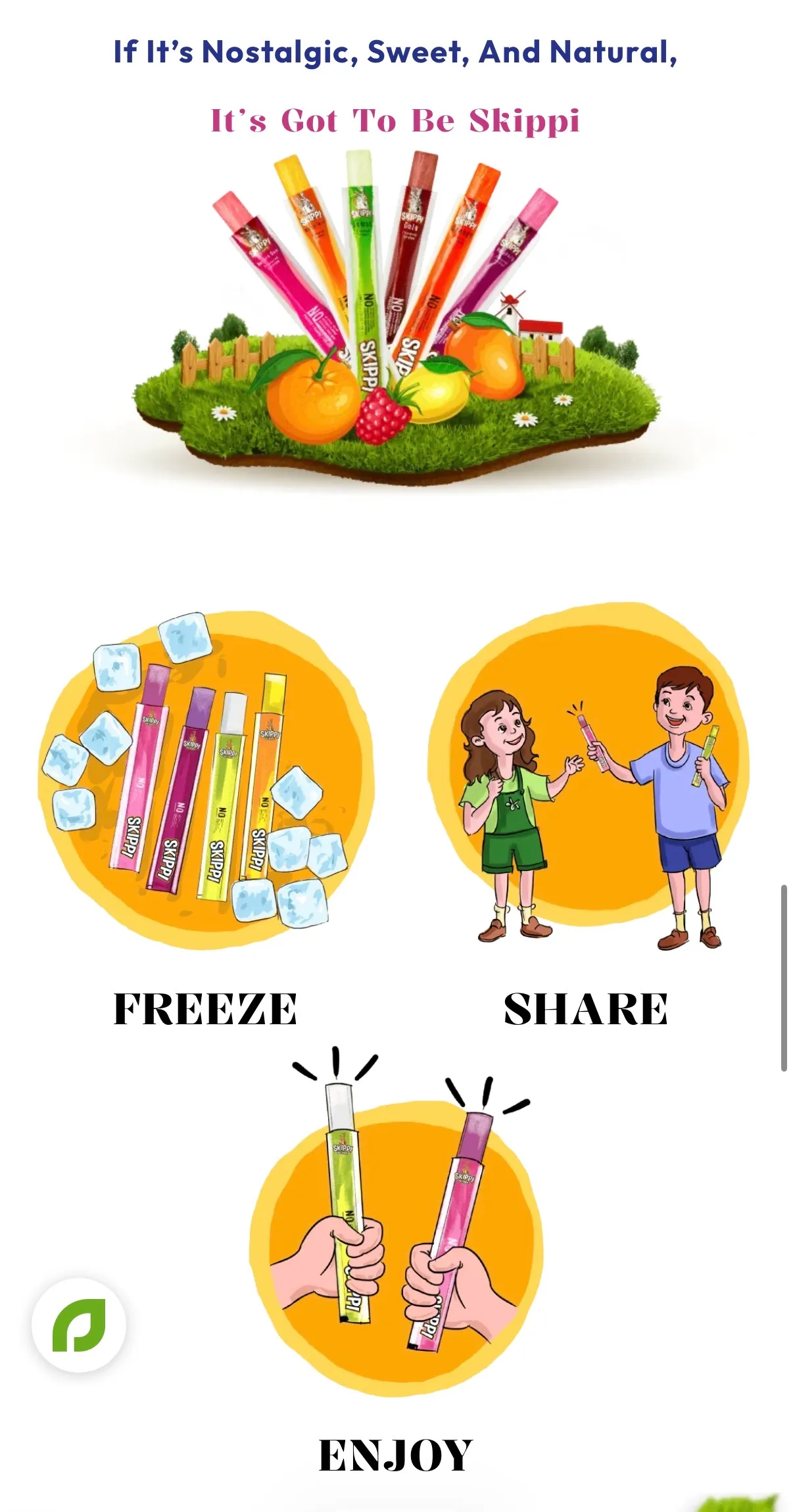
For most startups, brand awareness takes years to build. Skippi accelerated this process in a single evening through Shark Tank India.
The company became the first startup in Shark Tank India's history to receive offers from all six Sharks, eventually securing a ₹1 crore investment.
Rather than viewing Shark Tank as just a fundraising opportunity, the founders leveraged it as a nationwide branding campaign.
Why Shark Tank Was More Than Funding
The television appearance instantly solved several challenges that new FMCG brands typically face:
Low consumer awareness
Lack of trust
Difficulty convincing retailers
High customer acquisition costs (CAC)
Limited media visibility
Millions of viewers were introduced to Skippi's unique product, significantly reducing the time and marketing spend required to build credibility.
Business Impact
Before Shark Tank | After Shark Tank |
Limited Brand Awareness | National Recognition |
Small Distribution | Rapid Retail Expansion |
Low Website Traffic | Massive Spike in Online Visitors |
Limited Investor Visibility | Strong Media Coverage |
Higher Customer Acquisition Cost | Organic Customer Discovery |
Consumer Psychology
Consumers often use authority bias while making purchase decisions.
When respected entrepreneurs publicly invest in a company, customers unconsciously assume:
"If experienced investors trust this brand, it must be good."
This dramatically reduces purchase hesitation.
Instead of spending crores building trust through advertising, Skippi borrowed credibility from the Sharks themselves.
Marketing Funnel
TV Appearance
↓
National Awareness
↓
Media Coverage
↓
Consumer Curiosity
↓
Website Visits
↓
Product Trials
↓
Repeat Purchases
Primary Funnel Stage: Awareness → Consideration
2. Instagram Marketing: Turning Colour Into Content
For an FMCG brand, packaging often acts as the first advertisement.
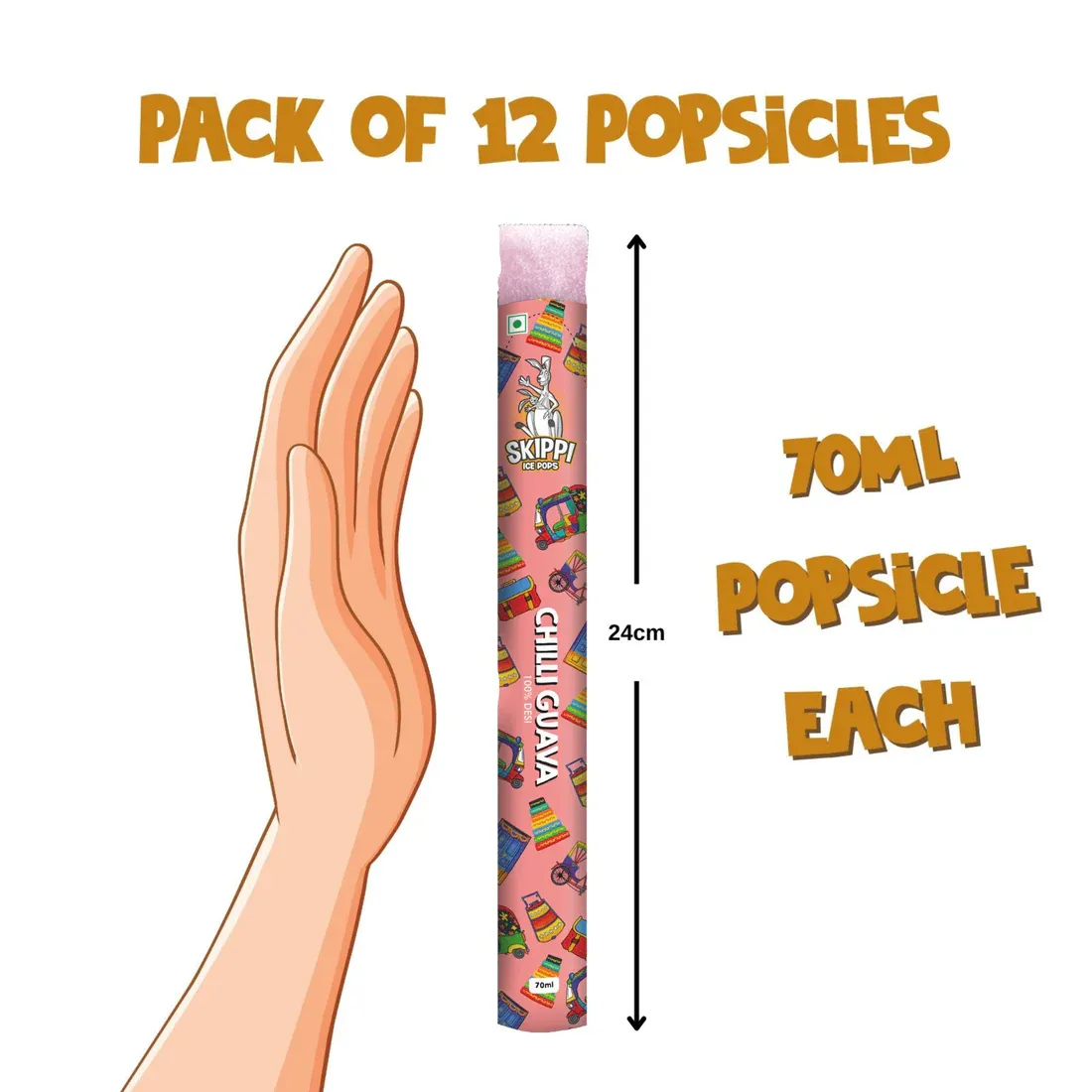
Skippi's colourful ice pops naturally stand out on social media platforms like Instagram, making them highly shareable.
Rather than relying on heavily produced commercials, the brand creates content that feels native to social media.
Its Instagram strategy focuses on:
Summer lifestyle content
Product photography
Family moments
Festival campaigns
Children's celebrations
User-generated content
Short-form Reels
Bright colours immediately capture attention while consumers scroll through crowded feeds.
Neuromarketing & Attention Economics
Research in behavioural psychology suggests that bright colours increase visual attention.
Skippi's packaging uses:
Yellow
Orange
Green
Pink
Purple
Red
These colours stimulate excitement and freshness, making the product highly "scroll-stopping."
Instead of marketing features first, the packaging itself becomes content.
This improves:
Reel views
Shares
Saves
Brand recall
Why This Strategy Works
Children notice colourful products.
Parents notice the natural ingredient messaging.
Both audiences receive different reasons to purchase the same product.
This is an excellent example of dual-audience marketing.
What Suggests This Strategy Is Working?
Strong Instagram engagement
High product photography quality
Seasonal campaign visibility
Community participation
Consistent visual identity
Primary Funnel Stage: Awareness & Engagement
3. Influencer Marketing: Building Trust Through Real Experiences
Instead of hiring only celebrities, Skippi collaborates with:
Parenting creators
Lifestyle influencers
Food bloggers
Family content creators
Kids' activity pages
These creators naturally integrate the product into everyday situations.
Rather than saying:
"Buy this."
The content communicates:
"My children genuinely enjoy this."
This subtle difference makes influencer marketing significantly more persuasive.
Social Proof Loop
Consumers trust recommendations from people they already follow.
Repeated exposure creates familiarity.
Familiarity builds trust.
Trust increases purchase intent.
This follows the Mere Exposure Effect in consumer psychology.
Social Proof Funnel
Creator Post
↓
Consumer Watches
↓
Brand Familiarity
↓
Consumer Trust
↓
Purchase
↓
Repeat Buying
Why Parenting Influencers Matter
Parents are Skippi's primary buyers.
Children are the users.
Therefore, influencer campaigns target decision-makers rather than end users.
This significantly improves marketing efficiency.
Benefits
✓ Higher trust
✓ Authentic reviews
✓ Better engagement
✓ Lower acquisition cost
✓ Stronger brand recall
What Suggests This Strategy Is Working?
Frequent creator collaborations
Strong engagement rates
Positive customer comments
Increased social proof
Primary Funnel Stage: Consideration
4. Paid Advertising: Amplifying Demand Instead of Creating It
Many startups depend entirely on paid Meta ads to generate sales.
Skippi takes a different approach.
The company first generates demand through:
Shark Tank
PR
Influencers
Organic social media
Paid advertising is then used to convert interested consumers rather than educate cold audiences.
This reduces advertising costs.
Hybrid Customer Acquisition Model
Organic Content
+
Shark Tank
+
Influencers
+
Paid Ads
=
Lower CAC
Consumers who have already seen Skippi elsewhere require less persuasion.
This improves:
Click-through rates
Conversion rates
Return on Ad Spend (ROAS)
AIDA Framework
Skippi's advertising follows the classic marketing funnel.
Stage | Example |
Attention | Bright colourful packaging |
Interest | Natural ingredients |
Desire | Healthier ice pops for children |
Action | Buy from Blinkit, Amazon or Retail |
Consumer Psychology
People rarely purchase immediately after seeing one advertisement.
Instead, consumers require multiple touchpoints.
A customer journey often looks like:
Instagram Reel
↓
Influencer Review
↓
Shark Tank Clip
↓
Retail Store
↓
Purchase
This is known as the Rule of Multiple Touchpoints, where repeated exposure increases conversion probability.
5. Omnichannel Distribution: Making the Product Available Everywhere
One of Skippi's biggest strengths is its omnichannel distribution strategy.
Many startups focus only on online sales.
Skippi combines:
D2C Website
Amazon
Flipkart
Retail Stores
General Trade
Modern Trade
Quick Commerce
This ensures consumers can buy the product wherever they prefer.
Why Quick Commerce Matters
Frozen products are impulse purchases.
Consumers usually buy them immediately rather than planning days in advance.
Platforms like:
Blinkit
Zepto
Swiggy Instamart
help reduce the time between desire and purchase.
The shorter the buying journey, the higher the conversion rate.
Business Impact
By expanding into 10,000+ retail outlets, partnering with 200+ distributors, and selling through both online and offline channels, Skippi reduces dependence on any single sales source.
This diversification improves resilience, increases customer accessibility, and supports long-term revenue growth.
Business Impact Analysis
Skippi Ice Pops' success is not driven by a single marketing channel but by an integrated ecosystem where branding, digital marketing, distribution, and consumer trust reinforce one another. Each marketing activity serves a distinct purpose within the customer journey, creating a scalable growth engine.
Instead of relying heavily on price discounts, Skippi has invested in building a memorable brand. This strategy not only attracts first-time buyers but also encourages repeat purchases through positive product experiences and emotional connections.
Following its appearance on Shark Tank India, the company witnessed a surge in website traffic, distributor enquiries, retailer partnerships, and consumer awareness. The credibility associated with the show significantly reduced the trust barrier that many FMCG startups face during their early growth stages.
As the business expanded, Skippi successfully diversified its revenue streams by selling through its own website, online marketplaces, quick-commerce platforms, and offline retail stores. This omnichannel strategy has enabled the company to reach consumers wherever they prefer to shop, reducing dependency on any single sales channel.
The company's growth can be summarized through the following customer acquisition ecosystem.
Customer Journey
Instagram Reels
│
▼
Consumer Discovers Brand
│
▼
Influencer Recommendation
│
▼
Shark Tank Credibility
│
▼
Amazon / Blinkit / Retail Store
│
▼
First Purchase
│
▼
Positive Product Experience
│
▼
Repeat Purchase
│
▼
Word-of-Mouth Referrals
Skippi's Marketing Flywheel
Unlike a traditional sales funnel, Skippi operates a marketing flywheel where every satisfied customer helps generate future demand.
Natural Product
│
▼
Positive Experience
│
▼
Social Sharing
│
▼
Brand Awareness
│
▼
New Customers
│
▼
Repeat Purchases
│
└──────────────┐
│
▼
Stronger Brand Equity
As this cycle repeats, customer acquisition becomes more efficient because brand awareness, trust, and recommendations continue to grow organically.
Marketing Framework Analysis
1. AIDA Framework
Stage | How Skippi Executes It |
Attention | Bright packaging, colourful visuals, Shark Tank India, Instagram Reels |
Interest | Natural ingredients, preservative-free positioning, family-friendly messaging |
Desire | Healthier alternative to traditional ice candies with nostalgic appeal |
Action | Easy purchase through Amazon, Blinkit, Zepto, Flipkart, retail stores, and D2C website |
2. Consumer Psychology Framework
Skippi's marketing taps into multiple behavioural psychology principles.
Principle | How the Brand Uses It |
Nostalgia Effect | Revives childhood memories through traditional ice pops |
Social Proof | Shark Tank, influencer collaborations, customer reviews |
Authority Bias | Investment from all six Sharks builds credibility |
Mere Exposure Effect | Frequent visibility on Instagram and retail shelves increases familiarity |
Colour Psychology | Bright packaging attracts attention and creates excitement |
Convenience Bias | Availability on quick-commerce platforms encourages impulse purchases |
SWOT Analysis
Strengths | Weaknesses |
Unique product positioning | Seasonal demand peaks |
Strong Shark Tank credibility | Smaller marketing budget than FMCG giants |
Omnichannel presence | Dependence on frozen logistics |
Healthy brand image | Limited international presence |
Opportunities | Threats |
Rising demand for healthy snacks | Increasing competition |
Expansion into new flavours | Price-sensitive consumers |
International exports | New entrants copying the concept |
Product diversification | Rising raw material costs |
Business Impact Summary
Marketing Activity | Business Impact |
Shark Tank India | Massive increase in brand awareness and credibility |
Instagram Marketing | Improved engagement and organic discovery |
Influencer Marketing | Built trust among parents and young families |
Retail Expansion | Increased accessibility across India |
Quick Commerce | Enabled impulse buying and convenience |
Omnichannel Distribution | Diversified revenue streams and reduced dependency on a single sales channel |
Key Marketing Lessons
Skippi's journey offers valuable lessons for startups and marketers aiming to build consumer brands in competitive categories.
Marketing Lesson | What Skippi Does | Why It Matters |
Solve a Real Consumer Problem | Offers preservative-free ice pops | Differentiation is stronger than competing on price |
Build Trust Early | Leverages Shark Tank credibility | Trust accelerates customer acquisition |
Create Platform-Native Content | Uses engaging social media content | Organic content performs better than overly promotional ads |
Focus on Omnichannel Distribution | Sells through online and offline channels | Consumers buy where it's most convenient |
Turn Packaging into Marketing | Uses vibrant, memorable designs | Strong visual identity improves brand recall |
Use Influencers for Authenticity | Partners with parenting and lifestyle creators | Authentic recommendations drive higher trust |
Balance Brand & Performance Marketing | Combines storytelling with paid ads | Sustainable growth comes from both awareness and conversions |
Strategic Gaps & Recommendations
Although Skippi has achieved significant growth, there are opportunities to strengthen its long-term competitive advantage.
1. Heavy Dependence on Seasonal Demand
Ice pops experience peak demand during summer months, which can lead to fluctuations in sales throughout the year.
Recommendation:
Expand the product portfolio with frozen fruit snacks, healthy beverages, or all-season offerings to maintain consistent demand.
2. Increase Organic Search Visibility
Much of Skippi's visibility comes from social media and retail channels.
Recommendation:
Invest more in SEO by publishing blogs on healthy snacks, kids' nutrition, summer recipes, and family lifestyle topics to attract long-term organic traffic.
3. Strengthen Customer Retention
Acquiring new customers is more expensive than retaining existing ones.
Recommendation:
Launch loyalty programs, subscription packs, and personalized email campaigns to encourage repeat purchases and improve customer lifetime value (CLV).
4. Build a Stronger Brand Community
Consumers today engage with brands beyond products.
Recommendation:
Run user-generated content campaigns, summer contests, and community events to deepen emotional connections with customers.
Founder Perspective
The founders of Skippi have consistently emphasized innovation, quality, and customer trust as the pillars of the company's growth. Rather than entering an already crowded ice cream market with another conventional product, they identified an opportunity to reinvent a nostalgic childhood treat using natural ingredients and modern branding.
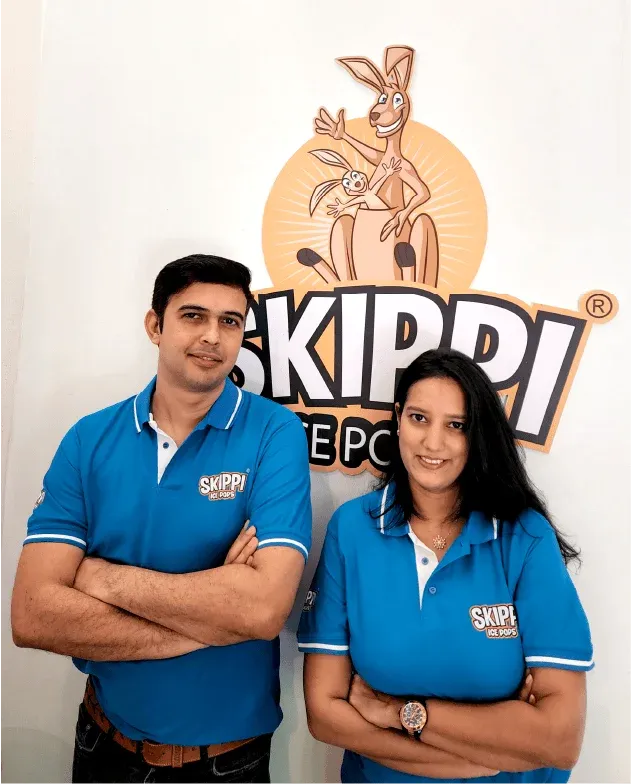
Their willingness to challenge traditional categories, combined with strategic use of Shark Tank India as a brand-building platform, reflects a long-term vision focused on sustainable growth rather than short-term sales.
This customer-first mindset continues to shape Skippi's marketing strategy and product innovation.
Conclusion
Skippi Ice Pops demonstrates how innovation, storytelling, and strategic marketing can transform a simple product into a nationally recognized brand.
Instead of competing directly with established ice cream giants, the company created its own category by introducing preservative-free natural ice pops that appealed to both children and parents. Its appearance on Shark Tank India provided national visibility, but the brand's sustained growth has been driven by much more than television exposure.
By combining digital marketing, influencer collaborations, omnichannel distribution, colourful branding, and consumer psychology, Skippi has built a scalable marketing engine capable of driving both awareness and repeat purchases.
For marketers, one of the biggest takeaways is that successful brands don't just sell products—they create memorable experiences, solve real consumer problems, and build trust across every customer touchpoint.
As consumer demand for healthier, convenient, and emotionally engaging products continues to grow, Skippi is well-positioned to strengthen its leadership in India's natural frozen treats category while pursuing its ambition of becoming a ₹100 crore+ FMCG brand.
Frequently Asked Questions (FAQs)
1. Why is Skippi Ice Pops different from traditional ice candies?
Skippi offers preservative-free, natural ice pops made with fruit-based ingredients, positioning itself as a healthier alternative to conventional ice candies.
2. How did Shark Tank India help Skippi grow?
The show significantly increased brand awareness, built consumer trust, attracted distributors, and accelerated nationwide expansion.
3. Who is Skippi's target audience?
The primary audience includes parents with young children, while the secondary audience consists of young adults seeking refreshing and healthier snacks.
4. What marketing channels contribute most to Skippi's growth?
Social media, influencer marketing, Shark Tank PR, retail distribution, quick commerce, marketplaces, and D2C sales all play key roles.
5. Why is omnichannel distribution important for Skippi?
Selling through multiple online and offline channels increases convenience, improves accessibility, and reduces reliance on a single sales platform.
6. What marketing lesson can startups learn from Skippi?
Differentiating through innovation, building trust early, and combining brand marketing with performance marketing can create sustainable long-term growth.
7. What challenges could Skippi face in the future?
Seasonal demand, rising competition, increasing customer acquisition costs, and the need for product diversification are potential challenges.
8. Is Skippi's marketing strategy scalable?
Yes. By strengthening SEO, expanding its product range, improving customer retention, and continuing to invest in omnichannel marketing, Skippi can scale sustainably while reinforcing its position in the FMCG market.