This August marks two years since seven suns appeared to set over Chengdu, in southwestern China. The event was real—a documented fact—and it found its way into my novel, The House of Memory. The story follows a visual artist forced to confront the lies told by her parents, her lovers, her friends, and the government.
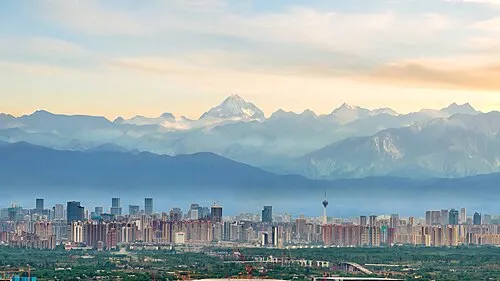
By FISU, CC BY 3.0, https://commons.wikimedia.org/w/index.php?curid=119642395
Suzane searches for the truth until, in a Kafkaesque turn of events, she is abducted and taken by force to an institution. In the novel, the House of Memory is a clinic that exists in São Paulo, although not everyone is able to see it. There, she is compelled to participate in an extraordinary social experiment: to forget the life we know. Although conceived as a "dystopia of the present," her story feels far more real than we might like to admit.
Outside fiction, we have become the characters, wandering between fact and fabrication. We live in a world where narratives often carry as much weight—or even more—than reality itself. President Donald Trump has repeatedly stretched the boundaries of reality, pushing them toward a point from which he appears to believe there can be no return. He has done so in relation to Brazil and other South American countries.
Now he is taking another gamble, like a trapeze artist performing without a safety net. He has presented the public with the claim that the upcoming U.S. midterm elections suffer from "shocking vulnerabilities." It echoes the same narrative once used to argue that Brazil's elections could not be trusted. From that premise follows another claim: that the United States should punish Brazil with sweeping tariffs for allegedly "persecuting" a former president convicted by Brazil's Supreme Court.
Seven suns did appear over Chengdu, but they were the result of a complex optical phenomenon. They represented one account of what happened—not the whole truth.
The full truth must emerge from the ballot boxes in both Brazil and the United States. Only then will we know whether we are living in fiction or in the reality of our own countries.
About the Author
I am a Brazilian writer and journalist. I hold a bachelor's degree in Journalism from the Pontifical Catholic University of Campinas (PUC-Campinas) and a master's degree in Social Sciences from the Federal University of São Carlos (UFSCar), São Paulo.
I am a retired media consultant for the Media Strengthening Program in Mozambique, funded by the U.S. Agency for International Development (USAID) and implemented by IREX. Previously, I worked as a reporter and editor for Jornal Nacional, Brazil's leading television newscast on TV Globo, and as assistant editor at Folha de S.Paulo, one of the country's largest newspapers. I have also contributed pro-bono to Global Voices.
I am a two-time recipient of the Tim Lopes Award for Investigative Journalism, one of Brazil's leading journalism awards. #book #dementia #distopic #amazon #uiclap #china #novel