Flutter vs React Native vs Native Apps: Which Technology Is Best for Mobile App Development in 2026?
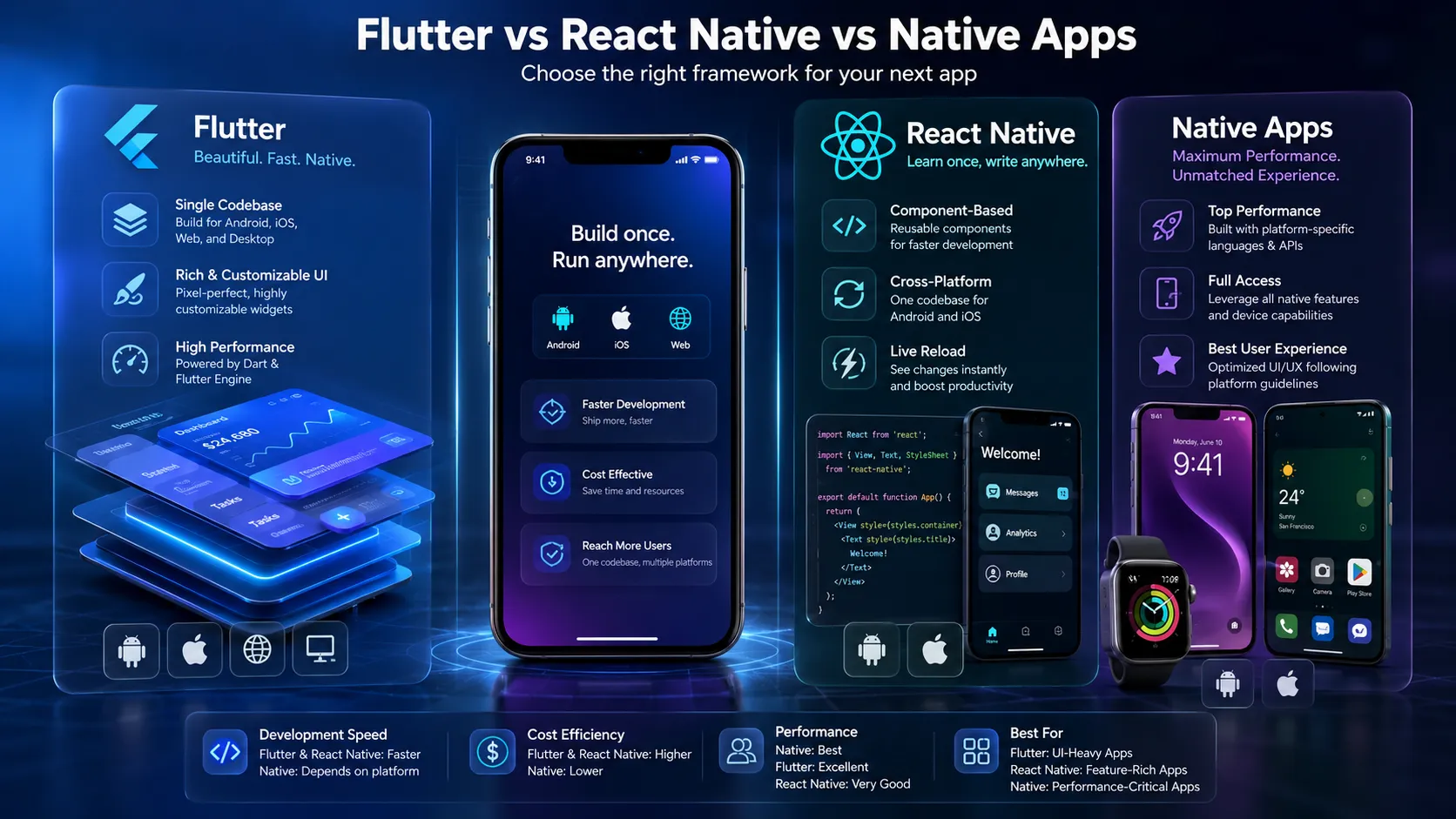
Choosing the Right Technology for Mobile App Development in 2026
Mobile applications have become one of the most powerful digital tools for businesses looking to engage customers, improve operations, and create new revenue opportunities. From startups launching innovative products to enterprises improving customer experiences, mobile apps are now a core part of digital transformation strategies.
However, building a successful mobile application is not only about having a great idea. Choosing the right technology stack plays a major role in determining an app’s performance, development cost, scalability, security, and long-term success.
In 2026, businesses are facing a critical decision: Should they invest in Native App Development, choose Flutter App Development, or build applications using React Native App Development?
Each technology has its own strengths and limitations. Native apps offer unmatched performance, while Flutter and React Native provide faster and more cost-effective cross-platform solutions. The right choice depends on factors such as business goals, target audience, app complexity, budget, and future growth plans.
For companies working with a professional Mobile App Development Company in USA, understanding these technologies helps make smarter decisions before starting a mobile application project.
Understanding Native App Development
What Are Native Apps?
Native applications are mobile apps built specifically for a particular operating system. This means developers create separate applications for iOS and Android platforms using technologies designed for each ecosystem.
For iOS applications, developers commonly use Swift or Objective-C, while Android applications are developed using Kotlin or Java.
Because native apps are created specifically for one platform, they can fully utilize device capabilities and provide highly optimized performance.
How Native Apps Work
A native application communicates directly with the operating system, allowing developers to access hardware features such as:
-
Camera
-
GPS
-
Bluetooth
-
Sensors
-
Face recognition
-
Biometric authentication
-
Advanced graphics processing
This direct interaction helps native apps deliver faster response times and smoother user experiences.
Advantages of Native App Development
1. High Performance
Native apps generally provide the best performance because they are optimized for specific platforms. They can handle complex animations, heavy graphics, gaming features, and advanced processing requirements efficiently.
2. Better Security
Native development provides stronger security control because developers can use platform-specific security features provided by iOS and Android.
For applications involving financial transactions, healthcare data, or enterprise information, native development is often preferred.
3. Smooth User Experience
Native apps follow platform-specific design guidelines, creating a familiar experience for users. iOS users get an Apple-style interface, while Android users receive a design aligned with Android standards.
4. Full Access to Device Features
Native apps can easily integrate advanced hardware features and new operating system updates.
Limitations of Native App Development
Despite its advantages, native development has some challenges:
-
Higher development cost
-
Longer development timeline
-
Separate codebases for Android and iOS
-
Requires specialized developers for each platform
For startups with limited budgets, maintaining two separate development teams can become expensive.
Understanding Flutter App Development
What Is Flutter?
Flutter is an open-source UI framework developed by Google that allows developers to build mobile applications using a single codebase.
Instead of creating separate apps for Android and iOS, developers can write one application and deploy it across multiple platforms.
Flutter uses the Dart programming language, which enables fast development and high-performance applications.
How Flutter Works
Flutter does not rely heavily on native UI components. Instead, it uses its own rendering engine to create user interface elements, giving developers greater control over app design.
This approach allows businesses to create highly customized interfaces with consistent performance across platforms.
Benefits of Flutter App Development
1. Faster Development
One of Flutter’s biggest advantages is reduced development time. A single codebase means developers can build, test, and update applications faster.
This makes Flutter a popular choice for startups and businesses that want to launch products quickly.
2. Cross-Platform Compatibility
Flutter supports Android, iOS, web, and desktop applications, making it an effective solution for businesses seeking Cross Platform App Development.
3. Cost-Effective Solution
Since businesses do not need separate development teams for different platforms, Flutter can significantly reduce development expenses.
4. Custom UI Capabilities
Flutter provides extensive design flexibility. Developers can create unique animations, interactive elements, and visually rich interfaces.
Limitations of Flutter
Flutter also has some limitations:
-
Larger application size compared to some native apps
-
Limited access to certain platform-specific features
-
Dependency on Flutter ecosystem updates
For highly specialized applications requiring deep operating system integration, native development may still be a better choice.
Understanding React Native App Development
What Is React Native?
React Native is a popular cross-platform mobile development framework created by Meta. It allows developers to build mobile applications using JavaScript and the React framework.
React Native enables developers to reuse code across Android and iOS platforms while still providing access to native components.
How React Native Works
React Native connects JavaScript code with native platform components through a communication layer. This allows developers to create apps that provide a near-native experience while maintaining a shared codebase.
Benefits of React Native App Development
1. Faster Development Cycle
React Native helps developers build applications faster because many components can be reused across platforms.
2. Large Developer Community
Since React Native is widely adopted, businesses have access to a large pool of experienced developers and resources.
3. Cost Efficiency
Companies can reduce development costs by maintaining one shared codebase instead of separate Android and iOS projects.
4. Easy Maintenance
Updates and bug fixes can often be implemented faster because changes can be managed across platforms simultaneously.
Limitations of React Native
Some challenges include:
-
Performance differences compared to fully native apps
-
Dependence on third-party libraries
-
Need for native modules for advanced features
For applications requiring intensive graphics or complex hardware usage, additional native development may be required.
Flutter vs React Native vs Native Apps: Detailed Comparison
Performance Comparison
When it comes to performance, native apps remain the leader because they communicate directly with the operating system.
Native development is ideal for:
-
Gaming applications
-
Advanced AR/VR apps
-
High-performance enterprise solutions
Flutter provides strong performance because it uses its own rendering engine, making it faster than many traditional cross-platform approaches.
React Native delivers excellent performance for most business applications but may require additional optimization for highly complex applications.
Performance Ranking:
-
Native Apps
-
Flutter
-
React Native
Development Cost Comparison
Cost is one of the biggest factors businesses consider before choosing a technology.
Native Apps
Native applications usually have the highest cost because businesses need separate development processes for Android and iOS.
Flutter Apps
Flutter reduces costs because developers can create applications using a single codebase.
React Native Apps
React Native also provides cost advantages through reusable components and faster development cycles.
For startups and small businesses, Flutter and React Native are often more budget-friendly options.
Development Speed Comparison
When speed-to-market is important, cross-platform frameworks have a clear advantage.
Flutter and React Native allow businesses to:
-
Build faster prototypes
-
Launch MVPs quickly
-
Release updates simultaneously
Native development usually takes longer because each platform requires separate development.
UI/UX Capabilities Comparison
Native apps provide the most platform-specific experience and maximum design control.
Flutter is highly competitive because it allows businesses to create customized and visually attractive interfaces.
React Native provides strong UI capabilities but sometimes depends on third-party libraries for advanced designs.
Security Comparison
Security depends heavily on development practices, but native apps generally have an advantage due to direct access to platform security features.
However, Flutter and React Native can also provide secure applications when developers follow proper coding standards, encryption methods, and security practices.
Scalability and Future Growth
The best technology depends on the application’s future requirements.
Startups
Flutter and React Native are excellent choices for startups because they allow faster MVP development with lower investment.
Enterprises
Large organizations may choose native development for applications requiring maximum reliability and advanced features.
Growing Businesses
Cross-platform solutions provide flexibility for businesses planning expansion across multiple platforms.
Flutter vs React Native vs Native Apps: Which One Should Businesses Choose in 2026?
Choose Native Apps If:
-
You need maximum performance
-
Your app requires advanced hardware integration
-
You are building complex applications
-
Security requirements are extremely high
Examples include banking apps, high-end gaming apps, and professional enterprise solutions.
Choose Flutter If:
-
You need faster development
-
You want Android and iOS apps from one codebase
-
You need cost-effective development
-
You want highly customized designs
Flutter is especially suitable for startups, MVPs, and businesses looking for rapid growth.
Choose React Native If:
-
You need flexible cross-platform solutions
-
Your team already works with React
-
You want faster updates and easier maintenance
React Native works well for business applications, eCommerce platforms, and service-based apps.
Future of Mobile App Development Technologies in 2026
The future of Mobile App Development in 2026 will be shaped by emerging technologies that improve user experience and business efficiency.
AI-Powered Mobile Applications
Artificial intelligence will become a major part of mobile apps through:
-
Personalized recommendations
-
AI assistants
-
Predictive analytics
-
Automated customer support
Growth of Cross-Platform Development
Businesses will continue adopting Flutter and React Native because companies want faster development with reduced costs.
Advanced Personalization
Apps will increasingly use user behavior data to deliver customized experiences.
AR/VR Integration
Augmented and virtual reality will create new opportunities in industries such as:
-
Retail
-
Healthcare
-
Education
-
Real estate
Cloud-Based Mobile Solutions
Cloud technologies will help businesses build scalable applications with better performance and flexibility.
IoT and Wearable Applications
Mobile apps will increasingly connect with smart devices, wearables, and connected ecosystems.
Flutter, React Native, and native technologies will continue evolving to support these future requirements
How to Select the Best Mobile App Development Approach?
Before choosing a technology, businesses should evaluate:
Business Goals
Understand whether your priority is speed, performance, scalability, or cost reduction.
Target Audience
Consider your users’ preferred platforms and expectations.
Budget
Evaluate development and long-term maintenance costs.
Required Features
Identify whether your app needs advanced hardware integration or standard functionality.
Performance Expectations
High-performance applications may require native development.
Long-Term Maintenance Plans
Choose technology that supports future updates and business growth.
Conclusion: Making the Right Choice for Your Mobile App in 2026
Choosing between Flutter, React Native, and Native App Development depends on your business requirements, technical needs, and long-term goals.
Native apps remain the best choice for businesses that require maximum performance, security, and advanced device integration. Flutter provides an excellent balance between speed, cost efficiency, and design flexibility. React Native continues to be a powerful option for businesses seeking scalable cross-platform solutions.
There is no single technology that works perfectly for every project. The right choice depends on your app’s purpose, audience, budget, and future vision.
Partnering with an experienced Mobile App Development Company in USA can help businesses evaluate their requirements and select the technology approach that delivers the best results in 2026 and beyond.