Finding a suitable Fitness Instructor South Tampa can make structured exercise easier to understand and maintain. A fitness instructor can help people learn proper movement, organize workouts, improve consistency, and choose activities that fit their current abilities and goals.
What Does a Fitness Instructor Do?
A fitness instructor helps individuals or groups participate in planned physical activity. Depending on their training and qualifications, they may demonstrate exercises, explain movement techniques, organize workout sessions, and provide general guidance on fitness routines.
The role can vary depending on the setting. Some instructors work in gyms and studios, while others provide private or small-group sessions in homes, outdoor spaces, or other suitable locations.
Common Areas of Support
A fitness instructor may help with:
-
Exercise technique and movement patterns
-
Strength and resistance exercises
-
Cardiovascular conditioning
-
Flexibility and mobility activities
-
Workout structure and progression
-
Warm-up and cool-down routines
-
General fitness education
-
Exercise consistency and accountability
The appropriate type of instruction depends on a person's experience, physical condition, goals, and preferences.
Why Structured Fitness Instruction Can Be Helpful
Starting or maintaining an exercise routine can be difficult when a person is unsure what exercises to perform or how to organize them. Structured instruction can provide a clearer framework for physical activity.
A Fitness Instructor South Tampa may help participants understand how individual exercises fit into a broader routine. Instead of selecting random exercises, people can follow sessions with a defined purpose and progression.
Learning Proper Exercise Technique
Technique matters because exercises are intended to be performed with specific movement patterns. Learning those patterns can make workouts more controlled and easier to understand.
An instructor can demonstrate movements and provide general corrections during a session. This can be particularly useful for beginners who are unfamiliar with resistance exercises, mobility drills, or other forms of training.
Building Consistency
Fitness results are generally associated with sustained participation rather than occasional workouts. A scheduled session can provide structure for people who have difficulty maintaining an independent exercise routine.
Consistency does not necessarily mean exercising every day. A practical routine should account for available time, recovery needs, fitness level, and personal circumstances.
How to Choose the Right Fitness Instructor
The right instructor depends on what someone wants from exercise. Before starting, it can help to identify the type of support needed and the activities that are comfortable or appropriate.
Consider these factors:
-
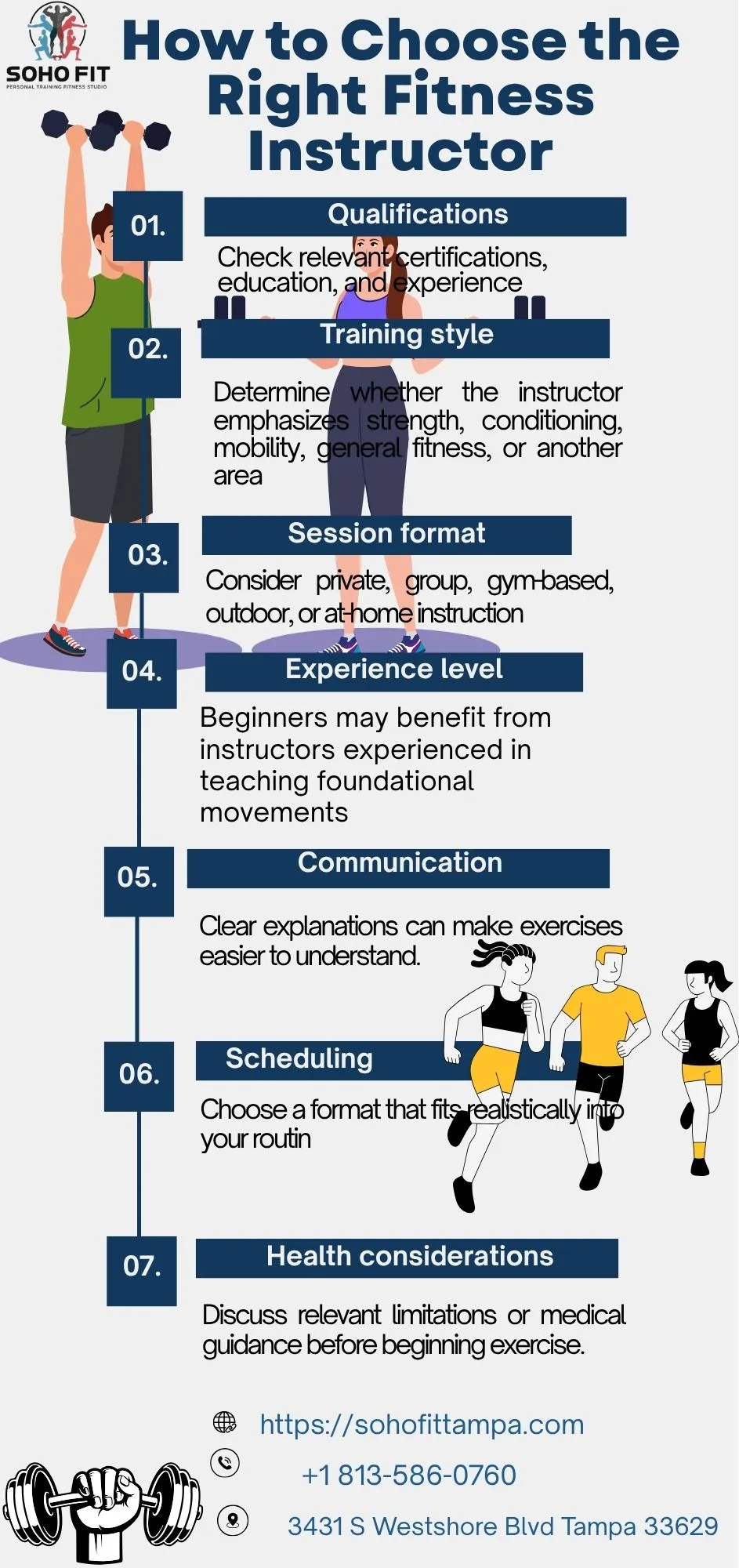
Qualifications: Check relevant certifications, education, and experience.
-
Training style: Determine whether the instructor emphasizes strength, conditioning, mobility, general fitness, or another area.
-
Session format: Consider private, group, gym-based, outdoor, or at-home instruction.
-
Experience level: Beginners may benefit from instructors experienced in teaching foundational movements.
-
Communication: Clear explanations can make exercises easier to understand.
-
Scheduling: Choose a format that fits realistically into your routine.
-
Health considerations: Discuss relevant limitations or medical guidance before beginning exercise.
A good match is not simply about location. It is also about whether the instructor's approach fits the person's needs and expectations.
Fitness Instruction for Different Experience Levels
People begin exercising with different levels of experience. Someone who has never followed a structured program may need a different approach from an experienced recreational athlete.
Beginners
Beginners often benefit from learning basic movement patterns first. Sessions may focus on bodyweight exercises, mobility, balance, cardiovascular activities, and introductory resistance training.
The objective is to understand how exercises are performed and develop a manageable routine before increasing complexity or intensity.
Intermediate Participants
People with some exercise experience may want more variety or structure. Instruction can include progressive resistance exercises, conditioning, mobility work, and changes in training volume.
Progress should be gradual. Increasing exercise difficulty too quickly can make a routine harder to maintain and may increase unnecessary strain.
Older Adults
Older adults may have different priorities, such as maintaining strength, mobility, balance, and functional movement. Exercise selection should consider individual abilities and any recommendations provided by healthcare professionals.
A qualified instructor can adapt general fitness activities to an individual's current capabilities while emphasizing controlled movement and appropriate progression.
Fitness During Pregnancy and After Childbirth
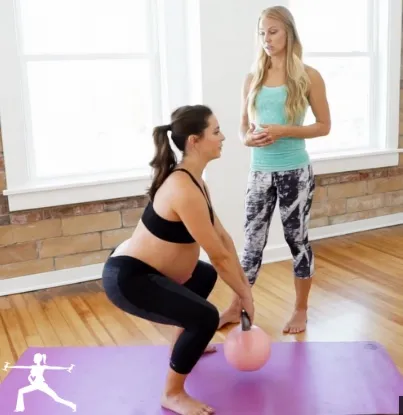
Pregnancy can change how a person approaches exercise because physical needs and tolerance may change throughout pregnancy. Anyone who is pregnant should discuss exercise with an appropriate healthcare professional, particularly when there are complications or specific restrictions.
A Pregnancy Personal Trainer may provide exercise guidance within their qualifications, but this should complement—not replace—medical advice. Exercises, intensity, positioning, and progression may need to be adjusted according to the individual's circumstances.
After childbirth, returning to exercise should also be gradual. Recovery can differ significantly between individuals, so professional medical guidance may be appropriate before resuming or progressing a fitness routine.
At-Home and In-Person Fitness Sessions
Fitness instruction does not have to follow one format. Some people prefer traditional gym sessions, while others find at-home instruction more convenient.
|
Session Type |
Potential Advantages |
Considerations |
|---|---|---|
|
Gym-based |
Access to equipment and dedicated workout space |
Requires travel and gym access |
|
At-home |
Convenient and private |
Equipment may be limited |
|
Outdoor |
Open space and varied activities |
Weather can affect scheduling |
|
Small group |
Social environment and shared instruction |
Less individual attention |
|
One-on-one |
More individualized guidance |
May require a larger time or financial commitment |
The best format depends on personal preferences, available space, schedule, and fitness objectives.
How Can a Fitness Instructor Help With a Workout Routine?
A fitness instructor can organize exercises into a logical session based on the participant's goals and experience. This may include a warm-up, main exercises, conditioning or mobility work, and a cool-down.
The instructor can also explain exercise order, repetitions, rest periods, and movement technique. The specific routine should remain appropriate to the individual's ability and should be adjusted when circumstances change.
People Also Ask
What is the difference between a fitness instructor and a personal trainer?
A fitness instructor often leads exercise sessions and teaches general fitness activities, while a personal trainer typically provides more individualized programming and instruction. The exact responsibilities vary by certification, employer, and setting. When choosing a professional, review their qualifications and the services they are specifically trained and authorized to provide.
Is a fitness instructor suitable for beginners?
Yes, fitness instruction can be useful for beginners because it can introduce basic movements and provide a structured approach to exercise. Beginners should communicate their experience level and any relevant limitations before starting. Sessions can then focus on learning technique, building confidence, and gradually developing a consistent exercise routine.
How often should someone work with a fitness instructor?
There is no single schedule that works for everyone. Frequency depends on goals, current fitness level, available time, recovery, and the amount of independent exercise someone can comfortably complete. Some people prefer frequent instruction, while others use sessions periodically to learn exercises, review technique, and adjust their routine.
Can fitness instruction be done at home?
Yes, depending on the instructor and service format. At-home sessions can use bodyweight exercises, resistance bands, free weights, or other available equipment. Before scheduling, it is useful to confirm the available space, equipment requirements, session structure, and whether the instructor provides the necessary equipment.
What should someone bring to a fitness session?
Comfortable exercise clothing, suitable footwear, water, and any personally required equipment are common considerations. For an at-home session, the instructor may recommend creating enough open space for movement. Individuals should also communicate relevant physical limitations or professional healthcare recommendations before beginning a new exercise program.
How to Prepare for Your First Fitness Session
Preparing in advance can make a first session more comfortable. Wear clothing that allows unrestricted movement and bring water if appropriate for the activity.
It can also help to think about your goals before the session. For example, you might want to improve general fitness, build strength, increase mobility, become more active, or learn how to exercise safely and consistently.
Questions to Ask Before Starting
Consider asking:
-
What qualifications and certifications do you hold?
-
What types of workouts do you typically teach?
-
Is the session one-on-one or group-based?
-
Can exercises be adapted for different experience levels?
-
What equipment is required?
-
How are sessions adjusted as fitness improves?
-
Are there any situations where medical clearance is recommended?
These questions can help establish realistic expectations before beginning.
Frequently Asked Questions
What does a fitness instructor typically teach?
A fitness instructor may teach cardiovascular exercises, strength movements, mobility activities, stretching, warm-ups, cool-downs, and other general fitness exercises. The exact activities depend on the instructor's qualifications and the session format. Participants should confirm whether a specific type of training is included before beginning.
Can fitness instructors create individualized workouts?
Some fitness professionals provide individualized exercise guidance, while others primarily lead group sessions. The scope depends on their qualifications and services. If individualized programming is important, ask about assessment methods, exercise customization, progress tracking, and how the routine will be adjusted over time.
Is personal training different from fitness instruction?
Yes, although the terms can overlap depending on the setting. Personal training generally emphasizes individualized exercise planning and instruction, while fitness instruction can refer more broadly to teaching or leading exercise activities. Checking the professional's certification and exact service description provides a clearer understanding of what is offered.
Can older adults participate in fitness instruction?
Many older adults can participate in appropriately designed exercise programs. Activities may focus on strength, balance, mobility, coordination, and functional movement. The routine should reflect the person's abilities and health circumstances, and medical advice should be followed when an existing condition or other concern affects exercise participation.
Can fitness sessions include strength training?
Yes. Depending on the instructor's qualifications and the participant's goals, sessions may include bodyweight movements, resistance bands, free weights, machines, or other forms of resistance exercise. Proper technique, suitable resistance, adequate recovery, and gradual progression are important considerations when incorporating strength training.
How can someone stay consistent with exercise?
Consistency is easier when exercise fits realistically into everyday life. Setting manageable schedules, choosing enjoyable activities, preparing equipment in advance, and tracking progress can help. Working with an instructor may also provide structure. The most practical routine is one that can be maintained while allowing appropriate recovery.
Conclusion
Choosing a Fitness Instructor South Tampa can be a practical way to learn exercise techniques, establish structure, and develop a routine suited to individual circumstances. Different formats, experience levels, and fitness goals may require different approaches.
People should consider qualifications, session format, communication, scheduling, and personal needs before beginning. For pregnancy-related exercise, guidance from a Pregnancy Personal Trainer should be considered alongside appropriate healthcare advice. For local fitness guidance and training options, Soho Fit Tampa provides a point of reference for exploring available services.
#fitness Instructor South Tampa, #fitness Training, #personal Training, #south Tampa Fitness, #exercise Instruction, #strength Training, #beginner Fitness, #at Home Fitness
Soho Fit Tampa
3431 S Westshore Blvd Tampa 33629
+1 813-586-0760