Walk into almost any living room in Washington D.C., Maryland, or Northern Virginia and look straight up. Nine times out of ten, you are staring at the exact same flat, chalky, builder grade white ceiling that has sat untouched since the house was framed. For decades, homeowners and painting crews treated that overhead surface like an obligation rather than a design choice. Someone grabbed a five gallon bucket of standard ceiling white from the supply store, rolled two quick coats over the drywall, and called the room done.
People are finally moving away from that habit. Spend enough time walking through renovated colonials in Alexandria, split levels in Silver Spring, or brick rowhouses in Capitol Hill, and you notice right away how much the overhead color controls the entire room. Sometimes it matters even more than the walls. Put a stark, blue tinted white ceiling over warm honey oak floors and the room immediately feels disjointed, almost like a commercial waiting room. Swap that harsh white for a soft, warm neutral or a muted earthy tone, and the whole space settles down. Daylight softens. Harsh corners disappear. Suddenly a plain boxy bedroom feels like someone actually designed it.
Whether you are trying to make a low basement ceiling feel less cramped, warm up a bright white kitchen, or give a stepped tray ceiling some real character, getting the paint color right changes everything. Below, we are answering every question homeowners actually ask when choosing colors for ceilings, from false ceiling layouts and white wall pairings to the exact shades replacing cold gray in 2026.
What Color Paint Ceiling Works Best for Different Rooms?
There is no magic paint color that belongs on every ceiling in your house. Natural sunlight, ceiling height, floor color, and evening light bulbs all change how a shade reads once it dries overhead. A warm cream that looks inviting on a vertical wall swatch can turn surprisingly yellow at nine o'clock at night under warm lamps. On the flip side, a pale silver gray that looks clean on a paper chip at the hardware store can turn icy blue once it covers a north facing bedroom ceiling.
Before buying gallons of paint, look closely at how each room functions and what kind of light hits that overhead surface during the hours you actually spend inside it.
The Most Popular Colors for Ceilings Right Now
If you want a dependable direction that feels fresh in 2026 without locking you into a short lived fad, five color families lead residential projects right now:
Soft Warm Whites: Shades carrying gentle cream, warm beige, or subtle greige undertones—such as Benjamin Moore White Dove or Sherwin Williams Alabaster—bounce daylight softly through a room. They eliminate the cold, clinical glare you get from standard off the shelf ceiling white.
Creamy Beige and Warm Sand: Light oatmeal, linen, and warm sand shades bring quiet comfort to living rooms, hallways, and bedrooms without making the ceiling feel heavy or oppressive.
Muted Sage and Dusty Olive: Soft, nature inspired greens sit beautifully above white oak hardwood floors, brass light fixtures, and off white walls. They work particularly well in dining rooms, sunrooms, and breakfast nooks looking out toward trees or backyard greenery.
Pale Sky and Haint Blue: Painting a porch ceiling soft blue is a classic Southern tradition, and that same visual trick works wonderfully indoors. Pale sky blue mimics open air, fools the eye into sensing distance, and makes an eight foot bedroom or bathroom ceiling feel noticeably higher.
Deep Charcoal, Navy, and Espresso: Rich, dark tones belong in rooms with tall ceilings, formal dining spaces, media rooms, or home offices where you want cozy intimacy rather than maximum daytime brightness.
Should My Ceiling Be Lighter or Darker Than My Walls?
The traditional rule in house painting says your ceiling should always be lighter than your walls so the room feels tall, airy, and open. That guideline still holds up well when you are dealing with standard eight foot ceilings, small windows, or narrow hallways with limited natural light. Going two shades lighter than your wall paint—or asking the paint counter to mix twenty five percent of your wall color with seventy five percent white—creates a smooth, gentle transition where your eye never stops on a sharp horizontal line.
Flipping that rule on purpose, however, creates a completely different mood. Painting a ceiling darker than the walls visually pulls the overhead plane downward. In a tall two story foyer, an oversized great room, or a dining room with ten foot ceilings, a deeper shade overhead makes the space feel grounded, warm, and thoughtfully put together rather than cavernous and empty.
How Floor Reflections and Window Direction Shift Ceiling Paint
Because ceilings sit horizontal rather than vertical, they rarely catch direct sunlight the way walls do. Most light reaches a ceiling by bouncing up off the floor, rugs, furniture, and windowsills. That bounce light carries the undertone of whatever surface it hits first. If you have rich oak, walnut, or warm luxury vinyl plank flooring, light reflecting off those boards throws a warm amber cast onto the ceiling. If you have cool gray carpet or blue slate tile, the reflected light cools the ceiling down.
In north facing rooms that get cool, bluish daylight, warm ceiling colors like creamy off white, soft putty, or pale sand balance out the chill. In south and west facing rooms flooded with golden afternoon sun, cooler muted tones like pale sage, soft blue gray, or balanced greige keep the room from feeling overly yellow or washed out.
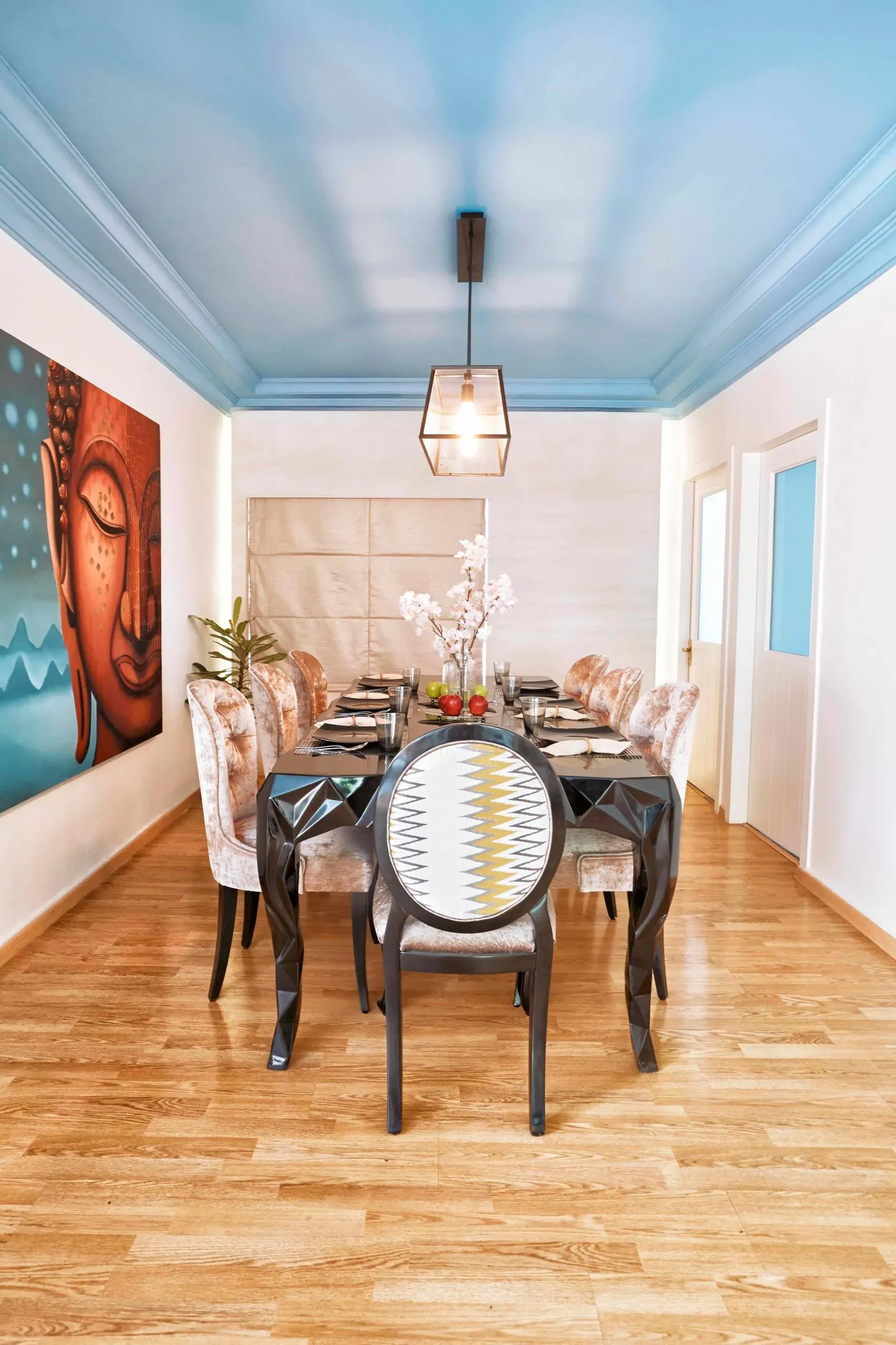
What Ceiling Colors Complement White Well?
White walls remain a favorite for good reason. They keep rooms feeling clean, let artwork and furniture stand out, and make compact floor plans feel much larger. Yet pairing bright white walls with an identical bright white ceiling often leaves a room looking unfinished, sterile, or boxy. Adding a deliberate tint overhead gives white walls a crisp architectural frame while keeping the overall atmosphere bright and open.
Ceiling Color | Best Room Type | Why It Works with White Walls |
Warm Greige or Soft Putty | Living rooms, open main levels, hallways | Takes the harsh glare off bright white walls while keeping the color palette neutral, warm, and easy to live with. |
Pale Blue Gray or Mist | Primary bedrooms, guest baths, laundry rooms | Creates a calm, airy contrast overhead without darkening the space or clashing with crisp white trim. |
Soft Blush or Warm Clay Tint | Bedrooms, dressing rooms, powder rooms | Casts a subtle, flattering warm glow across the room that makes evening lamp light feel soft and welcoming. |
Muted Sage or Soft Olive | Kitchens, sunrooms, breakfast nooks | Connects clean white cabinetry and walls with natural wood flooring and outdoor greenery. |
Rich Navy or Deep Charcoal | Formal dining rooms, studies, tall foyers | Turns the ceiling into a tailored focal point while bright white walls keep the room balanced and open. |
Warm Linen or Creamy Ivory | Historic homes, colonials, traditional living spaces | Adds gentle depth behind white crown molding so architectural trim profiles actually stand out. |
Why Crown Molding Makes Tinted Ceilings Look Twice as Good
If your rooms have crown molding, painting the ceiling a slightly deeper or tinted shade makes that carpentry stand out immediately. When the walls, crown molding, and ceiling are all painted the exact same stark white, the molding profile blends into the shadows and loses its detail. Even a subtle two shade difference between your white walls and your ceiling color sharpens the clean lines of your trim and gives the room a custom millwork finish.
Which Color Is Best for a False Ceiling?
False ceilings, drop soffits, recessed tray ceilings, and coffered beams bring architectural depth to rooms that would otherwise look completely flat. You see them constantly in finished basements where HVAC ductwork needs to be boxed in, as well as in primary bedrooms and dining rooms. How you place paint colors across those stepped levels decides whether the ceiling looks sleek and intentional or busy and chopped up.
Two Tone Strategies for Recessed and Tray Ceilings
When painting a tray ceiling or a stepped false ceiling, skip the temptation to use three or four different colors. Two closely related tones almost always look cleaner, calmer, and higher end:
Lighter Center, Slightly Darker Outer Border: Painting the recessed inner ceiling panel a crisp warm white while rolling a soft greige, taupe, or muted sand onto the lower outer drop draws the eye straight upward into the recess. That contrast makes the center of the room feel noticeably taller and deeper.
Accent Color Inside the Recessed Tray: If your room has clean white crown molding framing the tray perimeter, painting the inner recessed panel a soft dusty blue, muted sage green, or warm plaster beige highlights the carpentry without overwhelming the walls below.
Monochromatic Color Drenching: If you want a clean modern look—or if you are dealing with awkward basement bulkhead soffits you want to hide rather than draw attention to—paint the walls, crown molding, drop border, and recessed ceiling panel in the exact same shade. Removing color breaks erases visual clutter and tricks the eye into seeing one continuous, larger room.
How Recessed Lighting Affects False Ceiling Paint
False ceilings almost always include recessed LED can lights, cove strip lighting, or a central fixture. Warm LED bulbs set between 2700K and 3000K pull out creamy, golden, and earthy undertones in your ceiling paint. Cooler 4000K bulbs make whites appear sharper and push neutral grays toward blue. Always test your paint sample on the ceiling with your actual recessed lights turned on after sunset before buying full cans.
Ceiling Design Trends for 2026: What Is In and What Is Out?
Homeowners renovating their interiors in 2026 have moved firmly away from the cold, sterile palettes that dominated house flips and remodels throughout the late twenty tens. People updating their living spaces today want rooms that feel warm, comfortable, and grounded rather than cold or clinical.
What Color Is Replacing Gray in 2026?
Cool, blue undertone gray has officially stepped down as the default whole house neutral. Taking its place in 2026 are warm organic neutrals—specifically creamy off whites, sandstone beige, mushroom taupe, warm putty, and balanced greige.
There is a straightforward practical reason behind this change beyond simple taste. Most homeowners today are choosing natural white oak, warm hickory, or honey toned luxury vinyl plank flooring instead of cold gray wood planks. Cool gray ceiling paint clashes noticeably with warm wood floors and looks dreary on overcast winter afternoons. Warm organic neutrals bridge the gap naturally between warm wood flooring, crisp painted trim, and changing daylight.
What Colors Should You Avoid in 2026?
If you are repainting your interior this year—especially if you plan to list your house on the market anytime soon—avoid these three common ceiling mistakes:
Stark Blue White Ceiling Paint: Standard off the shelf ceiling white often contains heavy blue and violet tints added to make wet paint look bright in the can. Once dry, it throws a harsh, cold glare that clashes with warm wall colors and natural wood floors.
Icy Silver and Cool Concrete Grays: Unless your room has huge south facing windows flooded with bright sunlight all day, cool grays read chilly, flat, and outdated overhead.
High Gloss or Semi Gloss Finishes on Standard Drywall: Shiny paint acts like a mirror across a wide flat surface, magnifying every drywall tape seam, nail pop, patch, and roller lap mark on your ceiling. Stick strictly to a dead flat or matte ceiling finish unless a drywall finisher has skim coated the entire surface to level five smoothness.
What Color Makes a House Look Expensive?
Interior designers consistently lean on complex, muted earth tones and color drenching to give a home a custom, high end look. Shades like soft mushroom, warm linen, plaster beige, and deep charcoal brown feel tailored because their undertones shift quietly as sunlight moves across the room from morning through evening.
Pairing a warm neutral ceiling with freshly painted baseboards, clean interior doors, and new wide plank flooring upgrades an entire room faster than almost any other cosmetic project. If you are planning a broader interior refresh across Northern Virginia, Maryland, or Washington D.C., coordinating your wall, trim, and ceiling paint alongside your flooring keeps every surface working together smoothly. At FIXO, our residential painting and remodeling crews handle full interior house painting, baseboard and trim refreshes, and fixed price flooring installations with upfront quotes and zero hidden surprises.
Practical Painting Tips Before You Roll Your Ceiling
Even the best paint color will fall short if the surface prep or finish sheen is off. Keep these practical, job site tested habits in mind before starting your ceiling project:
Stick With Flat or Matte Finish: Flat ceiling paint absorbs stray light reflections and hides minor drywall waves, tape joints, and old ceiling patches. The only exceptions are full bathrooms with steamy showers and kitchens without strong exhaust fans, where a washable matte or moisture resistant bath paint prevents water streaking.
Prime Water Stains and Smoke Marks First: Standard latex ceiling paint will not seal old roof leak rings or kitchen grease. Spot prime any discoloration with an oil based or shellac stain blocking primer before rolling your topcoat, otherwise the yellow stain will bleed right back through within a day.
Roll Toward the Main Window: Cut in your edges neatly along the crown molding or wall line first, then roll the ceiling in overlapping passes running toward your room's primary natural light source. Rolling toward the window minimizes visible roller lap lines when afternoon sun hits the ceiling at a sharp angle.
Paint Ceilings Before Walls and New Floors: Gravity always wins during a paint job. Finish your ceiling first, paint walls second, and spray or brush baseboards last. If you are replacing old carpet or installing new hardwood or LVP flooring, schedule your ceiling and wall painting right before the new floors go down for the cleanest possible edges.
Frequently Asked Questions About Colors for Ceilings
What is the most popular color for ceilings?
Soft warm white remains the most popular color for residential ceilings because it bounces natural light well, pairs easily with almost any wall shade, and keeps standard eight foot rooms feeling open. Homeowners increasingly pick warm whites with subtle cream or beige undertones rather than stark blue whites.
Should your ceiling be lighter or darker than your walls?
Your ceiling should be lighter than your walls if you have low eight foot ceilings or limited daylight, since lighter shades bounce light and make the room feel taller. If you have tall nine or ten foot ceilings, choosing a ceiling color darker than your walls adds warmth, depth, and cozy intimacy.
What paint finish is best for ceilings?
A dead flat or matte finish is best for almost every ceiling in a house because it diffuses light and hides minor drywall seams, patches, and roller marks. Use a moisture resistant matte or eggshell finish only in bathrooms and kitchens with heavy steam and humidity.
What color is replacing gray in 2026?
Warm organic neutrals—including sandstone beige, mushroom taupe, warm greige, and creamy off white—are replacing cool gray in 2026. These warmer shades pair naturally with oak and walnut flooring, brass or black hardware, and warm interior lighting without feeling cold.
Can I paint my ceiling the same color as my walls?
Yes, painting your ceiling the same color as your walls—often called color drenching—is one of the easiest ways to modernize a bedroom, home office, or living room. Using one continuous color removes sharp visual breaks between the walls and ceiling, which often makes a smaller room feel calmer and larger.
Bringing Your Ceiling and Room Together
Choosing the right shade for your ceiling comes down to working with the natural light, floor tones, and architecture your home already has rather than grabbing whatever paint chip happens to be trending online. Before committing to full gallons, pick up two or three sample pots, brush wide swatches directly onto the ceiling near a window and near an overhead light, and watch how the color shifts from morning coffee through evening dinner. Whether you settle on a soft warm white that opens up a low basement or a rich, muted tone that grounds a tall dining room, giving your fifth wall real thought will pull your entire home together for years to come.
For more : Colors for Ceilings