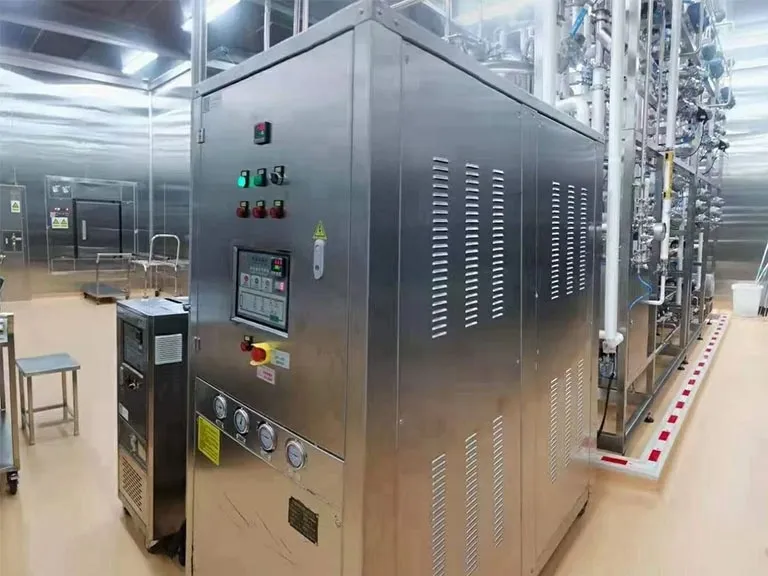
Temperature control is one of the most important factors in bioprocessing and industrial biotechnology. Whether a facility is producing vaccines, enzymes, cell cultures, biologics, or other biological products, maintaining the right temperature can directly influence process stability and product quality.
A bioreactor cooling system is specifically designed to remove heat generated during biological processes and maintain controlled operating conditions. Conventional process cooling can also provide temperature management, but it may not always offer the same level of control required for sensitive bioprocessing applications.
Understanding the differences between these two approaches can help biotechnology and manufacturing facilities select cooling equipment that matches their process requirements.
Tekin Cooling provides industrial temperature-control solutions designed for applications where reliable and precise cooling is important.
What Is a Bioreactor Cooling System?
A bioreactor cooling system is a specialized temperature-control solution designed to regulate the temperature of a bioreactor during biological and biochemical processes.
A bioreactor provides a controlled environment for growing cells, microorganisms, or biological materials. During operation, biological activity and mechanical equipment can generate heat. If this heat is not removed effectively, the temperature inside the vessel can rise beyond the desired range.
The cooling system removes excess heat and helps maintain the target process temperature.
Depending on the bioreactor design, cooling may be provided through a jacket surrounding the vessel, an internal heat exchanger, an external circulation loop, or a combination of these methods.
Typical components can include:
-
Refrigeration system
-
Heat exchanger
-
Circulation pump
-
Temperature sensors
-
Control valves
-
Process controller
-
Insulated piping
-
Safety monitoring equipment
The exact configuration depends on the bioreactor size, process requirements, heat load, and desired temperature range.
Why Is Temperature Control Important in Bioreactors?
Biological processes are often sensitive to temperature changes. Cells and microorganisms generally perform within specific temperature ranges, and deviations can affect growth, metabolism, and overall process behavior.
During fermentation or cell-culture operations, heat can be generated continuously. The cooling system therefore needs to respond to changing thermal loads while maintaining stable conditions.
A properly designed bioreactor cooling system can help maintain the required process temperature and reduce unnecessary fluctuations.
Temperature stability can be especially important when a bioprocess operates for several hours or days.
What Is Conventional Process Cooling?
Conventional process cooling refers to general industrial cooling systems used to remove heat from machinery, production equipment, fluids, or processes.
These systems are widely used in industries such as plastics, chemicals, food processing, metalworking, pharmaceuticals, and manufacturing.
A conventional process chiller may circulate chilled water or another fluid through heat exchangers or directly through equipment that generates heat.
These systems can provide reliable cooling for many applications. However, the cooling requirements of a bioreactor may be more specialized because biological processes often require tighter temperature control and careful management of the cooling medium.
Bioreactor Cooling System vs Conventional Process Cooling
Although both systems are designed to remove heat, their priorities can be different.
Temperature Precision
A bioreactor cooling system is generally designed around the specific temperature requirements of biological processes. Precise sensors and automated controls can help maintain stable conditions.
Conventional process chillers can also provide accurate temperature control, but the required precision depends on the particular industrial application.
Changing Heat Loads
Biological processes may generate different amounts of heat as the process develops. The cooling system should be able to respond to changing thermal conditions.
Conventional industrial applications may have more predictable heat loads, although this varies significantly by process.
Hygienic Requirements
Bioprocessing environments may have strict requirements for materials, fluid pathways, cleaning, and contamination control.
A conventional industrial cooling system may not be designed around these requirements.
System Integration
Bioreactor cooling is often integrated directly into the process-control system. Temperature data can be monitored continuously, allowing cooling output to respond to process conditions.
Conventional process cooling may operate as a separate utility system depending on the facility design.
How Does a Bioreactor Cooling System Work?
The cooling process begins when temperature sensors detect the temperature of the bioreactor or process fluid.
When cooling is required, chilled fluid is circulated through the reactor jacket or heat exchanger.
The cooling fluid absorbs heat from the bioreactor and returns to the cooling system at a higher temperature.
The chiller removes this heat through its refrigeration cycle before sending the cooled fluid back to the bioreactor.
This cycle continues throughout the process, allowing the system to maintain the required temperature.
Modern controls can automatically adjust cooling capacity according to the measured temperature and process demand.
Benefits of a Dedicated Bioreactor Cooling System
Better Process Stability
Maintaining a stable temperature can help create consistent conditions for biological activity.
Controlled Heat Removal
The system can continuously remove heat generated by biological activity and equipment operation.
Improved Process Monitoring
Sensors and automated controls provide real-time information about temperature conditions.
Reduced Temperature Fluctuations
Precise control can help minimize unwanted temperature changes that may influence biological processes.
Adaptability
Cooling systems can be designed according to the bioreactor size, process temperature, heat generation, and facility requirements.
Where Is Bioreactor Cooling Used?
Bioreactor cooling systems can be used across several biotechnology and pharmaceutical applications.
Pharmaceutical Manufacturing
Bioreactors are used to produce various biological products. Temperature control is an important part of maintaining consistent process conditions.
Cell Culture
Cell-based processes require carefully controlled environments. Cooling helps remove excess heat and maintain the desired temperature.
Fermentation
Microorganisms can generate heat during fermentation. A cooling system helps prevent temperature from rising beyond the process requirement.
Enzyme Production
Biological processes used for enzyme production may require controlled temperatures to support consistent production conditions.
Research and Development
Laboratories and pilot plants use bioreactors to develop and optimize biological processes. Flexible cooling equipment can support different experimental conditions.
Understanding Auto Cascade Refrigeration
Auto cascade refrigeration is a specialized refrigeration configuration designed to achieve lower temperatures using a refrigeration cycle with multiple refrigerant components or stages within a single system.
The technology can be useful in applications requiring temperatures below the practical range of conventional refrigeration.
However, auto cascade refrigeration and bioreactor cooling are not interchangeable technologies. A bioreactor cooling system is designed primarily around biological process temperature control, while auto cascade refrigeration is a refrigeration approach intended for low-temperature applications.
In some specialized facilities, advanced refrigeration technologies may be incorporated into cooling equipment when the process requires particularly low temperatures. The appropriate technology depends on the actual thermal requirements.
Factors to Consider When Selecting Bioreactor Cooling Equipment
Choosing a cooling system requires careful analysis of the bioprocess.
Important factors include:
-
Bioreactor volume
-
Required operating temperature
-
Heat generation
-
Cooling capacity
-
Temperature stability
-
Flow rate
-
Coolant type
-
Process-fluid compatibility
-
Control accuracy
-
Cleaning requirements
-
Installation conditions
The cooling system should be sized according to the maximum expected heat load rather than only the average process load.
Maintenance and Reliability
Reliable cooling is important because an unexpected temperature increase can disrupt a biological process.
Preventive maintenance should include inspection of pumps, heat exchangers, refrigeration components, sensors, valves, electrical connections, and coolant quality.
Temperature sensors should also be checked periodically to ensure accurate readings. Incorrect sensor readings can cause the cooling system to operate incorrectly.
Maintaining clean heat-transfer surfaces and proper fluid circulation can further support efficient operation.
Why Choose Tekin Cooling?
Bioprocessing applications require cooling systems that can respond to specific process conditions. A system designed for general industrial machinery may not automatically meet the requirements of a biological process.
Tekin Cooling provides engineered cooling solutions for industrial and specialized applications where accurate temperature control is important. Cooling equipment can be selected according to process heat load, operating temperature, cooling capacity, and environmental conditions.
Conclusion
A bioreactor cooling system is designed specifically to help maintain stable temperatures during biological and biochemical processes. While conventional process cooling can provide effective heat removal for many industrial applications, bioreactor processes often require more precise control, responsive cooling, and process-specific integration.
The difference becomes particularly important in pharmaceutical manufacturing, fermentation, cell culture, enzyme production, and biotechnology research.
Technologies such as auto cascade refrigeration serve a different purpose and are primarily associated with specialized low-temperature refrigeration. The appropriate cooling technology should always be selected according to the required temperature range, heat load, equipment configuration, and process requirements.
As biotechnology continues to advance, reliable temperature control will remain an essential part of successful bioprocessing. With appropriate system design, accurate monitoring, and regular maintenance, a well-engineered bioreactor cooling system can provide dependable thermal management throughout demanding production and research processes.
Tekin Cooling supports modern industrial temperature-control needs with engineered cooling solutions designed around specific application requirements.