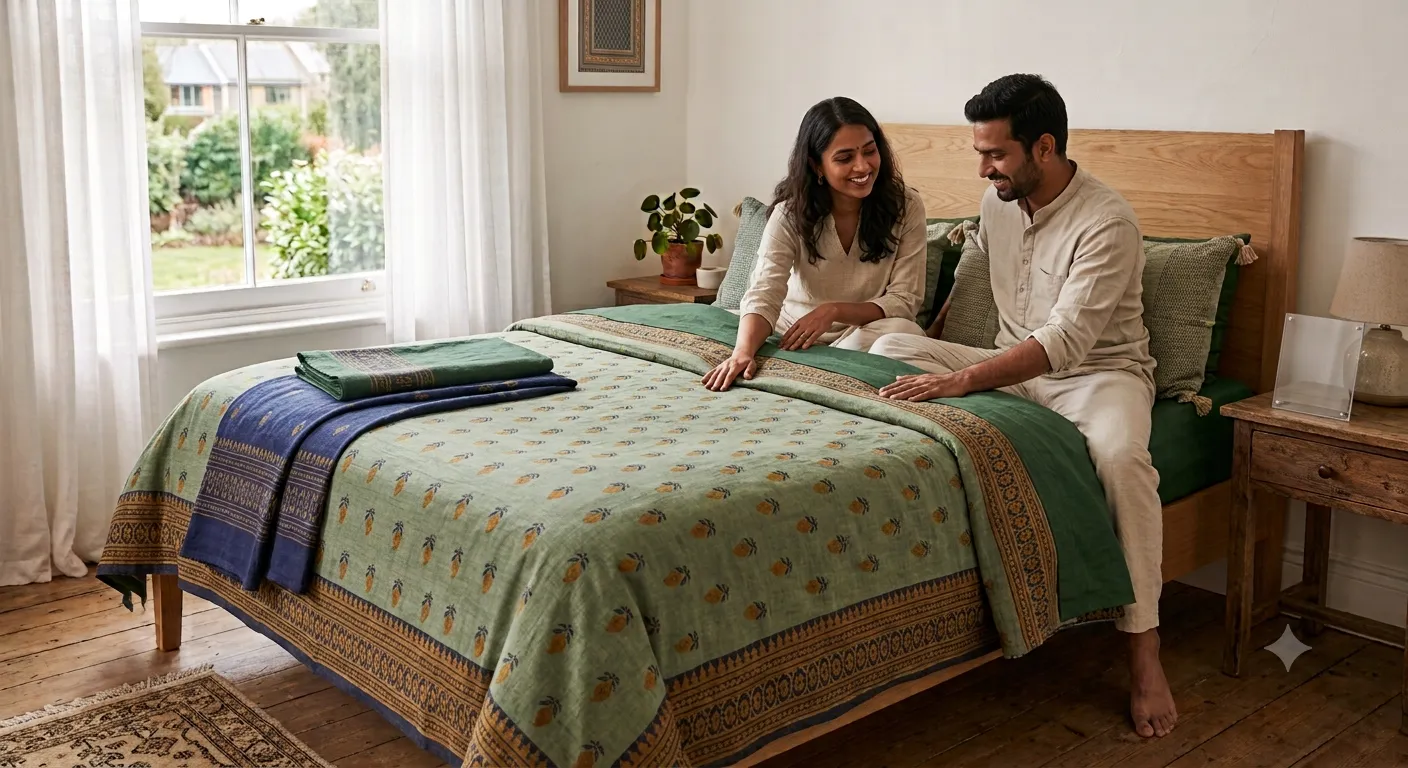
Something shifted in 2026. After years of polycotton blends and microfibre bedsheets dominating online carts, buyers started asking different questions - what's actually in this fabric, who made it, how long will it last. The answers weren't great for synthetic bedding.
Handloom cotton has been around for centuries, but this year it's showing up in conversations it never used to - interior design communities, sustainable living groups, and straightforward Google searches from people who just want a bedsheet that doesn't feel plasticky after three washes.
This isn't nostalgia. It's people doing the math - a 245 GSM handloom cotton bedsheet at ₹1,299 that lasts five years works out cheaper than replacing a ₹799 polycotton sheet every eighteen months. The comfort difference is real too. This guide breaks down what's trending, what's worth buying, and what to skip.
What's Actually Trending in Bedsheets in 2026
Search data and buying patterns from early 2026 point to five clear shifts in what Indian buyers want from bedsheets this year.
1. Muted, earthy colour palettes over bold brights
Warm beiges, clay browns, sage greens, dusty blues, and off-whites are dominating bedroom styling in 2026. The move is toward colours that make a room feel calm rather than decorated. Deep navy, terracotta, and soft lavender are also consistent performers. Loud reds and neon tones are down significantly.
2. Ethnic and block print motifs over digital prints
Florals, geometric block prints, and traditional Indian motifs are back - not as "ethnic" positioning but as everyday bedroom style. Buyers are specifically looking for hand block printed designs over digital or screen printed alternatives because the texture and variation is visible and valued.
3. Breathable fabric as a non-negotiable
With Indian summers getting more intense, breathability has become the top fabric priority, ahead of thread count. 245 GSM handloom cotton consistently outperforms polycotton and microfibre in this area.
4. Sustainability as a purchase factor
Eco-friendly bedding made from organic cotton and low-impact dyes is no longer a niche choice. It's showing up as a filter option on major e-commerce platforms and being mentioned specifically in purchase reviews.
5. Bedroom as a restorative space
The 2026 interior design conversation describes the bedroom as a "regenerative sanctuary" - a room designed intentionally, not just furnished. Bedsheets are being chosen as design decisions, not just commodity purchases.
Handloom cotton fits all five of these trends. That's why it's back in the conversation after years of being treated as a premium niche product.
Handloom Cotton vs Everything Else - Honest Comparison
|
Type |
GSM / TC |
Breathability |
Lifespan |
Washable |
Eco-Friendly |
2026 Trend Fit |
|
Handloom Cotton |
245 GSM |
Very high |
4–6 years |
Yes - machine wash cold |
Yes |
Strong |
|
Polycotton Blend |
180–220 GSM |
Low |
12–18 months |
Yes |
No |
Declining |
|
Microfibre |
N/A |
Very low |
12–18 months |
Yes |
No |
Declining |
|
Machine Cotton |
160–200 TC |
Medium |
2–3 years |
Yes |
Partial |
Stable |
|
Hand Block Printed Cotton |
400 TC |
High |
4–5 years |
Yes - cold wash |
Yes |
Very Strong |
|
Bamboo Cotton Blend |
300 TC |
High |
3–4 years |
Yes |
Partial |
Growing |
Polycotton and microfibre both losing ground in 2026 purchase data. Hand block printed cotton and handloom solid cotton are the two formats gaining the most traction in the Indian home textile market this year.
Why Handloom Specifically - Not Just "Cotton"
There is a difference between handloom cotton and regular machine-woven cotton even at the same GSM. It matters:
-
Handloom fabric is woven manually on pit looms - each thread placed under individual tension, which creates a tighter, more consistent interlacing than machine weaving
-
This results in a fabric that holds its structure longer under repeated washing
-
Natural air pockets form in the weave during manual weaving - this is what creates the breathability that machine-woven cotton at the same weight doesn't match
-
A handloom cotton bedsheet takes 6–8 hours per piece to weave - this isn't a marketing point, it's what determines the fabric's quality
Machine-woven "100% cotton" is not the same product, even when the fibre content is identical.
Buying Guide - How to Pick the Right Bedsheet in 2026
Step 1 - Fabric first, price second
The two formats worth buying in 2026:
-
Handloom solid cotton at 245 GSM - best for daily use, most breathable, improves with washing
-
Hand block printed cotton at 400 TC percale - finer finish, better for guest rooms or gifting
Anything below 200 GSM or 180 TC is unlikely to last more than a year with regular washing.
Step 2 - Colour based on your room, not just preference
|
Room Type |
Trending Colour for 2026 |
Why |
|
Small bedroom |
Soft sage, dusty blue, off-white |
Keeps the room feeling open |
|
Master bedroom |
Deep navy, terracotta, warm beige |
Rich without being loud |
|
Guest room |
Block print in earthy tones |
Looks considered and premium |
|
Kids room |
Muted multicolour, soft lavender |
Calm, not overstimulating |
Step 3 - Size matched to mattress depth, not bed frame
If your mattress is 8 inches or thicker - go one size up from your bed frame measurement. A king mattress at 10 inches needs a super king sheet for proper drape.
|
Size |
Dimensions |
Best For |
|
Single |
90 × 60 inches |
Solo sleepers, kids, hostel |
|
Double |
90 × 100 inches |
Standard Indian double bed |
|
King |
90 × 108 inches |
Most common Indian bed size |
|
Super King |
108 × 108 inches |
Large beds, thick mattresses |
Step 4 - Verify what you're buying
Genuine handloom has slight texture variation - it's not perfectly uniform. If a bedsheet described as "handloom" looks machine-perfect in every photo, it probably isn't handloom. Check for GSM listed clearly - if a seller doesn't mention it, that's usually because the number is low.
Use Cases - Which Bedsheet Works Where in 2026
Daily Use in Indian Summers
245 GSM handloom cotton solid. The open weave breathes in a way that polycotton simply doesn't. Colour-wise, soft sage, dusty blue, or warm beige all work well and align with the 2026 neutral palette trend. Browse handloom cotton bedsheets for daily use options.
Master Bedroom Upgrade
400 TC hand block printed cotton in deep navy, terracotta, or an earthy floral print. This is the format getting the most attention in 2026 bedroom styling - detailed, handmade, and visually distinct from anything mass-produced. The hand block printed bedsheets collection covers this range.
Guest Room
A block printed cotton bedsheet with matching cotton pillow covers in a contrasting neutral. Looks like a considered decision rather than a default purchase - which is exactly what a guest room should communicate.
Kids Room
Soft, muted multicolour or lavender in 245 GSM handloom cotton. Skin-safe, no harsh dye, and gets softer with every wash. Check kids bedsheets for sizes and prints appropriate for children.
Wedding or Housewarming Gift
A hand block printed king size bedsheet set with two pillow covers. In 2026, gifting handloom cotton is a more thoughtful choice than a generic home goods gift - it has craft value, practical use, and a story behind it. The bedsheets with pillow covers range has complete sets ready to gift.
Expert Tips - Getting Handloom Cotton Right in 2026
Don't judge handloom by the first wash
Handloom cotton needs 2–3 washes to reach full softness. New handloom sheets feel slightly stiff straight out of the packaging - this is from the natural sizing applied during weaving, not a quality issue. After the first few washes, it softens noticeably.
Cold wash every time
Hot water is the single biggest cause of premature fading and fibre breakdown in cotton bedsheets. Cold wash, gentle cycle - every time. This one habit extends the life of a handloom sheet by 2–3 years.
Shade dry is non-negotiable
Direct sun fades natural dyes faster than anything else. Especially for block printed sheets in earthy tones - the colour shift from consistent sun exposure is dramatic within six months. Shade dry always.
First wash tip
Add half a cup of white vinegar to cold water on the first wash - helps set the dye and reduces initial colour bleed, especially important for deep colours like navy, terracotta, or indigo.
Rotate between two sets
Using the same sheet every day means it goes through 104+ wash cycles a year. Two sets alternated means each gets half that - doubling the practical lifespan of both.
Top Recommendations - Handloom Cotton Bedsheets at theindiglobal
1. Handloom Solid Cotton Bedsheet with Pillow Covers - 245 GSM
Best for daily use. Colour woven into the yarn, breathable open weave, improves with washing. Available in the 2026 trending palette - sage, dusty blue, navy, warm beige.
Pros: most breathable, best for summers, lowest maintenance
Cons: solid only, slight natural texture variation
Handloom cotton bedsheets with pillow covers →
2. Ramya Hand Block Soft Cotton Bedsheet - 400 TC
Best for master bedroom or gifting. Hand block printed percale cotton in terracotta, marigold, deep blue, and earthy brown - all 2026 trending tones.
Pros: finer feel, detailed block print, looks premium
Cons: cold wash and shade dry essential, minor batch variation normal
Ramya hand block printed cotton bedsheets →
3. Homi Cotton Bedsheet - Kantha and Patchwork Print
Best for eclectic or layered bedroom styling. Traditional Indian stitch patterns in muted multicolour - fits the 2026 "ethnic motif" trend without feeling costume-like.
Pros: unique print, traditional craft, skin-safe
Cons: more care needed for Kantha embroidery sections
Homi cotton bedsheets in block print →
4. Pure Cotton Pillow Covers - Matching or Contrast
Often overlooked in the bedsheet buying decision - pillow covers directly affect how the full bed looks. In 2026 styling, mismatched-but-coordinated is the approach: pull one colour from the bedsheet print and use that for pillows rather than an exact match.
The Shift Is Real - And It Makes Practical Sense
Handloom cotton coming back in 2026 isn't a trend driven by aesthetics alone. It's buyers doing the actual math on what they're spending on bedsheets over three or four years and realising the cheaper synthetic options aren't cheap at all when you factor in how often they need replacing.
A 245 GSM handloom cotton bedsheet that lasts five years with basic care - cold wash, shade dry, mild detergent - costs less per year than replacing a polycotton sheet twice in the same period. The comfort is better, the environmental footprint is lower, and the fabric tells a story that a machine-made sheet doesn't.
Three things to do before your next bedsheet purchase:
-
Check the GSM or thread count - if it's not listed, ask or move on
-
Pick a colour from the 2026 muted palette - earthy tones, soft blues, warm neutrals work in almost every room
-
Start with one handloom cotton bedsheet and see how it feels after three washes before committing to a full set
Browse handloom cotton bedsheets and hand block printed cotton bedsheets for current availability across all sizes.
10 FAQs - Bedsheet Trends 2026
1. What bedsheet fabric is trending in India in 2026?
Handloom cotton and hand block printed percale cotton are the two formats gaining the most ground in 2026. Polycotton and microfibre are declining as buyers prioritise breathability and durability. Eco-friendly, low-impact dye cotton is showing up as an active purchase filter on major Indian e-commerce platforms for the first time at scale.
2. What colours are trending in bedsheets for 2026?
Muted, earthy palettes are dominant - warm beige, clay brown, sage green, dusty blue, soft lavender, and deep navy. Bold brights are down. The shift is toward colours that make a bedroom feel calm rather than visually busy. Terracotta and off-white are performing particularly well in Indian home styling searches this year.
3. Is handloom cotton actually better than regular cotton bedsheets?
Yes - for two reasons. First, the weave structure is tighter and more consistent because it's made manually, which creates better durability. Second, natural air pockets form during hand weaving that machine weaving doesn't replicate, making handloom genuinely more breathable even at the same GSM as machine-woven cotton.
4. Why are people moving away from polycotton bedsheets in 2026?
Polycotton blends trap heat, feel synthetic on skin, and wear out within 12–18 months of regular use. As Indian summers have gotten more intense, breathability has become the top purchase priority - which polycotton fails at. The cost-per-year math also doesn't favour synthetic bedding when buyers start calculating replacement frequency.
5. What is hand block printed cotton and why is it trending?
Hand block printing is a traditional Indian technique where fabric is stamped using carved wooden blocks - one colour at a time, by hand. The resulting print has natural variation and texture that machine or digital printing can't replicate. In 2026, buyers specifically searching for this texture over flat digital prints is a measurable trend in home textile searches.
6. What GSM should a bedsheet be for daily use in India?
240–300 GSM for daily use. This range gives enough density for durability while maintaining the breathability needed for Indian climate conditions. Below 180 GSM tends to thin out within a year of regular washing. Above 400 GSM is better for guest rooms or gifting where premium feel matters more than daily practicality.
7. Are block print bedsheets machine washable?
Yes - cold water, gentle cycle. The key is cold water, not the machine itself. Hot water pulls block print dye off the surface faster than anything else. Wash inside out, use mild detergent, shade dry. With this routine, hand block printed cotton holds its colour and print quality for 4–5 years of regular use.
8. Which bedsheet size fits most Indian beds in 2026?
King size at 90 × 108 inches fits the majority of Indian beds. Double at 90 × 100 inches fits standard Indian double mattresses. If your mattress is thicker than 8 inches, go one size up from your frame measurement. Super king at 108 × 108 is for genuinely large frames or anyone who prefers significant overhang on the sides.
9. What makes theindiglobal handloom bedsheets different from other brands?
Every bedsheet is 100% pure cotton - no synthetic blend mixed in anywhere. Fabric specs (GSM, thread count, weave type) are listed clearly on each product page. Products are made by Indian artisan families using handloom weaving and hand block printing - not factory produced. Starting from ₹999 across all sizes.
10. Is handloom cotton a good bedsheet for summers in India?
Yes - it's one of the best options specifically because of how it's woven. The manual weaving process creates natural air pockets in the fabric that allow heat to escape and air to circulate. A 245 GSM handloom cotton sheet stays noticeably cooler than polycotton or microfibre at any comparable weight, making it practical rather than just aesthetically preferred for Indian summers.